Economic Affairs
-

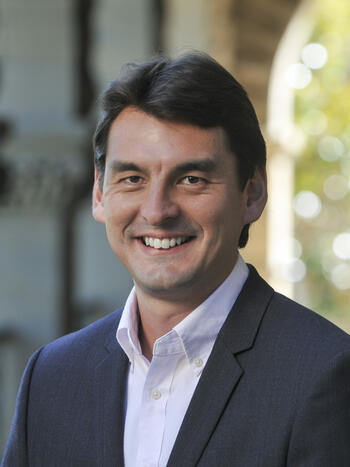
Torun Dewan is a political scientist at the London School of Economics. His main research is in political economy and in the formal and empirical analysis of decision making in political parties, legislatures and executives. Amongst other issues he has looked at how cabinets structure the incentives of ministers, how leadership acts as a coordinating focal point, how political parties aggregate dispersed information, and how elections provide incentives for policy experimentation.


This seminar is part of the Comparative Politics Workshop in the Department of Political Science and is co-sponsored by The Europe Center.

Torun Dewan London School of Economics
Workshops
Authors
News Type
News
Date
Paragraphs

Stanford scholars are encouraging the new administration to consider steps to alleviate the uncertainty and anxiety felt by countries in East Asia about U.S. intentions toward the region.

President Donald Trump’s anti-China rhetoric during his campaign and his recent withdrawal of the U.S. from the Trans-Pacific Partnership have contributed to the unease in the region, which is drifting in ways that are unfavorable for American interests, they said.

Stanford’s Walter H. Shorenstein Asia-Pacific Research Center (APARC) recently published a 27-page report with recommendations on topics of trade and defense that would improve relations between the U.S. and Asian countries. The report, co-authored by eight Stanford scholars, is aimed to help shape U.S. policies in the region.

“The advent of any new administration provides an opportunity to reassess policy approaches,” wrote Gi-Wook Shin, director of the Shorenstein center. “A new mandate exists, and it is our hope that that mandate will be used wisely by the new administration.”

Trade and defense

The biggest trade concern for experts in the region is President Trump’s decision to withdraw the U.S. from the Trans-Pacific Partnership (TPP) and his intention to focus on bilateral agreements instead of multinational pacts.

The agreement, which bound 12 countries in the region by a set of international trade and investment rules, had problems, Stanford scholars said. For example, some have criticized the treaty for not requiring full compliance with international labor standards for all the participating countries. Also, the rules of origin, which were supposed to give preferential treatment to countries in the TPP, were deemed to be weak by many, allowing goods produced outside the TPP to receive benefits.

But it would not be wise or efficient for the U.S. to start negotiations from scratch in the region because the U.S. withdrawal from the agreement, which was touted as a model for the 21st century, already has hurt its credibility with other Asian countries, said Takeo Hoshi, director of the Japan Program at the Shorenstein Center. In addition, Asian countries view the idea of bilateral agreements as an attempt to force trade deals on them that disproportionately benefit the U.S., he said.

“The TPP was not perfect and many problems remain, but they are not removed by abandoning the TPP,” Hoshi wrote in the report. “Completely abandoning the TPP could hurt not only the U.S. economy but also erode U.S. leadership in Asia.”

Hoshi said the U.S. should rely on aspects of TPP that are consistent with the current U.S. trade policy when creating new bilateral agreements, while maintaining and improving existing free trade agreements with other Asian countries.

Another immediate concern for scholars is the maintenance of security and stability in the region.

“The region is unsettled because of uncertainty about us,” said Thomas Fingar, a Shorenstein APARC fellow. “The U.S. has long served as the guarantor of prosperity and security in the region but Asians are no longer convinced that we have the will or ability to do so. This has real consequences … It’s not simply because they are already beginning to act as if we intend to play a less active or positive role.”

If China’s national power and economy continue to expand, it will become increasingly difficult to maintain stability in the region if the U.S. does not continue to play a constructive role. Possible dangers include escalation of tensions between China and the U.S. or its allies following accidents or tactical encounters near areas over which China claims sovereignty.

In the report, scholars recommend a comprehensive review of security in the region to make sure military plans are in place that prioritize management of a possible collapse of North Korea or a sudden military strike coming from the country. Other priorities should include peaceful resolution of China-Taiwan differences and ensuring military access in the South China Sea and East China Sea, wrote Karl Eikenberry, director of the U.S.-Asia Security Initiative at the Shorenstein Center.

“The United States also should engage in a more long-range, exploratory strategic dialogue, first with allies and partners, and then with Beijing, to identify potential areas of mutual interest that can help prevent the unintended escalation of conflicts and reduce already dangerous levels of misperception and mistrust on both sides,” Eikenberry wrote.

China is key

Maintaining a peaceful, productive relationship with China should be of the utmost importance for the U.S., according to the Stanford scholars.

“Managing America’s multifaceted relationship with China is arguably the most consequential foreign policy challenge facing the new administration,” Fingar said.

Although President Trump’s anti-China rhetoric during his campaign made Asian countries anxious about the future, China has been criticized by many American leaders before. Ten previous U.S. presidents were critical of China during their campaigns, but once they assumed office, their tone changed and they adopted a more pragmatic view of U.S. interests in the area, Fingar wrote.

However, while in the past China’s political moves have been predictable for the most part, now that its economy is slowing, the country is increasingly relying on social control and nationalism to reinforce regime legitimacy. This makes China less predictable, according to Fingar.

But the scholars say that there are several opportunities to approach the relationship with China in a way that is beneficial for the U.S. and the rest of the region.

One such opportunity would be for the U.S. to declare its willingness to join China’s newly created Asian Infrastructure Investment Bank, which was formed in early 2016 to support construction projects in the Asia-Pacific region. This would be an “any outcome we win” opportunity that would showcase the U.S. desire to cooperate with China and help establish the region’s confidence in the U.S., Fingar said.

The new administration should also consider pushing for a quick completion of a Bilateral Investment Treaty with China – something that two previous U.S. administrations were not able to achieve. Creating this agreement would help protect things that are important to the U.S. businesses and reassure the willingness of the U.S. to deepen its relationship with China, according to Fingar.

“In my view, how we’re going to establish or reestablish relations with China is key,” Shin said. “Will there be more tension? That’s really important. This affects not only the U.S., but also our allies in the region.”

Alex Shashkevich is a writer for the Stanford News Service.

Hero Image
gettyimages southchinasea
Navy officers wait dockside as a Chinese Navy warship, escorting the arrival of the USS Curtis Wilbur, arrives at Qingdao port.
Getty Images - AFP/Frederic J. Brown
All News button
1
Paragraphs

Scholars at Stanford's Shorenstein Asia-Pacific Research Center in the Freeman Spogli Institute for International Studies assess the strategic situation in East Asia to be unsettled, unstable, and drifting in ways unfavorable for American interests. These developments are worrisome to countries in the region, most of which want the United States to reduce uncertainty about American intentions by taking early and effective steps to clarify and solidify U.S. engagement. In the absence of such steps, they will seek to reduce uncertainty and protect their own interests in ways that reduce U.S. influence and ability to shape regional institutions. This 23-page report entitled “President Trump’s Asia Inbox” suggests specific steps to achieve American economic and security interests.

All Publications button
1
Publication Type
Policy Briefs
Publication Date
Journal Publisher
Shorenstein Asia-Pacific Research Center
Authors
Gi-Wook Shin
Takeo Hoshi
Thomas Fingar
Kathleen Stephens
Daniel C. Sneider
Donald K. Emmerson
Paragraphs

If you want to understand the trade and industrial policy that President Donald Trump is now going to pursue, simply jump into a DeLorean time machine with Marty McFly and go back to 1985. As the title of that iconic film, released that year, proclaimed – it is Back to the Future, Sneider writes.

All Publications button
1
Publication Type
Commentary
Publication Date
Journal Publisher
Toyo Keizai Online (Tokyo Business Today)
Authors
Daniel C. Sneider
News Type
News
Date
Paragraphs


At a recent European Security Initiative (ESI) lecture held at the GSB's Oberndorf Event Center, Sergey Kislyak, Russian Ambassador to the US, described US-Russia relations as being at its worse point since the end of the Cold War.

Ambassador Kislyak then went on to list the series of US actions that he believes led up to this.  

Moderated by Michael McFaul, the Director of FSI, Professor of Political Science, and former US Ambassador to Russia, the lecture drew a large audience of over 200 students, faculty, staff and members of the public. 

To listen to the lecture in its entirety, please visit our YouTube Channel.

Hero Image
Russian Ambassador Sergey Kislyak Pasha Croes
All News button
1
616 Serra StreetEncina Hall E301Stanford, CA94305-6055
(650) 723-6530
0
hong_cheng.jpg PhD

Cheng Hong joins the Walter H. Shorenstein Asia-Pacific Research Center (Shorenstein APARC) during the 2016–17 academic year from the Institute of Quality Development Strategy at Wuhan University, where he serves as a Professor of Economics and Dean of the Institute.

His research interests encompass China’s economic transition, quality of economic development, product quality governance and regulation, and entrepreneurship and innovation. During his time at Shorenstein APARC, he will participate in a research on the phenomenon of ‘zombie firms’ emerging in China.

Cheng is Director of Management Committee of China Employer-Employee Survey (CEES). He is also the Founding Editor of Journal of Macro-Quality Research since 2013. He received the First China Quality Award Nomination from the Chinese government in 2013.

He received a Ph.D. in economics from Wuhan University in 1999.

Visiting Scholar
-

Over two billion adults in the world (38% of all adults) are unbanked. Several more are underbanked and may have basic accounts but do not have access to credit or insurance services and not ‘financially healthy’. Anju will share her insights on the financially underserved (unbanked and underbanked) in emerging markets and developed world and possible solutions that are emerging in the digital age to help the financially underserved, in a commercially viable manner. 

Speaker Bio

Image
Anju Patwardhan is a Fulbright Fellow and Visiting Scholar at Stanford University where her research is focused on Fintech and specifically on use of technology to support financial inclusion. Anju was in banking until July 2016 and has over 25 years of experience with Citibank and Standard Chartered Bank (SCB) in global leadership roles across Asia, Africa and the Middle East covering over 70 countries. She was a member of SCB’s global leadership team, global risk management group and global technology & operations management group. She has been a speaker on Fintech and Financial Inclusion at the United Nations, Asian Development Bank, World Economic Forum, SF Federal Reserve, nationally televised panel discussions in Singapore and China etc. Anju is currently a Partner with Credit Ease China for its Fintech Fund and Fund of Funds, a member of the Investment Committee. She is also a member of the World Economic Forum (WEF) Global Future Council on Blockchain and on the WEF steering committees for “Internet for All” and “Disruptive Innovation in Financial Services.” She is an alumnus of the IIT Delhi and IIM Bangalore and moved from Singapore to the Bay Area in August 2016.

Agenda

4:15pm: Doors open
4:30pm-5:30pm: Talk and Discussion
5:30pm-6:00pm: Networking

RSVP Required

 
For more information about the Silicon Valley-New Japan Project please visit: http://www.stanford-svnj.org/
Seminars
-

Image
Image of The Great Leveler book cover
DUE TO THE OVERWHELMING RESPONSE FOR THIS EVENT, WE ARE NOW FULLY BOOKED AND UNABLE TO TAKE FURTHER RSVPS.


Are mass violence and catastrophes the only forces that can seriously decrease economic inequality? To judge by thousands of years of history, the answer is “Yes.” Tracing the global history of inequality from the Stone Age to today, Walter Scheidel shows that inequality never dies peacefully. Periods of increased equality are usually born of carnage and disaster and are generally short-lived, disappearing with the return of peace and stability. The Great Leveler is the first book to chart the crucial role of violent shocks in reducing inequality over the full sweep of human history around the world.

Ever since humans began to farm, herd livestock, and pass on their assets to future generations, economic inequality has been a defining feature of civilization. Over thousands of years, only violent shocks have significantly lessened inequality. The “Four Horsemen” of leveling—mass-mobilization warfare, transformative revolutions, state collapse, and catastrophic plagues—have repeatedly destroyed the fortunes of the rich. Scheidel identifies and examines these processes, from the crises of the earliest civilizations to the cataclysmic world wars and communist revolutions of the twentieth century. Today, the violence that reduced inequality in the past seems to have diminished, and that is a good thing. But it casts serious doubt on the prospects for a more equal future.

An essential contribution to the debate about inequality, The Great Leveler provides important new insights about why inequality is so persistent—and why it is unlikely to decline any time soon.


Image
Image of Walter Scheidel


Walter Scheidel is the Dickason Professor in the Humanities, Professor of classics and history, and a Kennedy-Grossman Fellow in Human Biology at Stanford University. The author or editor of sixteen previous books, he has published widely on premodern social and economic history, demography, and comparative history.


Walter Scheidel Dickason Professor in the Humanities Speaker Stanford University
Lectures
News Type
Commentary
Date
Paragraphs

Researchers in the Korea Program regularly contribute to Korean media on the Korean affairs ranging from education and economics to politics and North Korea nuclear issues. The articles are in Korean language.

Nationalist Populism in South Korea (Gi-Wook Shin, August 18, 2019)

The Ambiguous Boundary Between Korean Wave and the Anti-Korean Sentiment (Joyce Lee, May 2, 2019)

Restoring the Dignity of South Korea (Gi-Wook Shin, April 18, 2019)

Happiness and Productivity (Yong Suk Lee, March 21, 2019)

Softness Overcomes Hardness  (Joyce Lee, March 6, 2019)

What should the Hanoi Declaration lay out? (Gi-Wook Shin, February 20, 2019)

What Would an Aged Society Look Like? (Yong Suk Lee, January 23, 2019)

Confront the lure of populism or risk economic failures and the coming of a far-right extremist regime (Gi-Wook Shin, January 17, 2019)

Only a drastic measure towards denuclearization can resolve the current stalemate with North Korea (Gi-Wook Shin, interview with Korea Times, January 10, 2019)

Looking After Myself (Joyce Lee, January 9, 2019)

2018, The Moon Jae-In Government's Progress Report (Gi-Wook Shin, December 27, 2018)

Rethinking North Korean Economy? (Yong Suk Lee, November 29, 2018)

The Dark Side of the Korean Culture of Hierarchy (Joyce Lee, November 14, 2018)

Trump's Second Half (Gi-Wook Shin, November 7, 2018)

How Parents Can Help their Children with Career Planning (Yong Suk Lee, October 17, 2018)

Anticipation and Concerns Mount Ahead of the 3rd Inter-Korean Summit (Joyce Lee, September 19, 2018)

Spring on the Korean Peninsula Needs to be hard fought (Gi-Wook Shin, September 5, 2018)

Should we encourage kids to learn coding? (Yong Suk Lee, August 6, 2018)

Some Thoughts on the Korean Value of Saving Face (Joyce Lee, July 16, 2018)

Koreans abroad can play important roles in achieving peace on the Korean Peninsula (Gi-Wook Shin, July 2, 2018)

Withdrawal of US troops from South Korea now becomes an option (Gi-Wook Shin, June 20, 2018)

Trump in Face-Saving Action for Kim (Joyce Lee, June 18, 2018)

South Korea and the U.S. Differ on Priorities for North Korea Policy (Gi-Wook Shin, May 14, 2018)

Is CVID Possible? (Gi-Wook Shin, May 7, 2018)

CVID Faces Challenges (Gi-Wook Shin, May 3, 2018)

The April 27 Korea Summit and the Lingering Question of CVID+α (Gi-Wook Shin, April 30, 2018)

Choices for Your Happiness (Joyce Lee, April 23, 2018)

The Ambiguity of the Moon Government's Goal for the Inter-Korean Summit (Gi-Wook Shin, April 2, 2018)

Korea as a Pacemaker (Gi-Wook Shin, March 13, 2018)

MeToo Movement Should Create Lasting Social Change (Gi-Wook Shin, March 12, 2018)

What's Wrong with Being a Nobody? (Joyce Lee, February 26, 2018)

It's Time to Move Beyond the Political Deadlock of Comfort Women Issue (Gi-Wook Shin, January 15, 2018)

Can the Government Rouse Young Koreans from Their Dreams of Childless Comfort? (Joyce Lee, January 3, 2018)

A Grand Bargain between the US and China Seems More Likely than Ever (Yong Suk Lee, December 25, 2017)

Korea No Longer a Country of Koreans (Rennie Moon, December 11, 2017)

Moon Administration's Diplomatic and Securtiy Strategies (Gi-Wook Shin, November 27, 2017)

Making Little Mr. and Ms. Perfects, But for Whose Sake and at What Cost? (Joyce Lee, November 6, 2017)

Identifying Korea as a Developed Country (Joon Nak Choi, October 30, 2017)

Superficial Korea (Gi-Wook Shin, September 26, 2017)

What Comes After the War of Words Between Trump and Kim Jong-un (Gi-Wook Shin, September 25, 2017)

In the Midst of Rising Fears of War (Joyce Lee, September 12, 2017)

Broken English as the global language (Rennie Moon, August 28, 2017)

'Polifessors' of Moon administration (Gi-Wook Shin, July 24, 2017)

In Anticipation of the Era of Korean Studies (Joyce Lee, July 17, 2017)

Technological Change: Why Korea needs a longer-term perspective on job creation (Yong Suk Lee, June 27, 2017)

Global network of Koreans abroad (Gi-Wook Shin, June 6, 2017)

First summit meeting, not to hurry (Gi-Wook Shin, May 22, 2017)

Korean Americans' love for Korea (Rennie Moon, April 24, 2017)

Trump's anti-immigration stance to be an opportunity for Kore(Gi-Wook Shin, February 27, 2017)

A Labor market by the young, and for the young (Yong Suk Lee, January 30, 2017)

If Korean universities are to succeed with internationalization (Rennie Moon, November 21, 2016)

US presidential election and Korea (Gi-Wook Shin, October 24, 2016)

Political expediency should not block technology innovation (Joon Nak Choi, September 12, 2016)

Strategic policy on inter-Korean relations is essential (Gi-Wook Shin, August 1, 2016)

Is Korea ready to embrace risk and failure? (Yong Suk Lee, June 20, 2016)

Can Pankyo become Silicon Valley in Korea? (Gi-Wook Shin, May 9, 2016)

All News button
1

616 Jane Stanford Way
Encina Hall, C338-C
Stanford, CA 94305-6060

0
MYY headshot.jpg PhD

Mariko Yang-Yoshihara is an Instructor and an Educational Researcher at SPICE interested in driving social impact through curriculum development and research. Currently, she is focused on understanding how constructivist theory-based design thinking principles can 1) foster a more entrepreneurial mindset for adult learners and 2) promote an interdisciplinary STEAM (STEM + Arts/Humanities) approach to innovation for young and adult learners by developing educational curricula and analyzing their impacts. Her research informs the courses she develops and teaches for students ranging from middle to graduate-level across Japan.

Mariko’s academic research has been presented at national and international conferences, including the annual meetings of the American Educational Research Association, the Society of Research into Higher Education, and Japan Society for Research Policy and Innovation Management. Her past research findings have been published in peer-reviewed journals including International Journal of STEM Education, Thinking Skills and Creativity, Classroom Discourse, and Administrative Sciences, as well as in volumes published by the MIT Press, the Tokyo University Press (Japanese), and Hakuto Shobo (Japanese). Additionally, Mariko co-authored a book on STEAM education and design thinking (世界を変えるSTEAM人材―シリコンバレー「デザイン思考」の核心) published by Asahi Shinbun Press in 2019, which has been reprinted and translated into Chinese (title: 硅谷是如何培养创新人才的) by the Zhejiang People’s Publishing House (浙江人民出版社). She also conducts research on administrative career paths within higher education, focusing on the professional identities of those with doctorate degrees working within research management and administration at a global scale. She recently co-edited The Emerald Handbook of Research Administration Around the World that gathered contributions from over 50 countries and regions across Africa, North America, South America, Asia, Australasia, Eastern Europe, Western Europe, and the Middle East (Emerald Publishing, 2023).

In 2016, Mariko co-founded SKY Labo, an educational non-profit based in Japan, with a goal to nurture the next generation of STEAM thinkers. SKY Labo’s inquiry-based program utilizing human-centred pedagogical approaches has garnered official support from the Gender Equality Bureau of Japan’s Cabinet Office in 2019, and was honored with the Semi-Grand Prix of Nissan Foundation’s Rikajyo Ikusei Sho (Award Promoting Next Generation of Women in STEM) in 2022.

Mariko received a Ph.D. and a M.A. in Political Science from Stanford University. She holds a B.A. in Political Science from the University of California, Irvine and a B.A. in Literature from the University of the Sacred Heart in Japan. In addition to her role at SPICE, Mariko is a Visiting Professor at Tohoku University, serving as a faculty member of the School of Engineering and an academic advisor to graduate students in the Department of Management Science and Technology. 

Educational Researcher
Instructor, Stanford-Hiroshima Collaboration Program on Entrepreneurship
Instructor, Social Entrepreneurship (for Eikei University of Hiroshima)
Date Label
Subscribe to Economic Affairs