Mr. Price will discuss finding from the recent publication Citizen Participation and Technology: An NDI Study, which was initiated in the wake of the recent, rapid rise in the use of digital technology among citizens and civil society organizations offers the possibility of strengthening citizens’ voice in politics, carving out new political space for activism and promoting more government accountability. It is clear that these technologies are increasingly complementing citizens’ political participation, changing interrelationships between citizens, organizations, and public institutions, and expanding notions of political behavior and participation. NDI understands how to identify and support the types of citizen participation that contribute to democratization, but the exact role and results of technology use in this process are less clear. The rising use of technology to increase citizens’ access to information and provide avenues of communication to public officials in hopes that this will transform how politics is practiced seems driven by apparently underlying, yet largely untested, assumptions about technology’s ability to increase the quantity, quality, and democratizing influence of citizen participation. Despite the exuberance for new technologies, there is not enough data available on the impacts they have had on the political processes and institutions they are intended to influence in emerging democracies. This creates additional challenges in designing and implementing programs.
SPEAKER BIO
Koebel Price is NDI’s Senior Advisor for Citizen Participation. He has 20 years’ experience in leading programs that promote transparency and accountability in government, citizen participation and civil society development, political party strengthening and free and fair elections. Mr. Price has worked in over 30 countries, served as chief of party for U.S. government-funded programs in the Balkans, the Middle East, and North Africa and managed the democracy and governance portfolios of international development organizations. Domestically, he has served as a Political and Legislative Director with the Minnesota AFL-CIO, part of America’s largest trade union confederation. Prior to that, he was trained in community organizing at the Midwest Academy and led grassroots advocacy campaigns for issue – based civil society organizations. In his current role, he supports NDI’s civil society strengthening efforts globally, providing strategies, tools, techniques and training to NDI’s staff members and partner organizations to support and strengthen citizen organizing and political activism in new and emerging democracies. Mr. Price authored the recent publication Citizen Participation and Technology: An NDI Study, which examines the role technologies are playing in democratization programs
Wallenberg Theater
Bldg 160 Room 124
Koebel Price
Senior Advisor, National Democratic Institute for International Affairs ( NDI)
ABSTRACT
We are familiar with "information technology" and with “liberation technology" but perhaps still need to ask ourselves to what extent information and liberation make natural partners. This primarily theoretical talk will explore why it is tempting to champion information and its technologies in the cause of liberation, yet why it may also be problematic.
SPEAKER BIO
Paul Duguid is an adjunct full professor at the School of Information at Berkeley. In recent years he has also held visiting positions at Queen Mary, University of London, Copenhagen Business School, the École Polytechnique in Paris. In the 1990s, he was a consultant to senior management at the Xerox Palo Alto Research Center (PARC). While there he was co-author of The Social Life of Information with John Seely Brown, the director of PARC. Recent work has focused on the multiple conceptions of information and confusions they can give rise to.
Collective intelligence is channeled to journalism by crowdsourcing and co-creation. While the crowd contributes to the journalistic process with its knowledge, the crowd also challenges journalistic norms and ideals. In her talk, Dr. Aitamurto shows how collective intelligence impacts knowledge search in journalism, alters power structures in society, and functions as a basis for value creation.
SPEAKER BIO
Dr. Tanja Aitamurto is a Brown Fellow and the Deputy Director at the Brown Institute for Media Innovation at the School of Engineering at Stanford, as well as a Liberation Technology alumna. Her research focuses on the applications of collective intelligence in journalism, governance, and new product design in media innovations. She is the author of the book "Crowdsourcing for Democracy: New Era in Policy-Making", and she has published in New Media & Society, Digital Journalism and Design Issues.
Encina Hall
616 Serra Street
Stanford, CA 94305-6055
0
tanjaa@stanford.edu
Visiting Researcher
Aitamurto_HS1.jpg
Tanja Aitamurto was a visiting researcher at the Program on Liberation Technology at the Center on Democracy, Development and the Rule of Law at Stanford University. In her PhD project she examined how collective intelligence, whether harvested by crowdsourcing, co-creation or open innovation, impacts incumbent processes in journalism, public policy making and design process. Her work has been published in several academic publications, such as the New Media and Society. Related to her studies, she advises the Government and the Parliament of Finland about Open Government principles, for example about how open data and crowdsourcing can serve democratic processes. Aitamurto now works as a postdoctoral fellow at the Brown Institute for Media Innovation at Stanford.
Aitamurto has previously studied at the Center for Design Research and at the Innovation Journalism Program at Stanford University. She is a PhD Student at the Center for Journalism, Media and Communication Research at Tampere University in Finland, and she holds a Master’s Degree in Public Policy, and a Master of Arts in Humanities. Prior to returning to academia, she made a career in journalism in Finland specializing in foreign affairs, reporting in countries such as Afghanistan, Angola and Uganda. She has also taught journalism at the University of Zambia, in Lusaka, and worked at the Namibia Press Agency, Windhoek.
She also actively participates in the developments she is studying; she crowdfunded a reporting and research trip to Egypt in 2011 to investigate crowdsourcing in public deliberation. She also practices social entrepreneurship in the Virtual SafeBox (http://designinglibtech.tumblr.com/), a project, which sprang from Designing Liberation Technologies class at Stanford. Tanja blogs on the Huffington Post and writes about her research at PBS MediaShift. More about Tanja’s work at www.tanjaaitamurto.com and on Twitter @tanjaaita.
Publications:
Aitamurto, Tanja. (2012). Crowdsourcing for Democracy: New Era In Policy–Making. Publications of the Committee for the Future, Parliament of Finland, 1/2012. ISBN 978-951-53-3459-6 (Paperback), ISBN 978-951-53-3460-2 (PDF). Accessible online here.
Aitamurto, Tanja&Könkkölä, Saara. (2011) “Value in Co-Created Content Production in Magazine Publishing: Case Study of Co-Creation in Three Scandinavian Magazine Brands.” The World Conference on Mass Customization, Personalization, and Co-Creation: Bridging Mass Customization & Open Innovation.
SPEAKER BIO
Andy Carvin was National Public Radio's senior product manager for online communities. He accepted a position at First Look Media in February, 2014. Carvin was the founding editor and former coordinator of the Digital Divide Network, an online community of more than 10,000 Internet activists in over 140 countries working to bridge the digital divide . He is also an active blogger as well as a field correspondent to the vlog Rocketboom.
Development organizations need tools capable of providing reliable and timely feedback on the efficacy of humanitarian interventions. Traditional surveys and surveying methodology lack interactivity as participants only provide data and may never see the survey results. In her talk, Brandie will describe an interactive assessment platform called CAFE, the Collaborative Assessment and Feedback Engine. CAFÉ was utilized to assess the performance of three Nutrition Education Centers in Uganda. The platform collected the opinions of 137 women who visited these centers for family planning training. We applied principal component analysis on the quantitative assessment questions. We learned that the top two factors that differentiated participants’ assessment of the effectiveness of the family planning trainings were: degree of female’s autonomy at home and degree of fear about contraception techniques. We applied a significance testing methodology to these factors and discovered the promising result that attending family planning trainings was correlated to reduced fears.
Speaker Bio:
Brandie Nonnecke
Dr. Brandie Nonnecke is the Research & Development Manager of the CITRIS Data and Democracy Initiative at the University of California, Berkeley. Her research focuses on how information and communication technologies can be used as tools to support civic participation, to improve governance and accountability, and to foster economic and social development. She has published articles in Telecommunications Policy, Telematics & Informatics, Communications & Strategies, and Information Technologies & International Development.
Brandie has an M.S. in Journalism and Mass Communication from Iowa State University and a Ph.D. in Mass Communications from The Pennsylvania State University.
Wallenberg Hall
Brandie M. Nonnecke, PhD
Research and Development Manager, Data and Democracy Initiative, CITRIS, UC Berkeley
UC Berkeley
The atomic bombs had been dropped on Hiroshima and Nagasaki just before 18-year-old William J. Perry landed in Japan during the War of Occupation as a mapping specialist. He saw the devastation left behind by American firebombers on Tokyo and Okinawa.
The young man quickly understood the staggering magnitude of difference in the destruction caused by traditional firepower and these new atomic bombs. He would go on to devote his life to understanding, procuring and then trying to dismantle those weapons.
But that was seven decades back. And many young Americans today believe the threat of nuclear weapons waned alongside the Cold War and Cuban Missile Crisis.
So as faculty at Stanford and the Center for International Security and Cooperation evolve with the digital age by taking their lessons online, one of the university’s oldest professors is also adapting to online teaching in an effort to reach the youngest audience, urging them to take on the no-nukes mantle that he’s held for many years.
“The issue is so important to me that I tried all sorts of approaches from books and courses and lectures and conferences to try to get my contemporaries and the generations behind me engaged – all with limited success,” says the 86-year-old Perry, a CISAC faculty member and the Michael and Barbara Berberian Professor (emeritus) at the center’s parent organization, the Freeman Spogli Institute for International Studies.
“First – which is a sine qua non – they must become seriously concerned that there is a nuclear danger, which most of these kids don’t understand at all,” said Perry. “Secondly, we want to convince them that there is something they can actually do about it.”
To reach those students, he believes he must go digital. So Perry – who co-teaches with CISAC’s Siegfried Hecker the popular Stanford course, “Technology and National Security” – began to map out a classroom course that would be videotaped and serve as a pilot for an online class that would be free and open to the public.
That course, “Living at the Nuclear Brink: Yesterday & Today” included lectures by some of the best people working in the field of nuclear nonproliferation today. Among those who will be highlighted in the online course are Perry and Hecker; Joe Martz of the Los Alamos National Laboratory; Stanford nuclear historian David Holloway; Stanford political scientist Scott Sagan; and Ploughshares Fund president, Joseph Cirincione.
The Perry Project will produce short-segment videos highlighting key information and stories from the course, packaging them in an online course available in multiple platforms and possibly offered by the university.
Perry used his personal journey as a young soldier during WWII, a mathematician and later a developer of weapons for the U.S. nuclear arsenal as undersecretary of defense for the Carter administration – and then trying to dismantle those weapons as secretary of defense for President Bill Clinton.
“I’m not doing this simply because I want to put a notch on my belt, to say that I’ve done a MOOC,” Perry said. “I’m doing it because I really want to get across to hundreds of thousands of young people.”
Last summer, he launched the Perry Project by inviting a dozen high school and college students to campus for a nuclear weapons boot camp so that they could take back to campus the message that nuclear annihilation is still a real, contemporary possibility.
He asked them: How do I get through to your generation?
“They said, `We don’t get our information by books or even by television, we get it through social media and YouTube, the various social media platforms. And you want to make the message relevant and relatively compact,’” he recalls.
Perry listened. “Living at the Nuclear Brink: Yesterday and Today” is in production now and a short-segment pilot video should be made available in the fall.
And lectures from CISAC's signature course, “International Security in a Changing World” (PS114S) will soon go up on YouTube as lecture modules entitled, “Security Matters.”
“Online learning offers a way to expand CISAC's reach to new audiences, geographies, and generations,” says CISAC Co-Director Amy Zegart, who has co-taught the popular course for the past few years with CISAC’s Martha Crenshaw.
“At the same time, the PS114 online modules will give us a living lecture library so that future Stanford students can compare faculty lectures on similar topics across time – learning, for example, how Martha Crenshaw assessed the terrorist threat in 2010 vs. 2015,” Zegart said.
Guest lecturers whose presentations will be included for the YouTube package include:
Jack Snyder of Columbia University: Democratization and Violence
Francis Fukuyama of Stanford: The Changing Nature of Power
Zegart: Understanding Policy Decisions: The Cuban Missile Crisis
Scott Sagan of CISAC: The Nuclear Revolution; and Why Do States Build/Forego Nuclear Weapons?
Abbas Milani, director of Iran Studies at Stanford: Historical Perspective on Iran
Former FBI Director Robert Mueller: the FBI’s Transformation Post 9/11
U.S. Army Lt. Gen. Karl Eikenberry (Ret.) and former U.S. ambassador to Afghanistan: The War in Afghanistan and the Future of Central Asia
Jane Holl Lute, former deputy secretary of Homeland Security: Emerging Threats in Cybersecurity
Perry: Security Issues in Russia, Yesterday and Today
Brad Roberts: former U.S. Deputy Assistant Secretary of Defense for Nuclear and Missile Defense Policy: Ensuring a (Nuclear) Deterrence Strategy that is Effective for 21st Century Challenges
CISAC Co-Director David Relman: Doomsday Viruses
And lectures at CISAC’s Cybersecurity Boot Camp for senior congressional aids will also be videotaped and packaged for YouTube and online consumption later this year.
“We are excited to enter into this phase of experimentation to see what works, what doesn't, and how we can further CISAC's teaching mission both here at Stanford and around the world,” Zegart said.
Jonathan Mayer's education path is unusual: He has earned a Stanford law degree while working on his Ph.D. in computer science. He did research with a fellow doctoral candidate to discredit NSA claims that sensitive information about American citizens cannot be gleaned in the "metadata" the spy agency gathers from millions of phone calls.
Law and computer science both have their codes, but they're disparate. Legal code is often fuzzy and qualitative. Computer code is precise and quantitative. Not surprisingly, law and computer science tend to attract different people. It's not that the twain shall never meet; it's just that they seldom do.
Mayer is the exception. He has received his law degree and is completing his PhD in computer science, both at Stanford. Along the way he has aimed his double-barreled expertise at the National Security Agency's practice of collecting various forms of electronic information, including telephone metadata of Americans: the phone number of every caller and recipient, the unique serial number of the phones involved, the time and duration of each phone call.
Working with fellow Stanford computer science doctoral candidate Patrick Mutchler, Mayer proved that the NSA was wrong when it claimed that its analysts could not tease detailed personal information from phone metadata searches.
"Phone numbers, as it turns out, aren't just phone numbers," said Mayer, who is also a cybersecurity fellow at the Center for International Security and Cooperation. "They're an avenue for finding out detailed information about individual citizens."
Aleecia McDonald, the director of privacy for the Center for Internet and Society at Stanford Law School, said Mayer's research irrefutably demonstrated that phone metadata is anything but trivial.
"The lovely thing about Jonathan's research is that it made the sensitivity of phone metadata concrete," McDonald said. "The country was told that phone metadata were not worth constitutional protection, and now Jonathan's research confirms otherwise."
McDonald said Mayer's research confirmed the sense of unease felt by many Americans, which could have ramifications beyond the current metadata debate.
"Mobile phones are basically tracking devices, but in addition to geographic data, Jonathan showed you can obtain rich information on daily lives and associations," she said. "This speaks directly to strongly protected privacy issues. No one is calling for stopping all surveillance, but these new dragnet programs essentially treat everyone as criminals and terrorists all the time. People are wondering if they can trust government on anything, and that's dangerous."
Mayer talks to CBS News about his metadata project
Mayer's ability to have significant public impact while still a young academic stems directly from his unusual combination of legal and computer acumen, according to John C. Mitchell, the Mary and Gordon Crary Family Professor in the School of Engineering and Stanford vice provost for online learning. Mitchell, who is Mayer's adviser, is a professor of computer science and, by courtesy, of electrical engineering.
"That ability to apply high technology to legal issues, to understand both fields so deeply – well, not many people have those skill sets," said Mitchell. "In fact, he seems one of a kind. We're lucky to have him working on these issues. I don't know anyone else who could do it."
Go 'geekward,' young man
Mayer traces his interest in computer science – his "geekward leanings," as he puts it – to his childhood in Chicago, where he logged a lot of time on his family's Apple IIGS computer. Once, when he received an elementary school writing assignment, he developed a web page instead. This was in the early stages of the World Wide Web, and his accomplishment engendered both respect and confusion.
As his facility with computers grew, he became increasingly interested in security issues. This was sometimes expressed in unorthodox – even mischievous – fashion. He couldn't help but hack.
One holiday, he recalled, he received a Radio Shack watch that had a TV remote control feature. After fiddling a bit, he discovered that by setting the frequency for a Sony TV, pointing his device at the infrared port on certain Apple computers and hitting channel change, he could force the computer to reboot.
"My school used those kinds of computers, so I spent quite a bit of time pushing channel change when kids were on the computers at school," Mayer said. "They were mystified. I have to admit it was fun, but it also got me thinking about computer vulnerabilities."
Computer science quickly became a focus for Mayer during his undergraduate studies at Princeton. But he also developed interests in public policy and politics – subjects that had previously struck him as dreary.
"They just seemed somewhat vapid and tedious," Mayer said. "But my roommates were intensely interested in policy and politics, and they gradually won me over. I saw that both are viable paths for implementing change, for getting real things done."
His faculty adviser, Princeton computer science and public affairs Professor Ed Felten, reinforced that. Mayer's senior thesis reflected the merging of his interests: It was about web privacy – balancing computer science research with law and policy issues.
Taking dual paths
After graduating from Princeton in 2009 with a degree in public policy, Mayer came directly to Stanford with the intention of becoming, as he tells it, the first student to simultaneously pursue a JD in law and a PhD in computer science (CS).
"I wasn't going to do law and policy lite or CS-lite," Mayer told the Stanford Daily in February. "I was going full in on both."
Among his successes on the legal front: He was recently asked to teach a class at Stanford Law. The seminar explores the legal ramifications of security and privacy in the technology sector, emphasizing "areas of law that are frequently invoked, hotly contested or ripe for reform," according to the course overview.
He finds his new instructor role rewarding: "I get a kick out of the fact that I'm an engineer teaching law at Stanford."
His legal accomplishments notwithstanding, Mayer's computer science efforts – particularly his metadata research – have made more of a public splash. And as so often happens at Stanford, it all started with a conversation among peers.
"Patrick [Mutchler] and I were talking with our adviser [Mitchell] shortly after the Edward Snowden revelations," Mayer recalled. "We were really intrigued by the NSA's programs, especially all the claims and counterclaims about phone metadata. There was a lot of conjecture at that point but very little scientific clarity. So we thought we'd try to bring some focus to bear."
But Mayer and Mutchler found it difficult to acquire the metadata. While the NSA could harvest it directly from telecommunications companies, the Stanford doctoral students had to solicit phone records from the public.
"We realized we might be able to get metadata voluntarily through crowdsourcing," Mayer said. "So we posted an explanation on a Stanford website and provided an Android app that allowed people to send us their data. Crowdsourcing is a pretty risky basis for research, of course, because you never know what you're going to get. We would've been very happy with 100 responses – instead, we got about 500, and we were off to the races."
Metadata was revealing
Again, this innovative tactic took root in the confluence of legal and computing expertise.
"Building and distributing the app was within the capabilities of many computer experts, but its application was very clever," Mitchell said. "The rationale was: 'We would like to see what the NSA sees, but we don't want to behave like the NSA. So how do we do that?' Seeking volunteers willing to provide their phone data and devising and distributing the app was an extremely creative, sophisticated – and effective—approach."
In the course of their analysis, Mayer and Mutchler derived many revealing inferences from the metadata that show who called whom, when, from where to where and how often. For example, they could determine where the subjects lived and worked, and could see some intimation of relationships between the volunteers.
In some cases, the researchers were able to identify who was dating whom. One volunteer contacted a pharmaceutical hotline for multiple sclerosis patients, a management service for rare medical conditions, a specialty pharmacy and several neurology medical groups. Another called several locksmiths, a hydroponics dealer, a head shop and a home improvement store.
Those findings, Mayer drily observed, debunked the NSA's original assertions that phone metadata were impenetrable.
"It gave us pause," he said. "It was pretty clear that we could tease out more sensitive information with some elbow grease."
The findings have caused headaches for the NSA, and Mayer sees waning support for the agency's aggressive pursuit of private information. A number of high-profile cases on metadata are either pending or wending their way through the courts, and the entire program is up for renewal, or cancellation, in 2015. In May, the U.S. House of Representatives passed legislation to halt the National Security Agency's wholesale collection of domestic phone records. Sen. Dianne Feinstein, the chairwoman of the U.S. Senate's intelligence committee, signaled she is amenable to supporting a companion bill.
What's Next?
Mayer, who has received his JD and recently passed the California Bar Exam, expects to complete his computer science PhD in 2015. And after that?
"I would like to go to Washington, to try to bring technical rigor to federal policy," Mayer said, "though I'm aware there's always the danger of sinking into the political morass in that town. I'm working on a start-up NGO that I hope can bridge D.C. and Silicon Valley. In the interim, I just enjoy teaching at the law school."
Glen Martin is a former San Francisco Chronicle reporter based in Santa Rosa, Calif.
CISAC cybersecurity fellow Jonathan Mayer talks to CBS News about the Android app he created with fellow Stanford PhD computer science student, Kevin Mutchler for a Stanford Security Lab project. They asked volunteers to share their phone records via MetaPhone to learn what could be uncovered in the metadata collected by the NSA.
He spoke to CBS News about the project. Be patient; you have to get past an ad first.
Scott Charney, corporate vice president for Microsoft's Trustworthy Computing Group, addresses a CISAC seminar about the evolving pursuit of security and privacy. He shares his views on the NSA revelations as well as the industry perspective regarding concerns about government metadata programs, the key cybersecurity challenges and Microsoft's view of what we need to know as we try to advance cyber policy. You can watch his entire talk here.
For the past 60 years, progress in information technology has been governed by Moore's law, which states that the number of transistors on a semiconductor chip doubles every 18 months. However, this remarkable trend is drawing to a close, mostly because the electrons that carry current in chips move like cars driving through a crowded marketplace, swerving around obstacles and dissipating too much of their energy as heat. The recent discovery of a new state of matter, the topological insulator, may lead to a new paradigm of information processing, in which electrons moving in opposing directions are separated into well-ordered lanes, like automobiles on a highway. This talk will explain the basic principles behind this amazing discovery.
Shoucheng Zhang was born in Shanghai and received his BS degree from the Free University of Berlin in 1983 and PhD from the State University of New York at Stony Brook in 1987. He joined the faculty at Stanford in 1993. He is a condensed matter theorist known for his work on topological insulators, spintronics and high temperature superconductivity. He is a fellow of the American Physical Society, a fellow of the American Academy of Arts and Sciences and a foreign member of the Chinese Academy of Science. He is the recipient of a number of awards including the Guggenheim fellowship in 2007, the Alexander von Humboldt research prize in 2009, the Johannes Gutenberg research prize in 2010, the Europhysics prize in 2010, the Oliver Buckley prize in 2012, the Dirac Medal and Prize in 2012 and the Physics Frontier Prize in 2013 for his theoretical prediction of the quantum spin Hall effect and topological insulators.
Stanford Center at Peking University
SHOUCHENG ZHANG
JG Jackson and CJ Wood Professor of Physics
Speaker
Stanford University

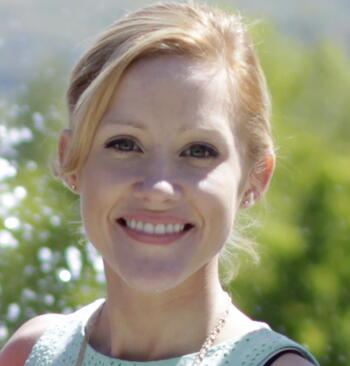 Brandie Nonnecke
 Cybersecurity fellow Jonathan Mayer to teach online class on surveillance.
