


Towards a Post-9/11 Foreign Policy
-
Image
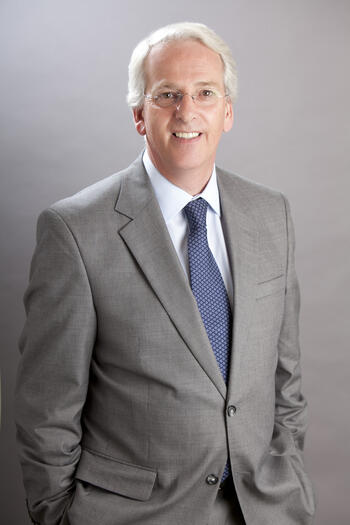
Before his appointment as Ambassador to NATO by President Obama in 2009, Daalder was a senior fellow in foreign policy studies at the Brookings Institution, specializing in American foreign policy, European security and transatlantic relations, and national security affairs. Prior to joining Brookings in 1998, he was an Associate Professor at the University of Maryland’s School of Public Policy and director of research at its Center for International and Security Studies. Ambassador Daalder was educated at Oxford and Georgetown Universities, and received his PhD in political science from the Massachusetts Institute of Technology.
Ivo Daalder
Speaker
President of the Chicago Council on Global Affairs and former US Ambassador to NATO
Lectures
War, Revolution and Freedom: the Baltic Countries in the 20th Century (Conference Day 3)
-
Conference Agenda for Day 3, October 10, 2014:
9:00 – 10:15 AM Chair: Katherine Jolluck, Stanford University
- Aigi Rahi-Tamm, Tartu University. Doubly Marginalized People: the Hidden Stories of Breaking Trust between People in Estonian Society (1940–1960)
- Daina Bleiere, Rīga Stradiņš University. Women in the Soviet Latvian Nomenclature (1940–1987)
10:30 AM – 12:15 PM Chair: Darius Staliunas, Lithuanian Institute of History
- Saulius Grybkauskas, Lithuanian Institute of History. The Second Secretaries of Communist Parties in the Soviet Baltic Republics during 1944–1990
- David Beecher, University of California, Berkeley. A Tale of Two Scholars: Paul Ariste and Yuri Lotman
- Gail Lapidus, Stanford University. The Baltic National Movements and the End of the USSR
12:15 – 2:00 PM Break
2:00 – 3:15 PM Chair: Paul Roderick Gregory, Hoover Institution
- Elga Zalīte, Green Library. The Rev. Richards Zariņš Collection in Stanford University Libraries as a Source for the Study of the Post-World War II Latvian Emigration in the United States
- David Jacobs, Hoover Institution Archives. Stateless Representatives: Baltic Diplomats during the Cold War
3:30 – 4:15 PM Chair: Saulius Sužiedėlis, Millersville University, Pennsylvania
- Maciej Siekierski, Hoover Institution Archives. Baltic Collections and Scholarship at the Hoover Institution
- Liisi Esse, Green Library. The Baltic Studies Program of Stanford University Libraries
6:00 – 8:00 PM, Cubberley Auditorium, Education Building, 485 Lasuen Mall
Latvian film director Pēteris Krilovs will present his documentary Obliging Collaborators (2014)
Conference organizers: Professors Lazar Fleishman (Slavic Department) and Amir Weiner (History Department)
Sponsored by: Hoover Institution Library and Archives, Office of the Provost, Stanford School of Humanities and Sciences, Stanford Global Studies Division, The Europe Center, Stanford University Libraries, Division of Literatures, Cultures, & Languages, Department of Slavic Languages and Literatures, Department of History, Center for Russian, East European and Eurasian Studies, and the Stanford Humanities Center.
Stauffer Auditorium, Hoover Institution (9:00am - 4:15pm)
Cubberley Auditorium (for film screening, 6:00pm - 8:00pm)
Conferences
War, Revolution and Freedom: the Baltic Countries in the 20th Century (Conference Day 2)
-
Conference Agenda for Day 2, October 9, 2014:
9:00-10:45 AM Chair: Magnus Ilmjärv, Тallinn University
- Ineta Lipša, Institute of History of Latvia. Interwar History of Latvia: the Gender Aspects
- Aivars Stranga, University of Latvia. Kārlis Ulmanis' Regime: Politics, Economics, Culture
- Andres Kasekamp, Tartu University. The Estonian Radical Right in the 1930s: The Collapse of Democracy and the Rise of Authoritarianism.
11:00 AM – 12:15 PM Chair: David Holloway, Stanford University
- Arturas Svarauskas, Lithuanian Institute of History. Regime, Society, and Political Tensions in Lithuania, 1938–1940.
- Magnus Ilmjärv, Тallinn University. Munich Pact and the Baltic States, 1938 – The Fateful Year for the Baltic States.
12:15 – 2:00 PM Break
2:00 – 3:15 PM Chair: Norman Naimark, Stanford University
- Saulius Sužiedėlis, Millersville University, Pennsylvania. The Nazi Occupation and the Holocaust in Reichskommissariat Ostland: Conflicting Narratives and Memories
- Uldis Neiburgs, Museum of the Occupation of Latvia. Latvia, Nazi German Occupation, and the Western Allies, 1941–1945
3:30 – 4:45 PM Chair: Gabriella Safran, Stanford
- Ene Kõresaar, Tartu University. World War II in Estonian Memory and Commemoration
- Kristina Burinskaitė, The Genocide and Resistance Research Centre of Lithuania. The KGB Search of War Criminals in the West and the Attempts to Discredit Lithuanian Emigration
Conference organizers: Professors Lazar Fleishman (Slavic Department) and Amir Weiner (History Department)
Sponsored by: Hoover Institution Library and Archives, Office of the Provost, Stanford School of Humanities and Sciences, Stanford Global Studies Division, The Europe Center, Stanford University Libraries, Division of Literatures, Cultures, & Languages, Department of Slavic Languages and Literatures, Department of History, Center for Russian, East European and Eurasian Studies, and the Stanford Humanities Center.
Stauffer Auditorium, Hoover Institution
Conferences
War, Revolution and Freedom: the Baltic Countries in the 20th Century (Conference Day 1)
Conference Agenda for Day 1, October 8, 2014:
9:00 AM
-
Welcome Remarks – Eric T. Wakin, Robert H. Malott Director of Hoover Institution Library & Archives
-
Opening Remarks – Amir Weiner, Stanford University
9:15-10:45 AM – Chair: Amir Weiner
-
Toomas Hiio, Estonian War Museum. Multi-ethnic (or Multi-national) Student Body of the University of Tartu and the WW I: Choices, Political Movements, Volunteers, Mobilizations, and Postwar Consequences
-
Darius Staliunas, Lithuanian Institute of History. Anti-Jewish Violence in Lithuania at the Turn of the 20th Century
11:00 AM – 12:30 PM Chair: Aivars Stranga, The University of Latvia
-
Ēriks Jēkabsons, University of Latvia. The War for Independence of Latvia and the United States
-
Tomas Balkelis, Vilnius University. Paramilitarism in Lithuania: Violence, Civic Activism and Nation-making, 1918–1920
-
Bert Patenaude, Stanford University. “Yankee Doodle: American Attitudes toward Baltic Independence, 1918–1921”
Conference organizers: Professors Lazar Fleishman (Slavic Department) and Amir Weiner (History Department)
Sponsored by: Hoover Institution Library and Archives, Office of the Provost, Stanford School of Humanities and Sciences, Stanford Global Studies Division, The Europe Center, Stanford University Libraries, Division of Literatures, Cultures, & Languages, Department of Slavic Languages and Literatures, Department of History, Center for Russian, East European and Eurasian Studies, and the Stanford Humanities Center.
Stauffer Auditorium, Hoover Institution
Conferences
Armageddon Insurance: Cold War Civil Defense in the United States and Soviet Union, 1945-1991
-
Abstract: This book project is the first historical study of the postwar Soviet civil defense program, and an innovative comparative account of American and Soviet civil defense. It offers a comparative institutional history of the superpowers’ civil defense drawing on previously unexamined Soviet and American archival sources. It offers findings that challenge common assumptions about the logic driving the two nations’ potentially apocalyptic nuclear flirtation, such as that that a mutual recognition that nuclear war would be suicidal prevented the leaders of the two superpowers from embracing civil defense. In actuality, Moscow and Washington developed their civil defense policies in accordance with domestic political concerns, sometimes in direct contradiction to their declared strategic doctrines or military planning. The strange history of Cold War civil defense shows that the superpowers made their nuclear weapons policies as the result of power struggles between different institutions pursuing their own narrow self-interests, with results that imperiled the survival of civilization itself.
About the Speaker: Edward Geist received his Ph.D. in history from the University of North Carolina in May 2013. Previously a Stanton Nuclear Security Fellow at the RAND Corporation in Washington DC, he is a native of Oak Ridge, Tennessee. His research interests include emergency management in nuclear disasters, Soviet politics and culture, and the history of nuclear power and weapons. His dissertation, a comparative study of Soviet and U.S. civil defense during the Cold War, draws upon previously unexamined archival sources to examine the similarities and differences in how the two superpowers faced the dilemmas of the nuclear age. Edward is also interested in the potential uses of simulation and modelling for historians and is developing a piece using these techniques to explore the potential historical implications of the the U.S. and Soviet Union's use of qualitatively different technical assumptions to model strategic nuclear exchanges. A previous recipient of fellowships from Fulbright-Hays and American Councils to conduct research in Moscow and Kyiv, he has published articles in the Journal of Cold War Studies, Russian Review, and the Bulletin of the History of Medicine.
Encina Hall (2nd Floor)
Edward Geist
MacArthur Nuclear Security Postdoctoral Fellow
PhD
CISAC
Seminars
James O. Ellis
Not in residence
0
Affiliate
James O. Ellis Jr. retired as president and chief executive officer of the Institute of Nuclear Power Operations (INPO), in Atlanta, Georgia, on May 18, 2012. He became an affiliate of CISAC in Fall 2013. For 2013-2014, he is the Annenberg Distinguished Visiting Fellow and member of the Arctic Security Initiative at the Hoover Institution.
INPO, sponsored by the commercial nuclear industry, is an independent, nonprofit organization whose mission is to promote the highest levels of safety and reliability--to promote excellence--in the operation of nuclear electric-generating plants.
In 2004, Admiral Ellis completed a distinguished thirty-nine-year navy career as commander of the United States Strategic Command during a time of challenge and change. In this role, he was responsible for the global command and control of United States strategic and space forces, reporting directly to the secretary of defense.
A 1969 graduate of the US Naval Academy, Admiral Ellis was designated a naval aviator in 1971. His service as a navy fighter pilot included tours with two fighter squadrons and assignment as commanding officer of an F/A-18 strike/fighter squadron. In 1991, he assumed command of the USS Abraham Lincoln, a nuclear-powered aircraft carrier. After selection to rear admiral, in 1996 he served as a carrier battle group commander leading contingency response operations in the Taiwan Straits.
His shore assignments included numerous senior military staff tours including commander in chief, US Naval Forces, Europe, and commander in chief, Allied Forces, Southern Europe, during a time of historic NATO expansion. He led United States and NATO forces in combat and humanitarian operations during the 1999 Kosovo crisis.
Ellis holds a master’s degree in aerospace engineering from the Georgia Institute of Technology and, in 2005, was inducted into the school’s Engineering Hall of Fame. He completed United States Navy Nuclear Power Training and was qualified in the operation and maintenance of naval nuclear propulsion plants. He is a graduate of the Navy Test Pilot School and the Navy Fighter Weapons School (Top Gun). In 2013, Ellis was elected to the National Academy of Engineering.
In 2009 he completed three years of service as a presidential appointee on the President’s Intelligence Advisory Board and, in 2006, was a member of the Military Advisory Panel to the Iraq Study Group.
The Limits of Counterinsurgency Doctrine in Afghanistan
-
Speaker bio:
Karl Eikenberry is the William J. Perry Fellow in International Security at the Center for International Security and Cooperation and a faculty member of the Shorenstein Asia-Pacific Research Center at Stanford University. He is also an affiliated faculty member with the Center for Democracy, Development, and Rule of Law, and researcher with The Europe Center.
Prior to his arrival at Stanford, he served as the U.S. Ambassador to Afghanistan from May 2009 until July 2011, where he led the civilian surge directed by President Obama to reverse insurgent momentum and set the conditions for transition to full Afghan sovereignty.
Before appointment as Chief of Mission in Kabul, Ambassador Eikenberry had a thirty-five year career in the United States Army, retiring in April 2009 with the rank of Lieutenant General. His military operational posts included commander and staff officer with mechanized, light, airborne, and ranger infantry units in the continental U.S., Hawaii, Korea, Italy, and Afghanistan as the Commander of the American-led Coalition forces from 2005-2007.
He has served in various policy and political-military positions, including Deputy Chairman of the North Atlantic Treaty Organization (NATO) Military Committee in Brussels, Belgium; Director for Strategic Planning and Policy for U.S. Pacific Command at Camp Smith, Hawaii; U.S. Security Coordinator and Chief of the Office of Military Cooperation in Kabul, Afghanistan; Assistant Army and later Defense Attaché at the United States Embassy in Beijing, China; Senior Country Director for China, Taiwan, Hong Kong and Mongolia in the Office of the Secretary of Defense; and Deputy Director for Strategy, Plans, and Policy on the Army Staff.
He is a graduate of the U.S. Military Academy, has master’s degrees from Harvard University in East Asian Studies and Stanford University in Political Science, and was a National Security Fellow at the Kennedy School of Government at Harvard.
Ambassador Eikenberry earned an Interpreter’s Certificate in Mandarin Chinese from the British Foreign Commonwealth Office while studying at the United Kingdom Ministry of Defense Chinese Language School in Hong Kong and has an Advanced Degree in Chinese History from Nanjing University in the People’s Republic of China.
His military awards include the Defense Distinguished and Superior Service Medals, Legion of Merit, Bronze Star, Ranger Tab, Combat and Expert Infantryman badges, and master parachutist wings. He has received the Department of State Distinguished, Superior, and Meritorious Honor Awards, Director of Central Intelligence Award, and Chairman of the Joint Chiefs of Staff Joint Distinguished Civilian Service Award. He is also the recipient of the George F. Kennan Award for Distinguished Public Service and Harvard University Graduate School of Arts and Sciences Centennial Medal. His foreign and international decorations include the Canadian Meritorious Service Cross, French Legion of Honor, Afghanistan’s Ghazi Amir Amanullah Khan and Akbar Khan Medals, and the NATO Meritorious Service Medal.
Ambassador Eikenberry serves as a Trustee for the International Institute for Strategic Studies, The Asia Foundation, and the National Committee on American Foreign Policy, and is a Fellow of the American Academy of Arts and Sciences. He is a member of the Council on Foreign Relations, the American Academy of Diplomacy, and the Council of American Ambassadors, and was previously the President of the Foreign Area Officers Association. His articles and essays on U.S. and international security issues have appeared in Foreign Affairs, The Washington Quarterly, American Foreign Policy Interests, The New York Times, The Washington Post, Foreign Policy, and The Financial Times. He has a commercial pilot’s license and instrument rating, and also enjoys sailing and scuba diving.
Reuben W. Hills Conference Room
Karl Eikenberry
William J. Perry Fellow in International Security at CISAC, CDDRL, TEC, and Shorenstein APARC Distinguished Fellow; and Former U.S. Ambassador to Afghanistan and Retired U.S. Army Lt. General
Speaker
FSI
Seminars
Presentations by Prize-Winning Honors Students
-
Abstracts will be posted on Friday, May 31.
Speakers:
Daniel Khalessi
Recipient of The Firestone Medal for Excellence in Undergraduate Research
“The Ambiguity of Nuclear Commitments: The Implications of NATO's Nuclear Sharing Arrangements on the Nuclear Nonproliferation Treaty”
Daniel Reynolds
Recipient of The William J. Perry Prize
“More with Less: Prioritizing U.S. Navy Global Presence with Reductions in Defense Spending”
CISAC Conference Room
Seminars
Testing the Logic of Counterinsurgency Doctrine
-
About the topic: When in late 2009, President Obama ordered the surge of an additional 30,000 troops into Afghanistan to reverse Taliban momentum, major tenets of the U.S. military counterinsurgency doctrine shaped the resulting campaign plan. Adages such as "protect the population" and "clear, hold, and build" served to guide civil-military actions. With the hindsight of four years, however, it seems clear that some of the important assumptions upon which the plan was premised were significantly flawed. Karl Eikenberry, who served in both senior diplomatic and military posts in Afghanistan, will examine the logic of counterinsurgency doctrine as it was applied during the surge and discuss its strengths and shortcomings.
About the speaker: Karl Eikenberry served as the U.S. Ambassador to Afghanistan from May 2009 until July 2011, where he led the civilian surge directed by President Obama to reverse insurgent momentum and set the conditions for transition to full Afghan sovereignty. Before appointment as Chief of Mission in Kabul, Ambassador Eikenberry had a thirty-five year career in the United States Army, retiring in April 2009 with the rank of Lieutenant General. He has served in various policy and political-military positions, including Deputy Chairman of the North Atlantic Treaty Organization (NATO) Military Committee in Brussels, Belgium; Director for Strategic Planning and Policy for U.S. Pacific Command at Camp Smith, Hawaii; U.S. Security Coordinator and Chief of the Office of Military Cooperation in Kabul, Afghanistan; Assistant Army and later Defense Attaché at the United States Embassy in Beijing, China; Senior Country Director for China, Taiwan, Hong Kong and Mongolia in the Office of the Secretary of Defense; and Deputy Director for Strategy, Plans, and Policy on the Army Staff.
CISAC Conference Room
Karl Eikenberry
William J. Perry Fellow in International Security at CISAC; CDDRL, TEC, and Shorenstein APARC Distinguished Fellow; Former U.S. Ambassador to Afghanistan; Retired U.S. Army Lt. General
Speaker
Seminars