Society

FSI researchers work to understand continuity and change in societies as they confront their problems and opportunities. This includes the implications of migration and human trafficking. What happens to a society when young girls exit the sex trade? How do groups moving between locations impact societies, economies, self-identity and citizenship? What are the ethnic challenges faced by an increasingly diverse European Union? From a policy perspective, scholars also work to investigate the consequences of security-related measures for society and its values.

The Europe Center reflects much of FSI’s agenda of investigating societies, serving as a forum for experts to research the cultures, religions and people of Europe. The Center sponsors several seminars and lectures, as well as visiting scholars.

Societal research also addresses issues of demography and aging, such as the social and economic challenges of providing health care for an aging population. How do older adults make decisions, and what societal tools need to be in place to ensure the resulting decisions are well-informed? FSI regularly brings in international scholars to look at these issues. They discuss how adults care for their older parents in rural China as well as the economic aspects of aging populations in China and India.

Shorenstein APARC Stanford University Encina Hall E301 Stanford, CA 94305-6055
0
2019-2020 Shorenstein Postdoctoral Fellow in Contemporary Asia
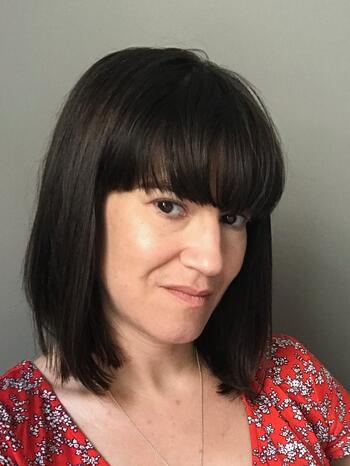
hannah_kim.jpg Ph.D.

Hannah June Kim joined the Walter H. Shorenstein Asia-Pacific Research Center (Shorenstein APARC) as Shorenstein Postdoctoral Fellow in Contemporary Asia for the 2019-20 academic year.  She researches public opinion, political behavior, theories of modernization, economic development, and democratic citizenship, focusing on East Asia.

Dr. Kim completed her doctorate in the Department of Political Science at the University of California, Irvine, in 2019.  Her dissertation examined how and why people view democracy in systematically different ways in six countries: China, Japan, Korea, Singapore, Taiwan, and Vietnam. Developing unique categories of democratic citizenship that measure the cognitive, affective, and behavioral patterns of individuals, she found that state-led economic development limited the growth of cultural democratization among middle class groups in all three dimensions. The results implied that the classic causality between modernization and democratization may not be universally applicable to different cultural contexts.

At Shorenstein APARC, Hannah worked on developing her dissertation into a book manuscript and making progress on her next project exploring democratization and gender empowerment in East Asia. Hannah received an MA in International Studies from Korea University and a BA from UCLA. Her work has been published, or is forthcoming, in The Journal of Politics, PS: Political Science & Politics, and the Japanese Journal of Political Science.

-

Livestream: This event will not be live-streamed or recorded.


Abstract: This study brings together social identity theory and the literature on ontological security in international relations to highlight the role of leadership processes for group formation and authoritarian legitimation. Together, these theories allow for exploring the conditions that increase the potency of identity-based politics and the specific ways political entrepreneurs can mobilize this political tool. Ontological insecurity, as I argue and show, is a condition that political entrepreneurs use and manipulate to gain political support and legitimate their rule. I illustrate this argument by looking into ‘late Putinism’ as an example of collective identity-driven politics. This study relies on an original nationwide survey experiment conducted in November 2017 in Russia to demonstrate the extent of the Russian society’s vulnerability and receptivity to insecure identity narratives. The data also allows us to start a discussion on the potential factors responsible for societal differentiation on this issue.


Speaker's Biography:

Gulnaz Sharafutdinova Gulnaz Sharafutdinova
Gulnaz Sharafutdinova, a Reader in Russian Politics at King’s College London, is the author of Political Consequences of Crony Capitalism Inside Russia (University of Notre Dame Press, 2011) and the forthcoming monograph Through The Looking Glass: Putin’s Leadership and Russia’s Insecure Identity (Oxford University Press, 2020)Gulnaz has written numerous articles on Russian regional political economy, state-business relations, and corruption in Russia. She has published an edited volume, Soviet Society in the Era of Late Socialism, 1964-1985 (2012) and has been working on bringing social psychological approaches to understanding collective identity issues and the nature of Putinism in Russia.


Gulnaz Sharafutdinova Reader in Russian Politics King’s College London
Seminars
Authors
News Type
Blogs
Date
Paragraphs

Representing 14 different countries, the Ford Dorsey Master’s in International Policy (MIP) first-year class is a diverse group. Of the 8 men and 21 women, some have worked in government, some have served in the military, and others just completed their undergraduate degrees. Their academic interests range from migration; to clean energy; to women’s, children’s and LGBTQIA rights; and they spend their free time woodworking, practicing Kung Fu, and listening to true-crime podcasts.

The Freeman Spogli Institute for International Studies spoke to five of the incoming first-year students about their backgrounds, passions, and dreams for the future. These are their stories.

Serage Amatory, 22. (Chouf, Lebanon) 

Image
serage1

“I’ve been living in Egypt for the last four years and attending American University in Cairo, where I double-majored in political science and multimedia journalism. My background is in human rights, and I plan to keep working in human rights after school. I worked as a journalist at one of the few nonpartisan TV stations in Lebanon, and I also worked at the Ministry of Foreign Affairs in Lebanon.

I’ve also made two documentary films — one is about the transgender community in Cairo, and the second film tells the stories of five male victims of rape and sexual assault in Cairo. I enjoy talking about issues that other people don’t want to talk about. I get a lot of disapproval from people all the time, but that's what motivates me — I want to be speaking about people who don’t have someone speaking about them. Someone has to bring attention to things that aren't in the mainstream, and that's what I like to do.

The Master’s in International Policy program here is amazing, and I love that you have the option to specialize in a topic — I’d like to study something concrete and know exactly what I'm going to be doing with it after I graduate. I studied really general topics in undergrad, and now I feel like it's time to augment my general education with something that's more specific. I came in with the expectation that I'm going to be specializing in governance and development, and while I still want to do that, I also really think I might want to take some cyber classes now. So we’ll see — I’m just really happy to be here.”

Maha Al Fahim, 21. (Vancouver, Canada and Abu Dhabi, United Arab Emirates) 

Image
maha1

“My interest in public policy started when I was 14. I wrote a nonfiction book about child abuse and gender discrimination, and it was based on my mother's story — she grew up in an abusive family. And in publishing that book, I really saw the power of writing to expose policy issues. When I went to Princeton for my undergraduate education, I wanted to hone my communication skills, because I saw communication as a really powerful tool. I wrote for the Daily Princetonian newspaper and Business Today magazine, and I was also chair of Princeton Writes, a program to promote writing among the community and celebrate the power of words.

Now I'm working on a novel. It's called "Shaolina", and it's set in China. The novel explores gender dynamics and financial and physical power. I traveled to China last summer to do research for the book, and I got to train with a Shaolin monk for 8 hours a day — we would wake up at 5 a.m. and run through the mountains, it was crazy. It was so cool to immerse myself in the experience like that. For me, Kung Fu is not just a sport, it’s a way of life. I've learned so many life lessons from Kung Fu: patience, perseverance, and balance, to name a few.

I love how Stanford is focusing on the future of policy, because as issues get more complex, you need not just qualitative skills, but also quantitative skills. And you need to be able to think creatively and innovatively. Our cohort is small — around 30 students — and I really like it. There are people here from very diverse backgrounds, and it has been really cool to hear so many different international perspectives.” 

Angela Ortega Pastor, 25. (Madrid, Spain) 

Image
angela1

“I studied economics at NYU Abu Dhabi, and then I worked for three years in Paris for the Organization for Economic Co-operation and Development (OECD) as an energy data manager in oil and gas topics. I worked a lot with the different countries within the OECD as well as with other organizations to help collect data, and we put all of that data into comprehensive reports so that other people and companies can use it for analysis. I really liked working there. I liked the international dynamic - everybody came from very different backgrounds and different places, so it was very congenial to learn from other people.

I'm an economist by training, and that impacts the way I like to look at the problems within the energy field. Such as, 'How can we get consumers and companies to want to transition to clean energy? Does it mean that we need to put policies in place, or regulate the market? Or are pure economic incentives going to do the trick?' There are a lot of professors at Stanford who have done research in that sphere, so that was also a big push for me to come here.

I really like Stanford so far. I've found that people here are very welcoming and happy to help. I was a bit worried about that - when you move somewhere new, you sometimes worry about cliques and how focused people will be on their own lives. But everyone that I've encountered has been really nice and helpful. It's made feel like, 'OK - I can figure out how this place works and eventually feel at home.'”

Craig Nelson, 37. (Minneapolis, Minnesota) 

Image
craig1

“I'm an infantry officer in the U.S. Army. I graduated from West Point in 2006, and I'm in my 14th year of service. I've done eight deployments across both Iraq and Afghanistan, and I've also spent a good amount of time stationed in Europe. My wife, Michelle, and I just moved to Palo Alto from Vicenza, Italy, with our 2-year-old son, Max. Michelle and I love to travel, we love being stationed abroad, and we think that the best way to complete a 20-year career in the Army is to be abroad as much as possible and see parts of the world that we would not otherwise be exposed to.

Overall what I hope to learn here is a better way for the American Army to help to implement the policy that I was a part of as the U.S. Army's forward-deployed unit in Europe. I was able to see where policy derived by our elected officials is actually implemented at a tactical level. I’d like to go back to the Army and implement that policy with a refined understanding of where it comes from and how it's generated.

Before social media became as ubiquitous as it is now, I think people were in groups based largely on where they're from - a certain area code, or a neighborhood, or a school. Now it's possible to identify with a group completely without respect to geographic location, and I think that's because of social media. I'm interested in how that drives security policy - how does that change cyber security policy, and how does that change the way that my country interfaces with its allies and its partners?

When I go back to the Army, I hope to be in a position of greater responsibility and leadership. And I think that this experience will broaden me in a way that I would not have achieved if I had stayed in the operational Army and done a more traditional job following what I just did in Italy.”

Sievlan Len, 23. (Toul Roveang Village, Cambodia) 

Image
sievlan1

“I earned my bachelor’s degree in global affairs from the American University of Phnom Penh in Cambodia. I did two internships before coming to Stanford: one was with a consulting firm, where I was working mainly on migration research and youth participation initiatives at the sub-national level. I also worked for a foundation that works on strengthening political parties in Cambodia. It was a really interesting experience, and it gave me the idea of doing my bachelor's thesis on migration.

My interests right now are in migration, development, and education. And I’m interested to learn about how the three interact, and how we can make the most out of migration. I'm so excited to explore the interdisciplinary aspects of the Master’s in International Policy program, because I've always felt that you can't separate these issues one from another — migration itself is very interdisciplinary, there is both a political and an economic side to it.

I come from a village in Cambodia, and I'm one of the luckiest in that I had the opportunity to pursue higher education. One of my dreams and goals is that everyone in Cambodia — including girls — have equal access to education, and at least to finish high school, and have the opportunity to pursue their dreams in universities if they’d like to. Where I grew up, I saw a lot of potential not being fulfilled because of people’s circumstances — poverty, or elders not valuing education. I really want to see that change. I want everyone to be able to reach their full potential.”

Hero Image
mipphotocropped
Vienna Exchange student Mourad Chouaki and Ford Dorsey Master’s in International Policy (MIP) first-year students Corie Wieland, Rehana Mohammed and Maria Fernanda Porras Jacobo on the grass of the Stanford Oval in September 2019. Photo: Maria Fernanda Porras Jacobo.
All News button
1
0
Visiting Assistant Professor at the Cyber Policy Center
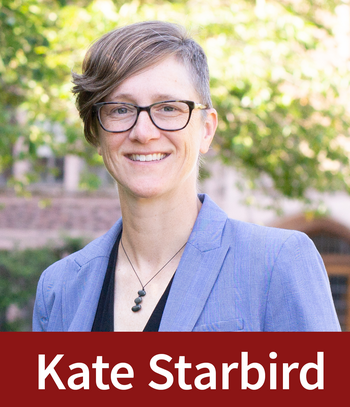
katestarbird-headshot-cip-2.png

Kate Starbird is a Visiting Assistant Professor at the Cyber Policy Center and Associate Professor at the Department of Human Centered Design & Engineering (HCDE) at the University of Washington (UW). Starbird’s research is situated within human-computer interaction (HCI) and the emerging field of crisis informatics—the study of the how information-communication technologies (ICTs) are used during crisis events. One aspect of her research focuses on how online rumors spread during natural disasters and man-made crisis events. More recently, she has begun to focus on disinformation and other forms of strategic information operations online. She is a co-founder and executive council member of the UW Center for an Informed Public. Starbird earned her PhD from the University of Colorado at Boulder in Technology, Media and Society and holds a BS in Computer Science from Stanford University.

-

Seminar Recording: https://youtu.be/qpUNQ9BgpPg


About this Event: There is growing alarm over how drugs empower terrorists, insurgents, militias, and gangs. But by looking back not just years and decades but centuries, Peter Andreas reveals that the drugs-conflict nexus is actually an old story, and that powerful states have been its biggest beneficiaries. In his new book, Killer High, Andreas shows how six psychoactive drugs-ranging from old to relatively new, mild to potent, licit to illicit, natural to synthetic-have proven to be particularly important war ingredients. This sweeping history tells the story of war from antiquity to the modern age through the lens of alcohol, tobacco, caffeine, opium, amphetamines, and cocaine. Beer and wine drenched ancient and medieval battlefields, and the distilling revolution lubricated the conquest and ethnic cleansing of the New World. Tobacco became globalized through soldiering, with soldiers hooked on smoking and governments hooked on taxing it. Caffeine and opium fueled imperial expansion and warfare. The commercialization of amphetamines in the twentieth century energized soldiers to fight harder, longer, and faster, while cocaine stimulated an increasingly militarized drug war that produced casualty numbers surpassing most civil wars. As Andreas demonstrates, armed conflict has become progressively more drugged with the introduction, mass production, and global spread of mind-altering substances. As a result, we cannot understand the history of war without including drugs, and we similarly cannot understand the history of drugs without including war. From ancient brews and battles to meth and modern warfare, drugs and war have grown up together and become addicted to each other.


Speaker's Biography: 

Peter Andreas is the John Hay Professor of International Studies at Brown University, where he holds a joint appointment between the Department of Political Science and the Watson Institute for International and Public Affairs. Andreas has published ten books, including Smuggler Nation: How Illicit Trade Made America. He has also written for publications such as Foreign Affairs, Foreign Policy, The Guardian, Harper's, The Nation, The New Republic, Slate, The New York Times, and The Washington Post.


Peter Andreas Professor of International Studies Brown University
Seminars
-

Livestream: This event will not be live-streamed or recorded.


Abstract: Despite a lull after the fall of the Soviet Union, grassroots activism in Russia is on the rise. The protests for free elections that swept across Russia in the summer of 2019 may have captured international headlines, but many other Russian grassroots groups have been actively organizing over the last decade. What types of civic movements exist in today’s Russia? What are the risks that civic activists face? How do they interact with the state or state-protected interest groups? Finally, what role could grassroots groups play in democratizing Russia? Russian activist Evgeniya Chirikova will shed light on these questions through her personal experience as an environmental activist and as a coordinator of Activatica.org, an online news platform covering grassroots activism across Russia.


Speaker's Biography:

Image
2012europe 111
Evgeniya Chirikova is a Russian environmental activist, primarily known for opposing the building of a motorway through the Khimki forest near Moscow. She also played a prominent role in the 2011-2012 Russian protests following disputed parliamentary elections in Russia. In March 2011, she received the Woman of Courage Award, handed over by US Vice President Joe Biden. In 2012, she was a winner of the Goldman Environmental Prize. In November 2012, Foren Policy named Chirikova one of its 2012 Top 100 Global Thinkers. In 2015 Chirikova organized the portal activatica.org, and she is currently organizing media support for grassroots groups.

Evgeniya Chirikova Russian Environmental Activist
Seminars
-

Image
David Beasley
Please join us for a conversation with United Nations World Food Programme Executive Director David Beasley, who will discuss "Challenges of 21st Century Humanitarian Response." The conversation will be moderated by his predecessor at the agency, Ertharin Cousin, a visiting fellow at the Center on Food Security and the Environment.

R.S.V.P.

As Executive Director of the World Foods Programme (WFP), Mr. Beasley serves at the level of Under-Secretary-General of the United Nations and is a member of the organization's Senior Management Group under the leadership of Secretary-General António Guterres. At WFP, he is putting to use four decades of leadership and communications skills to mobilize more financial support and public awareness for the global fight against hunger. Under his leadership, WFP kept four countries from slipping into famine in 2017 and is moving beyond emergency food assistance, to advance longer term development that brings peace and stability to troubled regions. Before coming to WFP in April 2017, Beasley spent a decade working with high-profile leaders and on-the-ground programme managers in more than 100 countries, directing projects designed to foster peace, reconciliation and economic progress.

David Beasley was elected at the age of 21 to the South Carolina House of Representatives (1979-1992) and as Governor of South Carolina (1995-1999), one of the youngest in the state’s history.  He received a Profile in Courage Award in 2003 from the John F. Kennedy Library Foundation and is a 1999 Fellow of the Institute of Politics at Harvard University’s Kennedy School of Government. Born in 1957, he attended Clemson University and holds a B.A. from the University of South Carolina, as well as a J.D. from the University of South Carolina School of Law.

The Conversation with David Beasley is co-sponsored by Stanford’s Freeman Spogli Institute for International Studies; the Center on Food Security and the Environment and the Annenberg Foundation Trust at Sunnylands.

 The lecture will be held at the David and Joan Traitel Building, 435 Lasuen Mall, Stanford University. For more information about the event, contact Sonal Singh at sonals@stanford.edu.

About the Wesson Lecture

The Wesson Lectureship was established at Stanford by the Freeman Spogli Institute for International Studies in 1988. It provides support for a public address at the university by a prominent scholar or practicing professional in the field of international relations. The series is made possible by a gift from the late Robert G. Wesson, a scholar of international affairs, prolific author, and senior research fellow at the Hoover Institution.

Lectures
-

Abstract: We have learned a great deal about Iraq since the fateful decision to invade the country in 2003. Given academic research on Iraqi society and politics over the past 16 years and hard won lessons from U.S. intervention in Iraq, what what are the lessons learned for contemporary U.S. policymakers? And, crucially, what role should Iraq play in current U.S. foreign policy and its regional strategy toward the Middle East?


Seminar Recording: https://youtu.be/4OBQOshr-gs


Speakers:

Colin H. Kahl Co-director of the Center for International Security and Cooperation, the inaugural Steven C. Házy Senior Fellow at the Freeman Spogli Institute for International Studies, and a Professor, by courtesy, in the Department of Political Science at Stanford University.

Brett McGurk Frank E. and Arthur W. Payne Distinguished Lecturer at the Freeman Spogli Institute and Center for Security and Cooperation at Stanford University.

With moderator: Lisa Blaydes
Professor of Political Science at Stanford University and a Senior Fellow at the Freeman Spogli Institute for International Studies


Speaker's Biography: 

Image
colin kahl
Colin H. Kahl is co-director of the Center for International Security and Cooperation, the inaugural Steven C. Házy Senior Fellow at the Freeman Spogli Institute for International Studies, and a Professor, by courtesy, in the Department of Political Science at Stanford University. He is also a Strategic Consultant to the Penn Biden Center for Diplomacy and Global Engagement.

From October 2014 to January 2017, he was Deputy Assistant to the President and National Security Advisor to the Vice President. In that position, he served as a senior advisor to President Obama and Vice President Biden on all matters related to U.S. foreign policy and national security affairs, and represented the Office of the Vice President as a standing member of the National Security Council Deputies’ Committee. From February 2009 to December 2011, Dr. Kahl was the Deputy Assistant Secretary of Defense for the Middle East at the Pentagon. In this capacity, he served as the senior policy advisor to the Secretary of Defense for Egypt, Iran, Iraq, Israel and the Palestinian territories, Saudi Arabia, Syria, Yemen, and six other countries in the Levant and Persian Gulf region. In June 2011, he was awarded the Secretary of Defense Medal for Outstanding Public Service by Secretary Robert Gates. 

From 2007 to 2017 (when not serving in the U.S. government), Dr. Kahl was an assistant and associate professor in the Security Studies Program at Georgetown University's Edmund A. Walsh School of Foreign Service. From 2007 to 2009 and 2012 to 2014, he was also a Senior Fellow at the Center for a New American Security (CNAS), a nonpartisan Washington, DC-based think tank. From 2000 to 2007, he was an assistant professor of political science at the University of Minnesota. In 2005-2006, Dr. Kahl took leave from the University of Minnesota to serve as a Council on Foreign Relations International Affairs Fellow in the Office of the Secretary of Defense, where he worked on issues related to counterinsurgency, counterterrorism, and responses to failed states. In 1997-1998, he was a National Security Fellow at the John M. Olin Institute for Strategic Studies at Harvard University.

Current research projects include a book analyzing American grand strategy in the Middle East in the post-9/11 era. A second research project focuses on the implications of emerging technologies on strategic stability.

He has published numerous articles on international security and U.S. foreign and defense policy in Foreign Affairs, Foreign Policy, International Security, the Los Angeles Times, Middle East Policy, the National Interest, the New Republic, the New York Times, Politico, the Washington Post, and the Washington Quarterly, as well as several reports for CNAS.

His previous research analyzed the causes and consequences of violent civil and ethnic conflict in developing countries, focusing particular attention on the demographic and natural resource dimensions of these conflicts. His book on the subject, States, Scarcity, and Civil Strife in the Developing World, was published by Princeton University Press in 2006, and related articles and chapters have appeared in International Security, the Journal of International Affairs, and various edited volumes.

Dr. Kahl received his B.A. in political science from the University of Michigan (1993) and his Ph.D. in political science from Columbia University (2000).


Image
mcgurk brett holden   official dos photo copy
Brett McGurk is the Frank E. and Arthur W. Payne Distinguished Lecturer at the Freeman Spogli Institute and Center for Security and Cooperation at Stanford University.

McGurk’s research interests center on national security strategy, diplomacy, and decision-making in wartime.  He is particularly interested in the lessons learned over the presidencies of George W. Bush, Barack Obama, and Donald Trump regarding the importance of process in informing presidential decisions and the alignment of ends and means in national security doctrine and strategy.  At Stanford, he will be working on a book project incorporating these themes and teaching a graduate level seminar on presidential decision-making beginning in the fall of 2019.  He is also a frequent commentator on national security events in leading publications and as an NBC News Senior Foreign Affairs Analyst. 

Before coming to Stanford, McGurk served as Special Presidential Envoy for the Global Coalition to Defeat ISIS at the U.S. Department of State, helping to build and then lead the coalition of seventy-five countries and four international organizations in the global campaign against the ISIS terrorist network.  McGurk was also responsible for coordinating all aspects of U.S. policy in the campaign against ISIS in Iraq, Syria, and globally.

McGurk previously served in senior positions in the George W. Bush and Barack Obama administrations, including as Special Assistant to President Bush and Senior Director for Iraq and Afghanistan, and then as Deputy Assistant Secretary of State for Iraq and Iran and Special Presidential Envoy for the U.S. campaign against the Islamic State under Obama.

McGurk has led some of the most sensitive diplomatic missions in the Middle East over the last decade. His most recent assignment established one of the largest coalitions in history to prosecute the counter-ISIS campaign. He was a frequent visitor to the battlefields in both Iraq and Syria to help integrate military and civilian components of the war plan. He also led talks with Russia over the Syria conflict under both the Trump and Obama administrations, initiated back-channel diplomacy to reopen ties between Iraq and Saudi Arabia, and facilitated the formation of the last two Iraqi governments following contested elections in 2014 and 2018.

In 2015 and 2016, McGurk led fourteen months of secret negotiations with Iran to secure the release of Washington Post reporter Jason Rezain, U.S. Marine Amir Hekmati, and Pastor Saad Abadini, as well as three other American citizens.

During his time at the State Department, McGurk received multiple awards, including the Distinguished Honor Award and the Distinguished Service Award, the highest department awards for exceptional service in Washington and overseas assignments.

McGurk is also a nonresident senior fellow in the Middle East Program at the Carnegie Endowment for International Peace.

McGurk received his JD from Columbia University and his BA from the University of Connecticut Honors Program.  He served as a law clerk to Chief Justice William H. Rehnquist on the U.S. Supreme Court, Judge Denis Jacobs on the U.S. Court of Appeals for the 2d Circuit, and Judge Gerard E. Lynch on the U.S. District Court for the Southern District of New York.


Colin Kahl Stanford University
Brett McGurk Stanford University
Seminars
-

DAY 1: Friday October 11


8:30 – 9:00am         Breakfast


9:00 – 9:15am         Introductory Remarks


9:15 – 11:15am       Panel 1: The Boundaries of Authoritarianism post-Arab Uprisings

Amr Hamzawy, Stanford University

“The Discourse of Authoritarianism in Egypt”

Sean Yom, Temple University

“Mobilization without Movement: The Curse of the Arab Spring in Jordan”

Samia Errazzouki, University of California, Davis

“Political and Economic Stagnation in Morocco: Twenty Years into King Mohamed VI’s Reign”

Chair: Lisa Blaydes, Stanford University


11:15-11:30am        Coffee Break


11:30-1:30pm          Panel 2: Popular Uprisings and Uncertain Transitions

Thomas Serres, University of California, Santa Cruz

“Beyond the ‘Isaba: A Political Economy of the Algerian Hirak”

Lindsay Benstead, Portland State University

“Religious Ideology or Clientelism? Explaining Voter Preferences in Tunisia’s Transitional Elections”

Khalid Medani, McGill University

"The Prospects and Challenges of Democratic Consolidation in Sudan: Understanding the Roots, Dynamics and Potential of an “Impossible” Revolution""

Chair: Hicham Alaoui, Harvard University


1:30-2:30pm             Lunch


2:30-4:30pm             Panel 3: Politics, Succession and Sectarianism in the GCC States

Toby Matthiesen, Oxford University

“Saudi Arabia and the Arab Counter-Revolution”

Michael Herb, Georgia State University

“Monarchical Institutions and the Decay of Family Rule in the Gulf”

Farah Al-Nakib, California Polytechnic State University

“Kuwait's New Urbanism: Palace Projects and the Erosion of the Public”                                   

Chair: Hesham Sallam, Stanford University


DAY 2: Saturday October 12


8:30 – 9:00am          Breakfast


9:00 – 11:00am       Panel 4: Social Strife and Proxy Conflict in the Middle East

Lina Khatib, Chatham House

“Syria’s Conflict: The Intersections of the International and the Domestic”

Stacey Philbrick Yadav, Hobart and William Smith Colleges,

“Can Allies in War Become Partners in Peace? 
Foreign Agendas, Foreign Investment, and Peacebuilding in Yemen”

David Patel, Brandeis University

“Institutions and Competition in Post-Occupation Iraq”

Chair: Amr Hamzawy, Stanford University


11:00-11:15am        Coffee Break


11:15-1:15pm          Panel 5: International Forces in the Arab Political Arena

Lisa Blaydes, Stanford University

“Will China's 'Belt and Road' Initiative Steady or Destabilize Arab Authoritarians?”  

Abbas Milani, Stanford University,

“Iran and its Role in the Prospects of Democracy in the Arab World”

Colin Kahl, FSI, Stanford University

“US Policy Toward a Changing Middle East”

Ayca Alemdaroglu, FSI, Stanford University

“The Rise and Fall of ‘neo-Ottomanism’”

Chair: Larry Diamond, Stanford University


SPEAKER BIOS


Image
hicham alaoui

Hicham Alaoui is an established voice calling for political reform in the Arab world. He is currently a research fellow based at the Weatherhead Center for International Affairs at Harvard University, and is pursuing a D.Phil. at the University of Oxford.  Previously at Stanford, he was a Consulting Professor at the Center for Democracy, Development, and Rule of Law, and advisory board member at the Freeman Spogli Institute. He has published on democratic reforms in the Middle East for journals such as Politique Internationale, Le Debat, Pouvoirs, Le Monde Diplomatique, and Journal of Democracy. He has contributed to The New York Times, Le Monde, La Nouvelle Observateur, El Pais, and Al-Quds. He also served on the MENA Advisory Committee for Human Rights Watch. He holds degrees from Princeton and Stanford. [Back to top]


Image
ayca

Ayça Alemdaroğlu (Ph. D. Cambridge, 2011) (Ph. D. Cambridge, 2011) is the associate director of the Keyman Modern Turkish Studies Program and research assistant professor of sociology at Northwestern University. Her research has engaged with a broad range of theoretical and ethnographic issues, including youth culture and politics, gender and sexuality, experiences of modernity, nationalism, eugenics and higher education. Between 2011-2015, Alemdaroğlu taught in the Anthropology Department and Introductory Studies at Stanford University. Her most publications include "Spatial Segregation and Class Subjectivity in Turkey” published in Social and Cultural Geography; and “Dialectics of Reform and Repression: Unpacking Turkey’s Authoritarian Turn” (with Sinan Erensu) in ROMES. [Back to top]


Image
lindsay b 2

Lindsay J. Benstead  is Associate Professor of Political Science in the Mark O. Hatfield School of Government and Director of the Middle East Studies Center (MESC) at Portland State University. Previously, she served as Fellow in the Middle East Program and the Women’s Global Leadership Initiative at the Woodrow Wilson International Center for Scholars in Washington, DC (2018-2019) and Kuwait Visiting Professor at SciencesPo in Paris (fall 2016). She is an Affiliated Scholar in the Program on Governance and Local Development (GLD) at the University of Gothenburg and Yale University. Benstead has conducted surveys in Morocco, Algeria, Tunisia, Libya, and Jordan and contributes to the Transitional Governance Project. Her research on women and politics, public opinion, and survey methodology has appeared in Perspectives on Politics, International Journal of Public Opinion Research, Governance, and Foreign Affairs. She holds a Ph.D. in Public Policy and Political Science from the University of Michigan in Ann Arbor and served as a doctoral fellow at Yale University and a post-doctoral fellow at Princeton University. [Back to top]


Image
lisa blaydes

Lisa Blaydes is a Professor of Political Science at Stanford University and a Senior Fellow at the Freeman Spogli Institute for International Studies. She is the author of Elections and Distributive Politics in Mubarak’s Egypt (Cambridge University Press, 2011). Her articles have appeared in the American Political Science ReviewInternational Studies QuarterlyInternational OrganizationJournal of Theoretical PoliticsMiddle East Journal, and World Politics. She holds degrees in Political Science (PhD) from the University of California, Los Angeles and International Relations (BA, MA) from Johns Hopkins University. [Back to top]


Image
Larry Diamond

Larry Diamond is a senior fellow at the Hoover Institution and at the Freeman Spogli Institute for International Studies. For more than six years, he directed FSI’s Center on Democracy, Development, and the Rule of Law, where he now leads its Program on Arab Reform and Democracy and its Global Digital Policy Incubator. He is the founding co-editor of the Journal of Democracy and also serves as Senior Consultant at the International Forum for Democratic Studies of the National Endowment for Democracy. His research focuses on democratic trends and conditions around in the world, and on policies and reforms to defend and advance democracy. His 2016 book, In Search of Democracy, explores the challenges confronting democracy and democracy promotion, gathering together three decades of his writing and research, particularly on Africa and Asia. He is author of Ill Winds: Saving Democracy from Russian Rage, Chinese Ambition, and American Complacency, published in 2019 by Penguin Press. He is now writing a textbook on democratic development. [Back to top]


Image
samia e

Samia Errazzouki is a PhD student focusing on early modern Northwest African history. Prior to UC Davis, she worked as a journalist based in Morocco reporting for the Associated Press, and later, with Reuters. Samia also worked as a research associate in Morocco with the University of Cambridge, researching the dynamics of surveillance and citizen media in light of the "Arab Spring." She is currently a co-editor with Jadaliyya. Her work and commentary has appeared in various platforms including The Washington PostBBCForeign PolicyThe GuardianAl Jazeera, the Carnegie Endowment's Sada Journal, the Journal of North African Studies, and the Middle East Institute, among others. Samia holds an MA in Arab Studies from Georgetown University and a BA in Global Affairs from George Mason University. [Back to top]


Image
amr hamzawy cropped

Amr Hamzawy is a Senior Research Scholar at CDDRL. He studied political science and developmental studies in Cairo, The Hague, and Berlin. He was previously an associate professor of political science at Cairo University and a professor of public policy at the American University in Cairo. Between 2016 and 2017, he served as a senior fellow in the Middle East program and the Democracy and Rule of Law program at the Carnegie Endowment for International Peace, Washington, DC. His research and teaching interests as well as his academic publications focus on democratization processes in Egypt, tensions between freedom and repression in the Egyptian public space, political movements and civil society in Egypt, contemporary debates in Arab political thought, and human rights and governance in the Arab world. He is currently writing a new book on contemporary Egyptian politics, titled Egypt’s New Authoritarianism. Hamzawy is a former member of the People’s Assembly after being elected in the first Parliamentary elections in Egypt after the January 25, 2011 revolution. He is also a former member of the Egyptian National Council for Human Rights. Hamzawy contributes a weekly op-ed to the Egyptian independent newspaper al-Shorouk and a weekly op-ed to the London based newspaper al-Quds al-Arabi[Back to top]


Image
michael herb square 620x620

Michael Herb is professor and chair of political science at Georgia State University. His work focuses on Gulf politics, monarchism and the resource curse. He is the author of The Wages of Oil: Parliaments and Economic Development in Kuwait and the UAE (Cornell University Press, 2014) and All in the Family: Absolutism, Revolution, and Democracy in the Middle Eastern Monarchies (SUNY ‎‎1999), in addition to numerous articles. He maintains the Kuwait Politics Database, a comprehensive and authoritative source of information on Kuwaiti elections.  He has twice won Fulbright awards to study in Kuwait. [Back to top]


Image
colin kahl

Colin H. Kahl is co-director of the Center for International Security and Cooperation, the inaugural Steven C. Házy Senior Fellow at the Freeman Spogli Institute for International Studies, and a Professor, by courtesy, in the Department of Political Science at Stanford University. He is also a Strategic Consultant to the Penn Biden Center for Diplomacy and Global Engagement. From October 2014 to January 2017, he was Deputy Assistant to the President and National Security Advisor to the Vice President. In that position, he served as a senior advisor to President Obama and Vice President Biden on all matters related to U.S. foreign policy and national security affairs, and represented the Office of the Vice President as a standing member of the National Security Council Deputies’ Committee. From February 2009 to December 2011, Dr. Kahl was the Deputy Assistant Secretary of Defense for the Middle East at the Pentagon. In this capacity, he served as the senior policy advisor to the Secretary of Defense for Egypt, Iran, Iraq, Israel and the Palestinian territories, Saudi Arabia, Syria, Yemen, and six other countries in the Levant and Persian Gulf region. In June 2011, he was awarded the Secretary of Defense Medal for Outstanding Public Service by Secretary Robert Gates. From 2007 to 2017 (when not serving in the U.S. government), Dr. Kahl was an assistant and associate professor in the Security Studies Program at Georgetown University's Edmund A. Walsh School of Foreign Service. From 2007 to 2009 and 2012 to 2014, he was also a Senior Fellow at the Center for a New American Security (CNAS), a nonpartisan Washington, DC-based think tank. From 2000 to 2007, he was an assistant professor of political science at the University of Minnesota. In 2005-2006, Dr. Kahl took leave from the University of Minnesota to serve as a Council on Foreign Relations International Affairs Fellow in the Office of the Secretary of Defense, where he worked on issues related to counterinsurgency, counterterrorism, and responses to failed states. In 1997-1998, he was a National Security Fellow at the John M. Olin Institute for Strategic Studies at Harvard University. Current research projects include a book analyzing American grand strategy in the Middle East in the post-9/11 era. A second research project focuses on the implications of emerging technologies on strategic stability. He has published numerous articles on international security and U.S. foreign and defense policy in Foreign Affairs, Foreign Policy, International Security, the Los Angeles Times, Middle East Policy, the National Interest, the New Republic, the New York Times, Politico, the Washington Post, and the Washington Quarterly, as well as several reports for CNAS. His previous research analyzed the causes and consequences of violent civil and ethnic conflict in developing countries, focusing particular attention on the demographic and natural resource dimensions of these conflicts. His book on the subject, States, Scarcity, and Civil Strife in the Developing World, was published by Princeton University Press in 2006, and related articles and chapters have appeared in International Security, the Journal of International Affairs, and various edited volumes. Dr. Kahl received his B.A. in political science from the University of Michigan (1993) and his Ph.D. in political science from Columbia University (2000). [Back to top]


Image
lina khatib

Lina Khatib is Head of the Middle East and North Africa Program at Chatham House. She was formerly director of the Carnegie Middle East Center in Beirut and co-founding Head of the Program on Arab Reform and Democracy at Stanford University’s Center on Democracy, Development, and the Rule of Law. Her research focuses on the international relations of the Middle East, Islamist groups and security, political transitions and foreign policy, with special attention to the Syrian conflict. She is a research associate at SOAS, was a senior research associate at the Arab Reform Initiative and lectured at Royal Holloway, University of London. She has published seven books and also written widely on public diplomacy, political communication and political participation in the Middle East. She is a frequent commentator on politics and security in the Middle East and North Africa at events around the world and in the media. [Back to top]


Image
toby m press photo tm

Toby Matthiesen is a Senior Research Fellow in the International Relations of the Middle East at the Middle East Centre, St. Antony’s College, University of Oxford. He was previously a Research Fellow at Pembroke College, Cambridge, and at the London School of Economics and Political Science and gained his doctorate from the School of Oriental and African Studies (SOAS). He is the author of Sectarian Gulf: Bahrain, Saudi Arabia, and the Arab Spring That Wasn't (Stanford University Press, 2013), and The Other Saudis: Shiism, Dissent and Sectarianism (Cambridge University Press, 2015). His current research focuses on Sunni-Shii relations and the legacies of the Cold War in the Middle East. [Back to top]


Image
Medani 2 sc

Khalid Medani is currently associate professor of political science and Islamic studies at McGill University, and has also taught at Oberlin College and Stanford University. Dr. Medani received an A.B. in development studies from Brown University (1987), an MA in development studies from the Center for Contemporary Arab Studies at Georgetown University (1994), and a PhD in political science from the University of California, Berkeley (2003). His research focuses on the political economy of Islamic and ethnic politics in Egypt, Sudan and Somalia. He has published widely on the roots of civil conflict and the funding of the Islamic movement in Sudan, the question of informal finance and terrorism in Somalia, the obstacles to state building in Iraq, and the role of informal networks in the rise of Islamic militancy. Dr. Medani has worked as a researcher at the Brookings Institution and at Stanford University’s Center for International Security and Cooperation (CISAC). He also served as a Homeland Security Fellow at Stanford University from 2006-2007, and has worked with a variety of international organizations including the United Nations Development Program (UNDP), and the UN Office of the Coordinator of Humanitarian Affairs. Dr. Medani has also served as a senior consultant for a variety of governments on issues such as the roots of Islamic militancy, the Darfur crisis, youth politics in Sudan, and electoral reforms in Morocco including the governments of the United States, the Netherlands, the United Kingdom, and Norway. He is a previous recipient of a Carnegie Scholar on Islam award from the Carnegie Corporation of New York. [Back to top]


Image
milani

Abbas Milani is the Hamid & Christina Moghadam Director of Iranian Studies and Adjunct Professor at the Center on Democracy, Development and Rule of Law at the Freeman Spogli Institute at Stanford University. He has been one of the founding co-directors of the Iran Democracy Project and a research fellow at the Hoover Institution. His expertise is U.S.-Iran relations as well as Iranian cultural, political, and security issues. Until 1986, he taught at Tehran University’s Faculty of Law and Political Science, where he was also a member of the Board of Directors of the university’s Center for International Relations. After moving to the United States, he was for fourteen years the Chair of the Political Science Department at the Notre Dame de Namur University. For eight years, he was a visiting Research Fellow in University of California, Berkeley’s Middle East Center. [Back to top]


Image
al nakib headshot

Farah Al-Nakib is Assistant Professor of History at California Polytechnic State University in San Luis Obispo.  She received her PhD (2011) and MA (2006) in History from the School of Oriental and African Studies in London. Her book Kuwait Transformed: A History of Oil and Urban Life (Stanford University Press, 2016) analyzes the relationship between the urban landscape, the patterns and practices of everyday life, and social behaviors and relations in Kuwait, and traces the historical transformation of these three interrelated realms in the shift from the pre-oil to oil eras. Her current research focuses on collective memory and forgetting in Kuwait, and on the Iraqi invasion and occupation of Kuwait in 1990-91.  Her articles have been published in numerous peer reviewed journals and various edited volumes. Until 2018 Al-Nakib was Associate Professor of History and Director of the Center for Gulf Studies at the American University of Kuwait. [Back to top]


Image
dspatel medium

David Siddhartha Patel is the Associate Director for Research at the Crown Center for Middle East Studies at Brandeis University. His research focuses on religious authority, social order, and identity in the contemporary Arab world. He conducted independent field research in Iraq on the role of mosques and clerical networks in generating order after state collapse, and his book, Order Out of Chaos: Islam, Information, and Social Order in Iraq, is being prepared for publication by Cornell University Press. Patel has also recently written about the Jordanian Muslim Brotherhood; ISIS in Iraq; and dead states in the Middle East. He teaches courses on Middle Eastern politics, research design, and GIS and spatial aspects of politics. Before joining the Crown Center, Patel was an assistant professor of government at Cornell University. Patel received his B.A. from Duke University in Economics and Political Science and his Ph.D. from Stanford University in Political Science, where he also was a fellow at CDDRL and CISAC. He studied Arabic in Lebanon, Yemen, Morocco, and Jordan. [Back to top]


Image
hesham sallam headshot

Hesham Sallam is a Research Associate at CDDRL and serves as the Associate-Director of the Program on Arab Reform and Democracy. He is also a co-editor of Jadaliyya ezine and a former program specialist at the U.S. Institute of Peace. His research focuses on Islamist movements and the politics of economic reform in the Arab World. Sallam’s research has previously received the support of the Social Science Research Council and the U.S. Institute of Peace. Past institutional affiliations include Middle East Institute, Asharq Al-Awsat, and the World Security Institute. He is editor of Egypt's Parliamentary Elections 2011-2012: A Critical Guide to a Changing Political Arena (Tadween Publishing, 2013). Sallam received a Ph.D. in Government (2015) and an M.A. in Arab Studies (2006) from Georgetown University, and a B.A. in Political Science from the University of Pittsburgh (2003). [Back to top]


Image
thomas

Thomas Serres is a lecturer in the Politics Department at UC Santa Cruz and a specialist of North African and Mediterranean politics and his scholarship focuses on questions of crisis, economic restructuring and authoritarian upgrading. His first book was published in French by Karthala in 2019. It studies the politics of catastrophization in post-civil war Algeria and is entitled Algeria and the Suspended Disaster: Managing the Crisis and Blaming the People under Bouteflika. He has also recently co-edited the volume North Africa and the Making of Europe: Governance, Institutions, Culture, which was published by Bloomsbury Academic Press in 2018. [Back to top]


Image
stacey philbrick yadav

Stacey Philbrick Yadav is Associate Professor and chair of the Department of Political Science at Hobart and William Smith Colleges. She has written extensively about Islamist-Leftist and intra-Islamist dynamics in Yemen, including Islamists and the State: Legitimacy and Institutions in Yemen and Lebanon, and was a contributor to the “Rethinking Political Islam” project at the Brookings Institution. Focusing increasingly on Yemen’s evolving war dynamics, she co-edited Politics, Governance, and Reconstruction in Yemen’s War for the Project on Middle East Political Science and the spring 2019 issue of Middle East Report devoted to the conflict. Philbrick Yadav serves on the executive committee of the American Institute for Yemeni Studies, and is currently a non-resident fellow at the Crown Center for Middle East Studies at Brandeis University. [Back to top]


Image
sean yom headshot closeup

Sean Yom is Associate Professor of Political Science at Temple University and Senior Fellow in the Middle East Program at the Foreign Policy Research Institute. His research explores authoritarian politics, institutional stability, and historical identity in these countries, as well as their implications for US foreign policy. His publications include From Resilience to Revolution: How Foreign Interventions Destabilize the Middle East (Columbia University Press, 2016); the Routledge textbooks Societies of the Middle East and North Africa (2019) and Government and Politics of the Middle East and North Africa (2019); and numerous articles in academic journals and popular media. He is currently writing a new book, under contract, on the history and politics of Jordan. [Back to top]

Conferences
Subscribe to Society