Society

FSI researchers work to understand continuity and change in societies as they confront their problems and opportunities. This includes the implications of migration and human trafficking. What happens to a society when young girls exit the sex trade? How do groups moving between locations impact societies, economies, self-identity and citizenship? What are the ethnic challenges faced by an increasingly diverse European Union? From a policy perspective, scholars also work to investigate the consequences of security-related measures for society and its values.

The Europe Center reflects much of FSI’s agenda of investigating societies, serving as a forum for experts to research the cultures, religions and people of Europe. The Center sponsors several seminars and lectures, as well as visiting scholars.

Societal research also addresses issues of demography and aging, such as the social and economic challenges of providing health care for an aging population. How do older adults make decisions, and what societal tools need to be in place to ensure the resulting decisions are well-informed? FSI regularly brings in international scholars to look at these issues. They discuss how adults care for their older parents in rural China as well as the economic aspects of aging populations in China and India.

-

About the Event: 

Political violence is rising in the United States, alarming citizens and leaders alike. How many Americans endorse partisan violence and other forms of extreme hostility? What are its deep social, political, historical, and psychological roots? What can be done about it? And what does it mean for democracy? 

In this talk, Drs. Mason and Kalmoe make sense of our contentious politics with a groundbreaking study of radicalism among ordinary American partisans. Their individual-level studies utilize more than a dozen new nationally representative surveys and experiments to trace recent trends since 2017, reactions to elections and violent events, broader conditions that spur support for violence, links from violence attitudes to aggressive behavior, and the role of leaders in enflaming or pacifying their followers.

The results reshape the study of modern American political behavior by showing that ordinary partisanship is far more volatile than scholars have recognized in the past century of study.  


About the Speaker(s)

Image
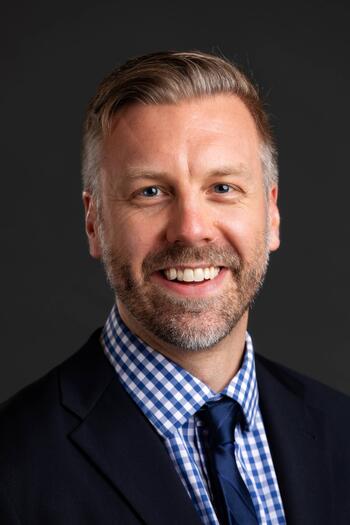
Nathan Kalmoe
Dr. Nathan P. Kalmoe is an associate professor of political communication at Louisiana State University in the Manship School of Mass Communication and Department of Political Science. He is the author of With Ballots & Bullets: Partisanship & Violence in the American Civil War and co-author of Neither Liberal nor Conservative: Ideological Innocence in the American Public. He has also written essays for The Washington Post and Politico, and his work has been featured in The New York Times, The Atlantic, and Vox, among other popular outlets.


Image
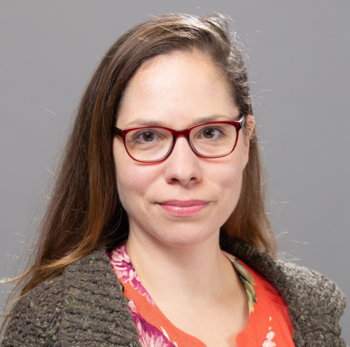
Lillilana Mason
Lilliana Mason is associate professor of Government and Politics at the University of Maryland, College Park, and author of Uncivil Agreement: How Politics Became Our Identity (University of Chicago Press). Her research on partisan identity, partisan bias, social sorting, and American social polarization has been published in journals such as American Political Science Review, American Journal of Political Science, Public Opinion Quarterly, and Political Behavior, and featured in media outlets including the New York Times, the Washington Post, CNN, and National Public Radio.


Online, via Zoom:  REGISTER

Dr. Nathan P. Kalmoe Associate Professor of Political Communication, Louisiana State University
Lilliana Mason Associate professor of Government and Politics at the University of Maryland, College Park
Seminars
-

About the Speaker:

Image
Stephen Krasner
Stephen Krasner is the Graham H. Stuart Professor of International Relations. A former director of CDDRL, Krasner is also an FSI senior fellow, and a fellow of the Hoover Institution.

From February 2005 to April 2007 he served as the Director of Policy Planning at the US State Department. While at the State Department, Krasner was a driving force behind foreign assistance reform designed to more effectively target American foreign aid. He was also involved in activities related to the promotion of good governance and democratic institutions around the world.

At CDDRL, Krasner was the coordinator of the Program on Sovereignty. His work has dealt primarily with sovereignty, American foreign policy, and the political determinants of international economic relations. Before coming to Stanford in 1981 he taught at Harvard University and UCLA. At Stanford, he was chair of the political science department from 1984 to 1991, and he served as the editor of International Organization from 1986 to 1992.

He has been a fellow at the Center for Advanced Studies in the Behavioral Sciences (1987-88) and at the Wissenschaftskolleg zu Berlin (2000-2001). In 2002 he served as director for governance and development at the National Security Council. He is a fellow of the American Academy of Arts and Sciences and a member of the Council on Foreign Relations.

Online, via Zoom:  REGISTER

CDDRL
Stanford University
Encina Hall
Stanford, CA 94305-6055

(650) 723-0676 (650) 724-2996
0
Senior Fellow at the Freeman Spogli Institute for International Studies, Emeritus
Graham H. Stuart Professor of International Relations
Senior Fellow at the Hoover Institution, Emeritus
krasner.jpg MA, PhD

Stephen Krasner is the Graham H. Stuart Professor of International Relations. A former director of CDDRL, Krasner is also an FSI senior fellow, and a fellow of the Hoover Institution.

From February 2005 to April 2007 he served as the Director of Policy Planning at the US State Department. While at the State Department, Krasner was a driving force behind foreign assistance reform designed to more effectively target American foreign aid. He was also involved in activities related to the promotion of good governance and democratic institutions around the world.

At CDDRL, Krasner was the coordinator of the Program on Sovereignty. His work has dealt primarily with sovereignty, American foreign policy, and the political determinants of international economic relations. Before coming to Stanford in 1981 he taught at Harvard University and UCLA. At Stanford, he was chair of the political science department from 1984 to 1991, and he served as the editor of International Organization from 1986 to 1992.

He has been a fellow at the Center for Advanced Studies in the Behavioral Sciences (1987-88) and at the Wissenschaftskolleg zu Berlin (2000-2001). In 2002 he served as director for governance and development at the National Security Council. He is a fellow of the American Academy of Arts and Sciences and a member of the Council on Foreign Relations.

His major publications include Defending the National Interest: Raw Materials Investment and American Foreign Policy (1978), Structural Conflict: The Third World Against Global Liberalism (1985), Sovereignty: Organized Hypocrisy (1999), and How to Make Love to a Despot (2020). Publications he has edited include International Regimes (1983), Exploration and Contestation in the Study of World Politics (co-editor, 1999),  Problematic Sovereignty: Contested Rules and Political Possibilities (2001), and Power, the State, and Sovereignty: Essays on International Relations (2009). He received a BA in history from Cornell University, an MA in international affairs from Columbia University and a PhD in political science from Harvard.

CV
The Graham H. Stuart Professor of International Relations. A former director of CDDRL, Krasner is also an FSI senior fellow, and a fellow of the Hoover Institution
Seminars
-

About the Event:  Decentralization and community-driven development programs have become increasingly common policies to attempt to improve the distribution of public goods across low- and middle-income countries. We study a series of reforms in the city of Delhi that decentralized the administration of discretionary school-level budgets to elected bodies of parents. We find that parents have preferences for representatives that are substantially more educated than them and discriminate against Muslims. Parents act on these preferences when given the opportunity to elect SMC members. They elect parents that are wealthier and more educated and are also of higher status. The paper provides empirical evidence to the question of under what conditions decentralization leads to elite capture. When bureaucrats have a stronger say in the selection of representatives, budgets are captured to reflect the preferences of state representatives, rather than constituents.


Image
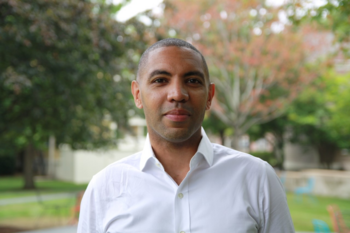
Emmerich Davies
About the Speaker:  Emmerich Davies is an Assistant Professor of Education at the Harvard Graduate School of Education, a Faculty Associate at the Weatherhead Center for International Affairs and Center for International Development, and a co-convener of the Brown-Harvard-M.I.T. Joint Seminar on South Asian Politics. He studies the political economy of education with a regional focus on South Asia. His work has been published in Comparative Political Studies and Governance. He received his Ph.D. and M.A. in political science from the University of Pennsylvania, and his B.A. in political science and economics from Stanford University.

Online, via Zoom:  REGISTER

Emmerich Davies Assistant Professor of Education at the Harvard Graduate School of Education
Seminars
-

About the Event:   The number of Americans arrested, brought to court, and incarcerated has skyrocketed in recent decades. Criminal defendants come from all races and economic walks of life, but they experience punishment in vastly different ways. How and why is the court process unequal? This talk draws on findings from my book Privilege and Punishment: How Race and Class Matter in Criminal Court (Princeton University Press, November 2020). Drawing on fieldwork and interviews in the Boston court system, I show that lawyers and judges often silence, coerce, and punish disadvantaged defendants when they try to learn their legal rights and advocate for themselves. These dynamics reveal how unwritten institutional norms devalue the exercise of legal rights among the disadvantaged, and that ensuring effective legal representation is no guarantee of justice. Drawing on other research and activism on the courts as a tool of racialized social control, I conclude with reflections on the democratic potential and possibilities of criminal court abolition.  


Image
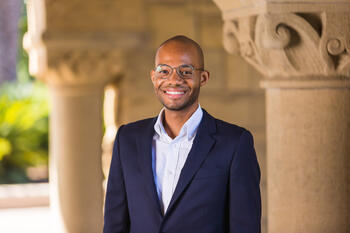
Matthew Clair
About the Speaker:  Dr. Matthew Clair is Assistant Professor in the Department of Sociology and (by courtesy) the Law School. His research examines the law, culture, and inequality. Dr. Clair's research has been published in Criminology, Law & Social Inquiry, Social Science & Medicine, and Social Forces and has been supported by the National Science Foundation and the American Society of Criminology. He has received awards from the American Sociological Association, the American Society of Criminology, the Law & Society Association, and the Society for the Study of Social Problems. His first book Privilege and Punishment: How Race and Class Matter in Criminal Court was published by Princeton University Press in November 2020.


Online, via Zoom:  REGISTER

Matthew Clair Assistant Professor in the Department of Sociology and (by courtesy) at Stanford Law School
Seminars
-

This is a virtual event. Please click here to register and generate a link to the talk. 
The link will be unique to you; please save it and do not share with others.


This event is co-sponsored by the Center on Democracy, Development, and the Rule of Law.

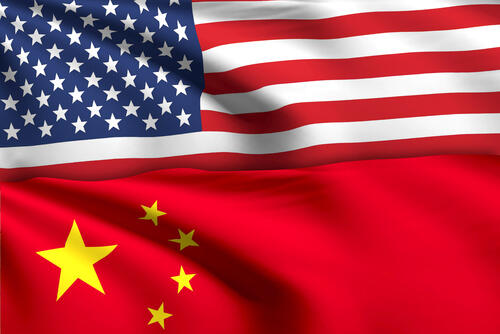
How does autocratic lobbying affect political outcomes and media coverage in democracies? This talk focuses on a dataset drawn from the public records of the US Foreign Agents Registration Act. It includes over 10,000 lobbying activities undertaken by the Chinese government between 2005 and 2019. The evidence suggests that Chinese government lobbying makes legislators at least twice as likely to sponsor legislation that is favorable to Chinese interests. Moreover, US media outlets that participated in Chinese-government sponsored trips subsequently covered China as less threatening. Coverage pivoted away from US-China military rivalry and the CCP’s persecution of religious minorities and toward US-China economic cooperation. These results suggest that autocratic lobbying poses an important challenge to democratic integrity.


Portrait of Erin Baggott CarterErin Baggott Carter is an Assistant Professor at the Department of Political Science and International Relations at the University of Southern California. There, she is also a Co-PI at the Lab on Non-Democratic Politics. She received a Ph.D. in Government from Harvard University, is currently a visiting scholar at the Stanford Center on Democracy, Development and the Rule of Law, and was previously a Fellow at the Stanford Center for International Security and Cooperation.

Dr. Carter's research focuses on Chinese politics and propaganda. She recently completed a book on autocratic propaganda based on an original dataset of eight million articles in Arabic, Chinese, English, French, Russian, and Spanish drawn from state-run newspapers in nearly 70 countries. She is currently working on a book on how domestic politics influence US-China relations. Her other work has appeared or is forthcoming in the British Journal of Political Science, Journal of Conflict Resolution, and International Interactions. Her work has been featured by the New York Times, the Brookings Institution, and the Washington Post Monkeycage Blog.


Image
American and Chinese flags
This event is part of the 2021 Winter/Spring Colloquia series, Biden’s America, Xi’s China: What’s Now & What’s Next?, sponsored by APARC's China Program.


Via Zoom Webinar. Register at: https://bit.ly/3beG7Qz

Erin Baggott Carter Assistant Professor, Department of Political Science and International Relations, University of Southern California; Visiting Scholar, Center on Democracy, Development and the Rule of Law, Stanford University
Seminars
-

This event is co-sponsored with the generous support of the Japan External Trade Organization (JETRO), the Japan Society of Northern California, and the Japanese Chamber of Commerce of Northern California.

Simultaneous interpretation (English <=> Japanese) will be offered. 同時通訳があります。

Ten years have passed since the Great East Japan Earthquake devastated Japan’s northeast. As a country that has experienced a variety of natural disasters throughout its history, Japan has developed various preventive and remedial technologies and social mechanisms, especially since the 1995 Hanshin Earthquake and the 2011 Great East Japan Earthquake. California has had similar experiences with natural disasters, particularly earthquakes, and it has developed its own preventive measures. On the occasion of the tenth anniversary of the Great East Japan Earthquake, this conference features two keynote speakers who have directly dealt with the aftermaths of recent earthquakes in Japan – Makoto Iokibe, who was the Chairman of the Reconstruction Design Council in Response to the Great East Japan Earthquake and is the author of The Era of Great Disasters, and Ikuo Kabashima, who as the Governor of Kumamoto led the recovery efforts from a major earthquake in 2016 and flooding in 2020. The conference will also provide a forum for speakers from Japan and California to learn from each other the cutting-edge approaches toward reducing the damages of natural disasters. 

大災害の時代における防災の最前線:東日本大震災から10年を経て

東日本大震災が関東・東北地方に大被害をもたらしてからすでに10年が経とうとしている 。その歴史の中で、多くの自然災害を経験してきた日本は、特に1995年の阪神大震災と2011年の東日本大震災以来、様々な防災・減災のための技術やシステムの開発に取り組んできた。一方で、地震など同じような自然災害を多く経験してきたカリフォルニアでも、独自の災害対策が進められてきた。東日本大震災から10年の節目に当たって、このコンフェレンスでは、東日本大震災復興会議議長として、復興への道のりをリードしてきた五百旗頭真氏(近著「大災害の時代」)と、熊本県知事として、2016年の地震と2020年の水害という大きな災害からの復興を指揮してきた蒲島郁夫氏の二人に基調講演をお願いし、日本の災害と復興の歩みについてご報告いただく。さらには、日本とカリフォルニアそれぞれから防災・減災の最前線で活躍する識者を招き、双方の取り組みについての理解を深め、新たな災害対策の道筋を探ることを目指す。

AGENDA (Pacific Time)

4:00 – 4:15 PM Opening remarks and Greetings from Gi-Wook Shin (Director of Shorenstein APARC, Stanford University), Ambassador Eleni Kounalakis (Lieutenant Governor of California) and Toru Maeda (Consul General of Japan, San Francisco)

4:15 – 5:00 PM Presentation from Cal OES, Keidanren, Fujitsu Laboratories, Research Institute for Earth Science Visualization Technology and JETRO

5:00 – 6:30 PM Keynote speakers: Kumamoto Governor, Ikuo Kabashima

Talk title: Dreams in Adversity & Making the Impossible Possible: The Politics of Disaster Response. 逆境の中にこそ夢がある ~不可能を可能に 災害対応の政治~

Makoto Iokibe, Chairman of the Reconstruction Design Council in Response to the Great East Japan Earthquake

Talk title: On Reconstruction from the Great East Japan Earthquake. 東日本大震災の復興について

6:30 – 7:00 PM Q&A Session 

SPEAKERS

Image
Ikuo Kabashima
Ikuo Kabashima, previously a Professor of Law at the University of Tokyo, became the Governor of Kumamoto Prefecture in 2008 and is currently serving in his fourth term. He displayed his leadership and creative thinking skills when he led the recovery efforts following both the 2016 Kumamoto Earthquake and the 2020 Kyushu Flooding disasters. After graduating from high school in Kumamoto he worked at a local agricultural cooperative. Ikuo Kabashima moved to the United States in 1968 as an agricultural research student and enrolled in the faculty of agriculture at the University of Nebraska in 1971, where he researched preservation techniques for pig semen. He entered a Master’s program at the University of Nebraska in 1974. Following this he pursued a Ph.D in Political Economy at Harvard University. After returning to Japan he became a professor at the Institute of Policy and Planning Sciences at Tsukuba University, and eventually became a Professor of Law at the University of Tokyo in 1997 where he specialized in political process theory and quantitative methods in political science. He was named a Professor Emeritus of the University of Tokyo in 2008. Kabashima has also served as the chairman of the Japanese Association of Electoral Studies and the vice-president of the International Political Science Association (IPSA). Under the guidance of Samuel P. Huntington, he is also credited with achievements for his empirical research on voting behavior and political development theory surrounding political participation in the United States. 

2008年4月、東京大学法学部教授から熊本県知事に就任し、現在4期目。2016年の熊本地震、2020年の豪雨災害などで、災害対応の陣頭指揮を執り、創造的復興に手腕を発揮。熊本県の高校を卒業後、地元農協に勤務。1968年に農業研究生として渡米し、1971年ネブラスカ大学農学部に入学。豚の精子の保存方法を研究し、1974年、ネブラスカ大学大学院修士課程に進学。その後、ハーバード大学大学院博士課程に入学。政治経済学を研究し、博士号を取得。帰国後、筑波大学社会工学系教授などを歴任した後、1997年から東京大学法学部教授に着任。専門は、政治過程論、計量政治学。2008年、東京大学名誉教授。日本選挙学会理事長、世界政治学会副会長などを歴任。アメリカではサミュエル・ハンチントンなどの指導を受け、投票行動の実証的研究や政治参加に関する政治発展理論において業績をあげる。

Image
Iokibe
Makoto Iokibe is Chancellor of the University of Hyogo and President of the Hyogo Earthquake Memorial 21st Century Research Institute. He is also Professor Emeritus of Japanese political and diplomatic history, Kobe University and Former President of the National Defense Academy of Japan. After the 2011 Great East Japan Earthquake, Professor Iokibe was appointed Chairperson of the Reconstruction Design Council in Response to the Great East Japan Earthquake, a government-established advisory panel of scholars and experts for formulating governmental reconstruction guidelines. Following the 2016 Kumamoto Earthquake, he served as Chairperson of the Expert Group for Reconstruction and Recovery from the Kumamoto Earthquake. Among his many publications, his volume Nichibeikankeishi (Yuhikaku, 2008) has recently been translated by the Japan Library and published as “The History of US-Japan Relations: From Perry to the Present” (Palgrave Macmillan, 2017). His most recent book is “The Era of Great Disasters: Japan and Its Three Major Earthquakes” (University of Michigan Press 2020), a translation of Daisaigai no Jidai(Mainichi Shinbun Shuppan 2016).

1943年兵庫県西宮市生まれ。京都大学法学部卒業。同大学院法学研究科修士課程修了。法学博士。専門は日本政治外交史。神戸大学法学部教授、防衛大学校長、熊本県立大学理事長などを経て、現在(公財)ひょうご震災記念21世紀研究機構理事長、兵庫県立大学理事長。この間、日本政治学会理事長、政府の東日本大震災復興構想会議議長、くまもと復旧・復興有識者会議座長なども歴任。文化功労者。主な著書に「米国の日本占領政策」上下(中央公論社、サントリー学芸賞受賞)、「日米戦争と戦後日本」(講談社学術文庫、吉田茂賞受賞)、「大災害の時代」(毎日新聞出版)ほか多数。

PRESENTERS 

Image
Gi-Wook Shin
Gi-Wook Shin, (Stanford University), is the William J. Perry Professor of Contemporary Korea in Sociology and Senior Fellow at the Freeman Spogli Institute for International Studies.  He established Stanford’s Korea Program in 2001 and has been directing the Walter H. Shorenstein Asia-Pacific Research Center at Stanford since 2005.  His research concentrates on social movements, nationalism, development, and international relations, with focus on Korea and broader Asia. Shin is the author/editor of over 20 books and numerous articles, including Divergent Memories: Opinion Leaders and the Asia-Pacific War; One Alliance, Two Lenses: U.S.-Korea Relations in a New Era; Cross Currents: Regionalism and Nationalism in Northeast Asia; and Ethnic Nationalism in Korea.  Shin’s current research initiatives include Global Talent Flows and Rise of Populism and Nationalism. Before coming to Stanford, Shin taught at the University of Iowa and the University of California, Los Angeles. He holds a B.A from Yonsei University in Korea and M.A and Ph.D from the University of Washington.

Image
Eleni-Kounalakis
Ambassador Eleni Kounalakis, (Lieutenant Governor of California) was sworn in as the 50th Lieutenant Governor of California by Governor Gavin Newsom on January 7th, 2019. She is the first woman elected to the post. From 2010 to 2013, Kounalakis served as US Ambassador to the Republic of Hungary and in 2015 published her acclaimed memoir, “Madam Ambassador, Three Years of Diplomacy, Dinner Parties and Democracy in Budapest” (The New Press). Prior to her service, Kounalakis spent 18 years as an executive at one of California’s most respected housing development firms, AKT Development. Throughout her career, she served on numerous boards and commissions including California’s First 5 Commission, the San Francisco War Memorial, San Francisco Port Commission and the Association of American Ambassadors. Eleni Kounalakis graduated from Dartmouth College in 1989, earned her MBA from U.C. Berkeley’s Haas School of Business in 1992 and holds an Honorary Doctorate of Laws from the American College of Greece. She is married to Dr. Markos Kounalakis and the couple has two teenage sons, Neo and Eon.

Image
Toru Maeda
Toru Maeda, (Consul General of Japan in San Francisco), began his career at the Ministry of Foreign Affairs of Japan in 1985 and has been in the foreign service for the last 35 years. Prior to his arrival in San Francisco in February 2020, he served as Minister / Deputy Chief of Mission of the Embassy of Japan in Myanmar. Over the past decade, he has held several senior positions in both overseas and domestic assignments, including Director General and subsequently Senior Vice President of the Japan International Cooperation Agency (JICA), Minister / Head of Chancery of the Permanent Mission of Japan in Geneva, and Minister in charge of economic affairs of the Embassy of Japan in Indonesia. His other postings in the Ministry of Foreign Affairs include Director positions in the International Cooperation Bureau and Intelligence and Analysis Service. He received his B.A. in Law from the University of Tokyo and M.S. in Foreign Service from Georgetown University.

Image
Ichiro Sone
Ichiro Soné, (Executive Vice President, JETRO), was appointed Executive Vice President of the Japan External Trade Organization in October 2019. Previously, Mr. Soné served as Director-General of JETRO Osaka, overseeing the Kansai and Hokuriku regions. Before Osaka, he served as Chief Executive Director of JETRO Chicago, where he oversaw the office’s activities designed to facilitate trade and investment between Japan and 12 Midwestern states. Mr. Soné  joined JETRO in 1988 after graduating Doshisha University in Kyoto with a bachelor’s degree in art and aesthetics. He has a deep knowledge in international business through working in the Trade Fair Department and Invest Japan Department at JETRO Headquarters in Tokyo, and the North America Bureau of the Ministry of Foreign Affairs. His previous overseas postings were JETRO offices in Los Angeles, San Francisco and Chicago.

Yasuhiro Uozumi, (Executive Director of Keidanren USA), 

Image
Yasuhiro Uozumi
has been Executive Director of Keidanren USA since June 2018. Mr. Uozumi joined Keidanren more than two decades ago. In the course of his career there, he is noted for his expertise on such issues as accounting, taxation, industrial policies, transportation and emerging markets, especially in Southeast Asia and Latin America. He also served as Secretary to the Keidanren Chairman. Mr. Uozumi earned his B.A. in Economics at the University of Tokyo and his MBA from Said Business School at the University of Oxford. He also conducted research on accounting at the Program on U.S.-Japan Relations of the Weatherhead Center for International Affairs at Harvard University. He is a Certified Public Accountant. Keidanren is committed to the realization of Society 5.0 for SDGs. 

Image
Lori Nezhura
Lori Nezhura, (Cal OES Deputy Director of Planning, Preparedness, and Prevention), has worked for the State of California since 2006. She is currently the Deputy Director of Planning, Preparedness, and Prevention, a role which includes oversite of the agency’s seismic hazards branch, dam safety, radiological preparedness, and statewide all-hazards emergency and continuity planning efforts. Additionally, she oversees the California Specialized Training Institute, a statewide enterprise with responsibility for supporting training, exercises, and education in wide variety of areas including, but not limited to, emergency management, public safety, homeland security, hazardous materials, disaster recovery, and crisis communications. Prior to her current role, Lori spent almost six years as the Legislative Coordinator at the California Governor’s Office of Emergency Services and nine years at the California Student Aid Commission as Legislative Director, Program Manager, and various Analyst roles. Lori received her baccalaureate degree from Arizona Christian University in Phoenix and her post-baccalaureate teacher certification at Arizona State University in Tempe. After receiving her teaching credential, she moved to Saitama Prefecture in Japan for two years to teach English as a Second Language. Upon her return to the United States, she taught elementary classes at Carden Christian Academy for ten years before going into state service.

Image
Akihiro Shibahara
Dr. Akihiko Shibahara, (CEO, Research Institute for Earth Science Visualization Technology Co.,), is a geologist, paleontologist, and 3D-CAM (computer-aided manufacturing) engineer. He received a Doctorate degree of Science from Tsukuba University, and he worked as a curator at the Geological Museum in AIST.  His recent research has focused on the visualization of earth science, such as underground data or hazard maps using 3D modeling techniques.  In 2016, he established the Institute for Earth Science Visualization Technology as an AIST Start-ups to implement his research activity. He is also working at the Institute of Dinosaur Research Investigation in Fukui Prefectural University as a Visiting Professor to visualize the spatial relationship between geology and paleontology. Earth Science Visualization Technology established several techniques of building up finely-detailed 3D miniatures to visualize geological information and hazard maps. 

Image
Yusuke Oishi
Dr. Yusuke Oishi​, (Fujitsu Laboratories LTD.), is a project director of Artificial Intelligence Laboratory at Fujitsu Laboratories LTD. Since 2014 he has also been a specially appointed associate professor of International Research Institute of Disaster Science (IRIDeS), Tohoku University. He joined Fujitsu Laboratories Ltd. in 2007 and has been engaged in research on simulation, high performance computing, and artificial intelligence. From 2010 to 2014, he was a visiting researcher at Imperial College London, where he was engaged in tsunami research using 3D fluid simulation. In collaboration with Tohoku University, the University of Tokyo, and Kawasaki City, he and his collaborators started a joint project in 2017 for disaster mitigation utilizing cutting-edge ICT such as artificial intelligence and supercomputing. The project aims to realize effective disaster mitigation by repeatedly implementing technology development, technology evaluation by citizens, and technology improvement.

MODERATOR 

Image
Kiyoteru Tsutsui
Kiyoteru Tsutsui, (Stanford University), is Henri H. and Tomoye Takahashi Professor and Senior Fellow in Japanese Studies at the Walter H. Shorenstein Asia-Pacific Research Center at Stanford University, where he is also Director of the Japan Program, a Senior Fellow of the Freeman Spogli Institute for International Studies, and a Professor of Sociology. He is the author of Rights Make Might: Global Human Rights and Minority Social Movements in Japan (Oxford University Press, 2018), co-editor of Corporate Responsibility in a Globalizing World (Oxford University Press, 2016) and co-editor of The Courteous Power: Japan and Southeast Asia in the Indo-Pacific Era (University of Michigan Press, forthcoming 2021). 

This event is being held virtually via Zoom. Please register for the webinar via the following link/登録はこちらから​: https://bit.ly/3s7hAnl


Ikuo Kabashima <br><I>Governor of Kumamoto Prefecture</i><br><br>
Makoto Iokibe <br><I>Chairman of the Reconstruction Design Council in Response to the Great East Japan Earthquake</i><br><br>
Gi-Wook Shin <br><I>Stanford University</i><br><br>
Ambassador Eleni Kounalakis <br><I>Lieutenant Governor of California</i><br><br>
Toru Maeda <br><I>Consul General of Japan, San Francisco</i><br><br>
Ichiro Sone <br><I>Executive Vice President, JETRO</i><br><br>
Yasuhiro Uozumi <br><I>Executive Director of Keidanren USA</i><br><br>
Lori Nezhura <br><I>Cal OES Deputy Director of Planning, Preparedness, and Prevention</i><br><br>
Akihiro Shibahara <br><I>Research Institute for Earth Science Visualization Technology</i><br><br>
Yusuke Oishi​ <br><I>Fujitsu Laboratories</i><br><br>
Authors
Josh Cheng
News Type
News
Date
Paragraphs

“Reception Hall with Tang Ning” is one of the most popular internet interactive broadcast shows in China with a very large audience base across the nation. Mr. Tang Ning is the founder and CEO of CreditEase Group and the host of “Reception Hall with Tang Ning Show.” 

On January 26, Josh Cheng, Executive Director of Stanford Center at Peking University, was invited to make an appearance in the show with two other guests: Professor Xiao Zhixing, and Mr. Jingsheng Huang, who retired last June from the post of Managing Director of Harvard (Shanghai) Center. The issue focused on the discussion, once again, was an extremely hot topic in China nowadays…. “Pursuing studies in America.”  It was estimated by CreditEase staff, and the January 26 show attracted close to a million viewers.

In the discussion, Mr Cheng strongly advises Chinese parents that if the family had the means and capabilities, sending kids to study in America is a decision that “goes without saying.”  Cheng alluded, based on his personal experience, that education in the US had completely changed his mindset, opened up brand new horizons, and equipped with a new set of perspectives and angles that had been guiding his career life. Stanford's education has profoundly changed his life and his family life for many generations to come.

Strategically, Cheng advised, Chinese parents ought to urge their youngsters to come to North America to explore and discover new fields, a new society, new ways of thinking, and more importantly, to discover themselves. Parents should not urge and expect their youngsters to come to America by living in a very closed Chinese speaking cluster and isolated from American society at large and forget about the mission of coming to American is not only taking some courses and get some degrees but to experience a discovery process that explores humanity, society, technologies, universe and themselves.

Professor Xiao Zhixing, who taught at China Europe International Business School (CEIBS), has worked with many entrepreneurs in China for a long time. Those entrepreneurs are more likely to send their kids abroad earlier; thus, their children lacked a sense of purpose and motivation. He pointed out that entrepreneurs should pay more attention to their children's cultural identity, self-identity, and sense of belonging and cultivate their creativity and leadership.

Mr. Huang commented on whether to go abroad at present: at a strategic level, education is a marathon, the same as life. It is unwise to be bound by age. Studying abroad is something that any age group can do, and it can be a lifelong plan. At the tactic level, for Chinese students who are currently facing the choice of studying abroad, they can make full use of the gap year to enrich themselves and improve their abilities in all aspects. Parents need to broaden their horizons and understand their children's wishes. Studying in Britain and the United States is not the only choice.

Watch the discussion here.


Hero Image
Josh
All News button
1
Subtitle

On January 26, Tang Ning Reception Hall hosted a discussion on "China-US Education Prospects, Where Is the Current Road to Studying Abroad." The event was simultaneously webcasted on multiple platforms, and nearly one million viewers participated online.

Authors
Josh Cheng
News Type
News
Date
Paragraphs

According to a local report there are more than 600,000 students from China currently studying in the US and millions of Chinese families are planning to send their kids to pursue their education in North America.

However, the deterioration of Sino US relations in recent years, combined with uncertainties from the pandemic around the globe had had a profound impact on those students who are already studying in the US and parents who are preparing to send their kids to study in America.

Stanford Center at Peking University, along of other peer institutions in China, had been approached by various groups seeking perspectives and insights on critical issues: Is it still safe and sound to send kids to study in America? Are there indications that US universities and schools are closing their doors to Chinese students?  Should parents and students start to seek other options, perhaps study in the UK or other countries?

In response to such concerns and with a desire to serve local communities, a round table panel discussion was held at the Yale Center of China in Beijing on Dec 26, 2020.   Stanford’s Executive Director, Josh Cheng, was among the nine directors of American education institutions with Centers in China who participated in the discussion.  Others (shown in the photo) participating in person were Yale, Chicago, Cornell, Notre Dame, and Columbia.  Representatives from Harvard, Wharton and Princeton participated virtually.

The directors shared with their personal experiences as well as institutional practices to directly address many concerns expressed by Chinese parents and students.  They believe US universities and schools will continue to welcome Chinese students, both in undergraduate and post graduate programs.  Having international students is an inseparable part of the global extension effort by almost every American educational institution. 

Stanford University just issued a statement in support of Stanford's international students and scholars, explicitly including those from China.

https://news.stanford.edu/today/2021/02/08/statement-president-marc-tessier-lavigne-support-stanfords-international-students-scholars/

Josh Cheng shared his perspectives on the safety and security concerns with Chinese parents. Using practices at Stanford, and other American universities, Mr. Cheng reiterated that American universities always make the safety and security of its students, staffs and faculties top priority.

The panel discussion was well attended, and it was agreed that if the pandemic policy of limiting visitors by PKU is lifted in near future, the Stanford Center at Peking University could serve as next host of the continuing discussion on US China Education.

Image
group photo


Hero Image
Josh
All News button
1
Subtitle

On December 26th, a group of American university center directors gathered at the Yale Beijing Center to discuss the future of international higher education in China. Josh Cheng, SCPKU Executive Director, introduced Stanford’s efforts to support students, no matter what nationality or race, continuing their study and research during this turbulent year.

-

REGISTER HERE


The United States has historically played an important role in promoting democracy to countries across the globe. But is the role of the U.S. as a leading advocate for democracy now diminished following the recent U.S. election and mob attack on the U.S. Capitol? 

The panel for this event will feature democracy activists from around the world, all of whom are graduates of the Draper Hills Program at the Center for Democracy, Development and the Rule of Law (CDDRL). In a discussion moderated by Professor Francis Fukuyama, they will offer their perspectives on the need for democracy promotion in their home countries at the current moment, particularly what role the new Biden administration could constructively play. Professor Michael McFaul’s recent series of articles [https://www.americanpurpose.com/articles/sell-it-again-uncle-sam/] in American Purpose, an online magazine recently launched by Professor Fukuyama, about the need for democracy promotion, will be the starting point for the discussion. Professor McFaul will offer introductory remarks.

PANELISTS:


Image
Moussa Kondo
Kondo Moussa, Class of 2018, Mali - Director Accountability Lab Mali . Kondo founded and runs the Mali chapter of the Accountability Lab, a U.S.-based nonprofit that promotes public accountability in six African and Asian countries. Rather than condemning corrupt leaders, it works to boost the influence of their honest counterparts, running grassroots “Integrity Idol” campaigns to celebrate their good work. Communities nominate local civil servants, and the Lab then profiles the top five on TV. The movement reaches a broader audience, as viewers across the country vote for their favorite candidates. It also runs in-country incubators to train and mentor “accountrapreneurs” who launch their own accountability projects. Kondo, a journalist, started Mali’s Lab after spending six months embedded with Liberia’s team during his 2015 Mandela Washington Fellowship. While Accountability Lab is not new, Kondo has successfully adapted it to a new and challenging context.


Image
Sahili Chopra
Shaili Chopra, Class of 2019, India - An Indian journalist turned entrepreneur whose work is focused on championing real women and their stories across India. Chopra is the founder of SheThePeople.TV, which is India's only women's channel. SheThePeople.TV is a form of digital democracy where women get to choose, speak up, and set the agenda. Chopra uses the internet to spotlight issues of women's rights, their role in a democracy, and empower them in a digitally connected world. Chopra is the recipient of India's highest honor in journalism and counted among the top 50 most influential women in media in India and is a Vital Voices fellow. She holds a BA in Economics from Delhi University and a Masters diploma in Journalism from the Asian College of Journalism in Chennai.  


Image
Mohamad Najem

Mohamad Najem, Class of 2019, Lebanon - Mohamad is the executive director of the Beirut–based digital rights organization Social Media Exchange (SMEX), the Middle East and North Africa’s leading digital rights research and policy advocacy organization. His work includes local and regional advocacy campaigns, research on privacy, data protection, and freedom of expression. Najem organized “Bread & Net”, the first unconference in the Middle East and North Africa region that tackled topics related to technology and human rights. Najem’s career began in the humanitarian aid arena. Najem was a 2014 New America Foundation Fellow and an alumnus of the Arts, Sciences, and Technology University in Lebanon where he completed his Masters in Business Administration. 


Anna Dobrovolskaya

Anna Dobrovolskaya Class of 2019, Russia – is a human rights activist based in Moscow, serving as the executive director of the Memorial Human Rights Center (MHRC). The Center is the biggest Russian human rights NGO, working to provide legal aid and consultation for refugees and asylum seekers, monitoring human rights violations in post-conflict zones and advocating for a human-rights based approach in fighting terrorism; as well as raising awareness about politically-motivated repression in Russia and maintains its own list of political prisoners. Dobrovolskaya’s areas of expertise include human rights education and awareness-raising activities and programs for young people and activists since 2008. She is a member of the Council of Europe pool of trainers. Her work currently lies in NGO management and providing consultancy to various human rights groups and initiatives. Anna was the author of the first Russian play about the life of human rights defenders, which is being performed in Teatr.doc since 2017.


This event is co-sponsored by the Freeman Spogli Institute for International Studies and the Center for Democracy, Development and the Rule of Law.

Authors
Donald K. Emmerson
News Type
Commentary
Date
Paragraphs

This op-ed by Donald K. Emmerson first appeared in The Jakarta Post.

Above all, Trump wanted to be a winner. History granted his wish. He is the first president in the 245-year life of his country to have been impeached twice. By that standard, he won the title of America’s Worst President (AWP)—worse than any of the 44 presidents who preceded him.

AWP rhymes with 'gawp,' and that’s what he also wanted: to be stared at, talked about, catered to, the center of fawning attention, unforgettably present, dominating the news, astride the world in which the news is made. He wanted applause. His ravenous insecurity—narcissism—inflated his ego to continental size. In effect, in his authoritarian imagination, the “extremely stable genius” that he called himself deserved to be the indispensable “me” in “America,” without which the country’s name and the country itself would crumble.

The roars and chants of Trump’s crowds slaked his thirst for veneration. But they imprisoned him in his “base.” By satisfying his craving to be idolized, they gave him no reason to convince the unimpressed. How much more gratifying it must have been for him to bask in mass flattery at rallies than to engage in the difficult business of persuading the uncommitted. That would have taken assets he lacked: empathy, knowledge, intelligence, and a willingness not to lie.

[Subscribe to APARC's newsletters to get regular updates on our scholars.]

So how could Americans have elected such a demagogue? Trump was corrupt but charismatic. He broke the rules. He said whatever was on his mind. He appealed to the streak of individualism in American culture. He ran his campaign and his presidency as a mass entertainment featuring a lone patriot fighting a “deep state” controlled by globalist elites. Especially in rural areas between Silicon Valley and the Boston-to-Washington corridor, millions of white Americans felt threatened by the transfer of jobs from physical toward mental labor in a computerized society whose racial make-up was increasingly non-white. Globalization fed those anxieties. Trump stoked them. He promised to end them and “make America great again.”

Joe Biden defeated Trump in both the popular vote and the Electoral College—respectively by 4.4 and 13.7 percent. Biden’s margins were narrower than one might have wished, given the blatant flaws in Trump’s character, including the 30,573 false or misleading claims that he made during his presidency as tracked and noted by The Washington Post . The egregiousness of his behavior is, however, a double testament to America’s democratic system: to its failure to select a less despicable leader, yes, but also to its success in providing the lawful framework within which his desperate effort to stage what in Latin America would be called an autogolpe or “self-coup” could be and was overcome.

On 1 February 2021, watching television at his 126-room estate in Palm Beach, Florida, ex-president Trump would have learned of the coup in Myanmar and might have envied Senior General Min Aung Hlaing. Both men had been banned by Facebook for inciting violence in their respective countries—Trump in 2021, the general in 2018. Both had suffered defeats in elections held just five days apart in 2020—3 November in the US, 8 November in Myanmar. Both had rejected the voters’ verdict, claiming fraud. But whereas Trump’s frantic and deadly effort to subvert the US election and retain power failed, Min Aung Hlaing’s self-coup has succeeded, at least for now. The general quickly seized full power despite his party’s massive embarrassment at the polls in November, Aung San Suu Kyi’s party having won 83 percent of the available seats. In contrast, Trump could not reverse his exit from power despite a far slimmer margin of electoral defeat. To the extent that the ex-president was even aware of the difference, it could have fanned what angry envy of the general he may have felt.

Trump failed mainly due to the checks and balances that generally call government to account in America. Min Aung Hlaing succeeded in no small part thanks to the checks and balances in the bank accounts of the generals who have compromised Myanmar’s transition to democracy and helped make it the second most corrupted country in Southeast Asia (after Cambodia) as measured by the Corruption Perceptions Index.

Among the many reactions to the Burmese coup, several stand out for their courage and creativity. UN Secretary General António Guterres was unequivocal. "It's absolutely unacceptable,” he said, “to reverse the result of the elections and the will of the people.” Presumably speaking on behalf of the UN, its secretariat, or himself, or all three, he went further: "We'll do everything we can to mobilize all the key actors of the international community to put enough pressure on Myanmar to make sure that this coup fails." 

This notable response came from Indonesia’s former foreign minister Marty Natalegawa: “Deafening silence in the face of assaults against democratic principles [has] increasingly become the norm,” he said. He urged ASEAN to “demonstrate its relevance: It must speak urgently for the respect of constitutional process and rule of law in Myanmar, and call for the immediate release of those unlawfully detained.”

In the days immediately following the coup, ASEAN’s Bruneian secretary general said nothing about it, preferring to remain, in the Indonesian expression, “silent in a thousand tongues.” Speaking for ASEAN as its current chair, however, Brunei’s government did at least encourage a “return to normalcy in accordance with the will and interests of the people of Myanmar,” noting that the group charter’s called for adherence to “democracy, the rule of law” and “human rights and fundamental freedoms.”

As for ASEAN’s next chair, Cambodia, its strongman Hun Sen did speak, but only to say that "Cambodia does not comment on the internal affairs of any country at all.” Hun Sen’s restraint made historical sense. Had Cambodia’s old despot chosen to criticize Myanmar’s new despot, observers could have noted that Min Aung Hlaing had only done what Hun Sen himself had bloodily accomplished in 1997 by seizing full control over Cambodia in a self-coup of his own that had enabled him to become the longest-serving prime minister in the world.

Critical Southeast Asian voices, unconstrained by look-the-other-way diplomacy, have been heard. The chairman of the ASEAN Parliamentarians for Human Rights, Charles Santiago, has urged ASEAN to send a high-level delegation to Myanmar to tell Min Aung Hlaing that his coup “violates ASEAN principles and the ASEAN charter” and is “not acceptable.” “If Myanmar does not turn around,” he added, “there should be proceedings to expel Myanmar out of ASEAN.”

Who is better positioned to deal with this crisis than ASEAN’s largest and debatably least authoritarian member country? It was Indonesia’s Natalegawa who patched up ASEAN’s consensus after Hun Sen damaged it on China’s behalf in 2012. And it is Natalagewa who believes, with the Myanmar coup in mind, that “at this critical juncture for the region, Indonesia must demonstrate its leadership within ASEAN.”

Indonesia’s president Jokowi, rather than trying to rally the region against the coup, will likely continue to focus on domestic economic growth. Not to mention the existential priority that COVID-19 also warrants on his agenda.

So why not task Natalegawa with a damage-control trip around the region comparable the one he took with some success in 2012? He could start with fact-finding in Myanmar. He could then explore an intra-ASEAN understanding that would reassert the core democratic values in the ASEAN Charter while lessening, if possible, the chance that Myanmar will revert to entrenched and fully authoritarian rule. That may be a lost cause. But nothing ventured, nothing gained.

Although Donald Trump is no longer in office, America is still not safe from Trumpism. But America’s system—democracy—is working as it should. Is ASEAN really a dictators’ club? Or does it, too, when threatened from within, have a system that can at least manage and minimize the damage that is, in Myanmar as I write this, being done?

Read More

Protesters opposing the February 1 coup in Myanmar
Q&As

The Myanmar Coup Is a Major Setback, but the Story of Myanmar's Struggle for Democracy Is Not Over

According to Scot Marciel, former U.S. ambassador to Myanmar and Stanford visiting scholar at APARC, building a democracy is a difficult process that can be upended, particularly when the military is politicized and has its own agenda.
The Myanmar Coup Is a Major Setback, but the Story of Myanmar's Struggle for Democracy Is Not Over
President Biden walks past a row of Chinese and American flags.
News

APARC Experts on the Outlook for U.S.-Asia Policy Under the Biden Administration

Ahead of President-elect Biden’s inauguration and on the heels of the attack on the U.S. Capitol by a pro-Trump mob that has left America shaken, an APARC-wide expert panel provides a region-by-region analysis of what’s next for U.S. policy towards Asia and recommendations for the new administration.
APARC Experts on the Outlook for U.S.-Asia Policy Under the Biden Administration
Barack Obama addresses a crowd of young leaders from ASEAN nations.
Commentary

A Global Town Hall Welcomes America Back

Despite the reversals of the Trump era, a flurry of online diplomacy served as a reminder that the U.S. is welcome in Southeast Asia writes Donald K. Emmerson in The Diplomat.
A Global Town Hall Welcomes America Back
Hero Image
Protesters in Myanmar stand on a picture of General Min Aung Hlaing
Protesters in Myanmar stand on a picture of General Min Aung Hlaing | Chung Sung-Jun, Getty Images
All News button
1
Subtitle

Southeast Asia Program Director Donald K. Emmerson compares responses across Southeast Asia to the February coup in Myanmar and reflects on the parallels and differences between the state of democracy there and in the United States.

Subscribe to Society