Society

FSI researchers work to understand continuity and change in societies as they confront their problems and opportunities. This includes the implications of migration and human trafficking. What happens to a society when young girls exit the sex trade? How do groups moving between locations impact societies, economies, self-identity and citizenship? What are the ethnic challenges faced by an increasingly diverse European Union? From a policy perspective, scholars also work to investigate the consequences of security-related measures for society and its values.

The Europe Center reflects much of FSI’s agenda of investigating societies, serving as a forum for experts to research the cultures, religions and people of Europe. The Center sponsors several seminars and lectures, as well as visiting scholars.

Societal research also addresses issues of demography and aging, such as the social and economic challenges of providing health care for an aging population. How do older adults make decisions, and what societal tools need to be in place to ensure the resulting decisions are well-informed? FSI regularly brings in international scholars to look at these issues. They discuss how adults care for their older parents in rural China as well as the economic aspects of aging populations in China and India.

-

Following a century of violent anti-religious campaigns, China is now filled with new temples, churches and mosques--as well as cults, sects and politicians trying to harness religion for their own ends. Driving this explosion of faith is uncertainty--over what it means to be Chinese, and how to live an ethical life in a country that discarded traditional morality a century ago and is still searching for new guideposts. Ian Johnson lived for extended periods with underground church members, rural Daoists and Buddhist pilgrims. Throughout his career in journalism and in his new book Souls of China: The Return of Religion After Mao (Pantheon/Knopf in the United States and Penguin in the U.K., both April 2017), Johnson has distilled these experiences into a cycle of festivals, births, deaths, detentions and struggle—a great awakening of faith that is shaping the soul of the world’s newest superpower. This panel discussion, featuring a keynote speech delivered by Johnson, will explore the resurgence of religion and value systems in China.

Souls of China: The Return of Religion After Mao will be available for sale. 

Panelists:
 

Image
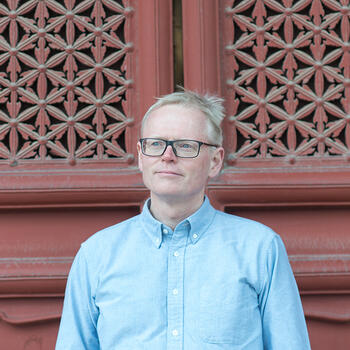
Ian Johnson is a Pulitzer-Prize winning writer focusing on society, religion, and history and 2016 Shorenstein Journalism Awardee. He works out of Beijing and Berlin, where he also teaches and advises academic journals and think tanks.

Johnson has spent over half of the past thirty years in the Greater China region, first as a student in Beijing from 1984 to 1985, and then in Taipei from 1986 to 1988. He later worked as a newspaper correspondent in China, from 1994 to 1996 with Baltimore's The Sun, and from 1997 to 2001 with The Wall Street Journal, where he covered macro-economics, China's WTO accession and social issues. In 2009, Johnson returned to China, where he writes features and essays for The New York Times, The New York Review of Books, The New Yorker, National Geographic, and other publications. He teaches undergraduates at The Beijing Center for Chinese Studies, and also runs a fellowship program there. In addition, he formally advises a variety of academic journals and think tanks on China, such as the Journal of Asian Studies, the Berlin-based think tank Merics, and New York University's Center for Religion and Media. 


Image
Orville Schell, Arthur Ross Director of the Center on U.S.-China Relations, Asia Society is a long-time China observer, author, journalist, and former Dean and Professor at the University of California, Berkeley, Graduate School of Journalism.

Schell is the author of fifteen books, ten of them about China, and a contributor to numerous edited volumes. His most recent books are: Wealth and Power, China’s Long March to the 21st Century; Virtual Tibet; The China Reader: The Reform Years; and Mandate of Heaven: The Legacy of Tiananmen Square and the Next Generation of China’s Leaders. He has written widely for many magazine and newspapers, including The Atlantic Monthly, The New Yorker, Time, The New Republic, Harpers, The Nation, The New York Review of Books, Wired, Foreign Affairs, the China Quarterly, and The New York Times, the Washington Post, and the Los Angeles Times.
 

Image
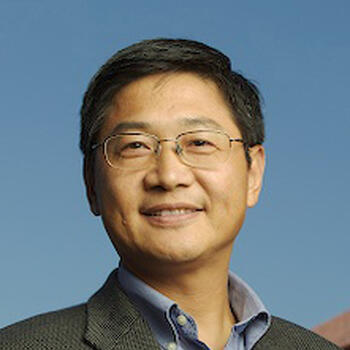
Xueguang Zhou, Kwoh-Ting Li Professor in Economic Development; Professor of Sociology, Stanford University

One of Zhou's current research projects is a study of the rise of the bureaucratic state in China. He works with students and colleagues to conduct participatory observations of government behaviors in the areas of environmental regulation enforcement, in policy implementation, in bureaucratic bargaining, and in incentive designs. He also studies patterns of career mobility and personnel flow among different government offices to understand intra-organizational relationships in the Chinese bureaucracy.

His recent publications examine the role of bureaucracy in public goods provision in rural China (Modern China, 2011); interactions among peasants, markets, and capital (China Quarterly, 2011); access to financial resources in Chinese enterprises (Chinese Sociological Review, 2011, with Lulu Li); multiple logics in village elections (Social Sciences in China, 2010, with Ai Yun); and collusion among local governments in policy implementation (Research in the Sociology of Organizations, 2011, with Ai Yun and Lian Hong; and Modern China, 2010).


About the Award:

The Shorenstein Journalism Award, which carries a cash prize of $10,000, honors a journalist not only for a distinguished body of work, but also for the particular way that work has helped American readers to understand the complexities of Asia. The award, established in 2002, was named after Walter H. Shorenstein, the philanthropist, activist, and businessman who endowed two institutions that are focused respectively on Asia and on the press: the Walter H. Shorenstein Asia-Pacific Research Center (Shorenstein APARC) in the Freeman Spogli Institute at Stanford University, and the Joan Shorenstein Center on the Press, Politics, and Public Policy in the Kennedy School of Government at Harvard University.

In 2011, Shorenstein APARC re-envisioned the award in recognition of the fact that Asia has served as a crucible for the role of the press in democratization in places such as South Korea, Taiwan, India, Pakistan, and Indonesia. It has also figured greatly in the emergence of social media and citizen journalism. New tests of the role of the media are emerging in China, Vietnam, and other authoritarian societies in Asia. Will the Internet be a catalyst for change, or can it also be a carrier of new forms of cyber nationalism and an instrument of authoritarian control? How are Asia’s journalists responding to that challenge?


Panel Discussions
Authors
News Type
News
Date
Paragraphs

Whether it’s WikiLeaks and CIA documents or nuclear thieves, the danger from insiders in high-security organizations is escalating in our Internet age.

But many threats from within go unrecognized or misunderstood, according to Stanford professor Scott Sagan, who co-edited a new book Insider Threats with Matthew Bunn, a professor of practice at Harvard University. Their work analyzes the challenges that high-security organizations face in protecting themselves from employees who might betray them. Sagan, a core faculty member in Stanford's Center for International Security and Cooperation, and Bunn recently participated in an online discussion of the book’s key arguments. They will hold a talk and book signing at 3:30 p.m. on May 16 in the CISAC Central Conference Room.

Sagan and Bunn wrote, “Perhaps the most striking lesson we learned in working with scholars and officials who have dealt with this problem was the sheer scale of the red flags – from explicit statements of support for Osama bin Laden to behavior leading other staff to fear for their lives – that organizations are able to ignore.”

They found that organizations tend to have biases that cause them to downplay insider threats. In particular, organizations with high-security needs face significant risks from trusted employees with access to sensitive information, facilities, and materials. 

The researchers highlight "worst practices" from these past mistakes, suggesting lessons and insights that could improve the security situations at many workplaces. Amy Zegart, co-director of CISAC, has a chapter in Insider Threats that provides a detailed account of the organizational dysfunction that allowed Nidal Hasan to carry out his massacre at Fort Hood.

Other chapters include the following topics and authors:

  • An analysis of the similar problems that led Bruce Ivins, who probably carried out the anthrax attacks in 2001, to continue to have access to deadly pathogens (by Jessica Stern, then of Harvard and now at Boston University, and Ron Schouten, of Massachusetts General Hospital and Harvard Medical School);
  • An analysis of the rapid rise and subsequent fall of “green-on-blue” attacks in Afghanistan – that is, Afghan soldiers and police officers attacking Americans there to help them (by Austin Long of Columbia University); and 
  • An assessment of how casinos and pharmaceutical plants, with a profit incentive to protect against insiders, cope with the problem (by Bunn and Kathryn Glynn, then of IBM Global Business Services and now at the National Nuclear Security Administration). 

Another chapter examines the potential terrorist use of nuclear insiders, offering new data that shows that jihadist writings and postings contain only a modest emphasis on possible nuclear plots, and essentially no mention of the possibility of using nuclear insiders. However, the authors warn this is no reason for complacency – insiders have been largely responsible for past nuclear theft incidents.

MEDIA CONTACTS

Scott Sagan, Center for International Security and Cooperation: (650) 725-2715, ssagan@stanford.edu

Clifton B. Parker, Center for International Security and Cooperation: (650) 725-6488, cbparker@stanford.edu


Hero Image
gettyimages 540849924
CISAC's Scott Sagan writes in a new book that organizations tend to ignore the many red flags typically associated with insider threats. | xijian/Getty Images
All News button
1
-

The venue of this event has been moved to the Okimoto Conference room.

Dr. Ruger, a leading scholar of global and domestic health policy and public health, will speak about global and national health inequities, drawing from her research in Asia --including India, Indonesia, Malaysia, South Korea, Vietnam -- and Africa. With training in political economy, health policy, international relations, comparative social research and law, Dr. Ruger crosses disciplines to reexamine the principles and values that underlie health policy and public health and apply these principles empirically.  She created the health capability paradigm, challenging existing approaches and illuminating optimal health policies and she has developed an empirical approach to evaluate public health programs and health policies as they measure up to that paradigm.  Dr. Ruger’s scholarship has critically scrutinized the existing global health architecture in order to identify more effective global health policy responses linking public policy and law to global health theory at the global and national levels.  Dr. Ruger studies critical health policy and public health problems such as the equity and efficiency of health system access, financing, resource allocation, policy reform and the social determinants of health.  Her forthcoming book, Global Health Justice and Governance (OUP, in press), advances a theory of global health justice and governance called provincial globalism.

Image
jennifer prah ruger
Dr. Ruger received a bachelor’s degree in the honors program in political economy from the University of California-Berkeley, master’s degrees from Oxford University, the Fletcher School of Law and Diplomacy and Yale University, a doctoral degree from Harvard University, and completed a post-doctoral fellowship at Harvard's Center for Population and Development. Dr. Ruger has authored over 100 publications and is internationally recognized for her leadership and work, which has been cited by the United Nations, World Bank, World Health Organization and United States Government.  She has been Principal Investigator and Co-Investigator on awards from the National Institutes of Health, Fogarty International Center, Hewlett Foundation, Henry J. Kaiser Family Foundation and she was awarded a Guggenheim Fellowship to complete Global Health Justice and Governance (OUP, in press).

Other papers:

1. Coping with Health Care Expenses Among Poor Households: Evidence from a Rural Commune in Vietnam: https://papers.ssrn.com/sol3/papers.cfm?abstract_id=1435832

2. Impact of Health Insurance on Health Care Treatment and Cost in Vietnam: A Health Capability Approach to Financial Protection: https://papers.ssrn.com/sol3/papers.cfm?abstract_id=1515733

3. Effect of Health Expenses on Household Capabilities and Resource Allocation in a Rural Commune in Vietnam: https://papers.ssrn.com/sol3/papers.cfm?abstract_id=1435820

4. The Changing Donor Landscape in Health Sector Aid to Vietnam: A Qualitative Case Study: http://www.sciencedirect.com/science/article/pii/S0277953615001719

5. An Alternative Framework for Analyzing Financial Protection in Health: https://papers.ssrn.com/sol3/papers.cfm?abstract_id=2139693

Jennifer Prah Ruger Amartya Sen Professor of Health Equity, Economics, and Policy, School of Social Policy and Practice, University of Pennsylvania
Seminars
-

This workshop is part of the Economic History Workshop series in the Department of Economics and is co-sponsored by The Europe Center.

351 Landau Economics Building
579 Serra Mall
Stanford, CA 94305-6072

Peter Temin MIT
Workshops
News Type
News
Date
Paragraphs
Lt. Col. Patrick Winstead, who is serving as the 2016-17 senior military fellow at the Shorenstein Asia-Pacific Research Center (APARC), will assume the position of vice wing commander of the U.S. Air Force’s 437th Airlift Wing, following completion of his fellowship at Stanford.
 
Based in Charleston, South Carolina, the 437th Airlift Wing flies and maintains one of the largest fleets of C-17A Globemaster III aircraft in the Air Force. The wing has 3,400 military and civilian personnel who work to support the Department of Defense’s worldwide airlift, tactical airdrop and aeromedical evacuation support missions.
 
“Patrick's selection as vice wing commander of the 437th Airlift Wing says volumes about his demonstrated leadership skills and potential,” said Oksenberg-Rohlen Fellow and U.S.-Asia Security Initiative Director Karl Eikenberry. “He's been an outstanding member of the Shorenstein Asia-Pacific Research Center over this past year and we wish him the very best at his next post.”
 
“This new assignment is an amazing opportunity to serve my country and serve the men and women of the 437th Airlift Wing while carrying out the nation’s call around the world,” said Winstead. “God blessed my family and I in coming to Stanford this year and we are blessed again to join the team in Charleston this summer.”
 
At Stanford, Winstead has been researching the strategic implications of unmanned systems operations in the Indo-Asia-Pacific region, as well as escalation control in a multi-lateral, multi-alliance security environment.
 
Prior to his fellowship at Shorenstein APARC, Winstead served in leadership roles on the staff of the U.S. Pacific Command Operations Directorate in Hawaii, and spent nearly a decade of his Air Force career stationed in the Asia-Pacific region.
Hero Image
winstead patrick
Rod Searcey
All News button
1
News Type
News
Date
Paragraphs
Admiral Harry B. Harris, Jr., commander of U.S. Pacific Command (USPACOM), visited the Shorenstein Asia-Pacific Research Center last Friday. Throughout the day, he met with faculty, fellows and students and delivered a keynote speech to the broader Stanford community.
 
In his remarks titled Deterring Revisionist Powers, Harris described how the Indo-Asia-Pacific region fits in the context of the “global operating system,” a term used to illustrate the norms and standards that have defined the international system since the end of World War II. Harris also explained how USPACOM is ensuring continued international access to the shared domains of the Indo-Asia-Pacific, which include use of the air, sea and cyber domains.
 
Harris also led discussions on the strategic environment and security challenges that the United States faces. He engaged in an exchange with various audience members on current security dilemmas such as North Korea’s nuclear program, the South China Sea, and the state of U.S. alliances and partnerships in the Indo-Asia-Pacific region.
 
The Chatham House Rule applied to Harris’ public presentation, and his subsequent meetings were closed to the public and news media.
 
Harris was later featured at a meeting held at the Highly Immersive Classroom at the Graduate School of Business. Faculty and students at Stanford conversed by way of video teleconference with affiliates at Stanford Center at Peking University (SCPKU), Beijing. U.S.-Asia Security Initiative Director Karl Eikenberry and SCPKU Executive Director Josh Cheng moderated the dialogue.
 
Admiral Harris’ visit to Stanford was co-sponsored by Ambassador Eikenberry and Admiral Gary Roughead, Robert and Marion Oster Distinguished Military Fellow at the Hoover Institution.
Hero Image
2017march admharris visit online
Admiral Harry B. Harris, Jr., commander of U.S. Pacific Command, delivers remarks titled "Deterring Revisionist Powers" at the Bechtel Conference Center, March 3, 2017. | Debbie Warren
All News button
1
-

Abstract:

This paper provides an account of the strategies of extortion and co-optation used by drug trafficking organizations (DTOs) toward civil society in Mexico. Our theoretical approach focuses on levels of territorial contestation among armed actors, as well as state capture by DTOs, to explain variation in co-opting or coercing civil society. Through the use of list experiments in a nationally representative survey, the paper measures extortion and assistance by DTOs in Mexico. We find that territorial contestation among rival DTOs increases predation on civil society while reducing DTOs assistance, which is found to occur in uncontested municipalities. Additionally, we find that extortion is higher in municipalities where DTOs have captured the state. These results suggest that territorial contestation and state capture are important in determining the strategy toward civil society during drug wars.


Speaker Bio:

Image
gustavo
Gustavo Robles is a Research Scholar for the Program on Poverty and Governance (POVGOV) at CDDRL. He finished his PhD in Political Science at Stanford University in 2017 with specialization in Political Methodology and Comparative Politics. His PhD dissertation focused on the dynamics and consequences of drug-related violence in Mexico. His research interests include the economics of crime and violence in Latin America, political economy of development, and legislative studies. He is involved in POVGOV’s projects on police accountability and use of force, crime and security, and violence prevention in Brazil and Mexico. He holds a M.A. in Economics from Stanford University and a BA in Economics and Political Science from ITAM.

Research Scholar for the Program on Poverty and Governance (POVGOV) at CDDRL
Seminars
Authors
News Type
News
Date
Paragraphs

Rodney Ewing was elected to the National Academy of Engineering this week.

Ewing, a senior fellow at the Center for International Security and Cooperation, was recognized for his research on “the long-term behavior of complex ceramic materials to assess their suitability for engineered nuclear waste sequestration.” He is a professor of geological sciences at Stanford.

Membership in the academy is one of the highest academic distinctions in the field of engineering. It honors outstanding contributions to “engineering research, practice or education, including, where appropriate, significant contributions to engineering literature” and “the pioneering of new and developing fields of technology, making major advancements in traditional fields of engineering or developing/implementing innovative approaches to engineering education," according to the NAE.

The academy also honored two other Stanford professors: Andrea Goldsmith, professor of engineering, and Leonidas Guibas, professor of computer science. The three Stanford scholars among 84 new members joining NAE this year. In total, the academy has 2,281 members including 249 foreign members. The newly elected class will be formally inducted during a ceremony at the academy's annual meeting in Washington, D.C., on Oct. 8, 2017. 

Click here to read a Stanford News Service story on the selections of Ewing and his colleagues to the National Academy of Engineering.

Hero Image
22150905629 b919a2123f k
Rod Searcey
All News button
1
-

Abstract:

The Allied occupation of Japan is remembered as the "good occupation." An American-led coalition successfully turned a militaristic enemy into a stable and democratic ally. Of course, the story was more complicated, but the occupation did forge one of the most enduring relationships in the postwar world. Recent events, from the occupations of Iraq and Afghanistan to protests over American bases in Japan to increasingly aggressive territorial disputes between Asian nations over islands in the Pacific, have brought attention back to the subject of the occupation of Japan. But where did occupation policy come from? This talk considers the role of presidents, bureaucrats, think tanks, the media, and Congress as part of an informal policy network created to manage the postwar world during World War II.


Speaker Bio:

Image
dbarnes1
Dr. Dayna Barnes is a specialist in 20th century international history, American foreign policy, and East Asia. She is a visiting scholar at Stanford University's Center on Democracy, Development and Rule of Law, and is an incoming assistant professor of history at City, University of London. Her book, Architects of Occupation: American Experts and the Planning for Postwar Japan, was published in Cornell University Press in March 2017.

Dana Barnes Visiting scholar at CDDRL
Seminars
Subscribe to Society