Society

FSI researchers work to understand continuity and change in societies as they confront their problems and opportunities. This includes the implications of migration and human trafficking. What happens to a society when young girls exit the sex trade? How do groups moving between locations impact societies, economies, self-identity and citizenship? What are the ethnic challenges faced by an increasingly diverse European Union? From a policy perspective, scholars also work to investigate the consequences of security-related measures for society and its values.

The Europe Center reflects much of FSI’s agenda of investigating societies, serving as a forum for experts to research the cultures, religions and people of Europe. The Center sponsors several seminars and lectures, as well as visiting scholars.

Societal research also addresses issues of demography and aging, such as the social and economic challenges of providing health care for an aging population. How do older adults make decisions, and what societal tools need to be in place to ensure the resulting decisions are well-informed? FSI regularly brings in international scholars to look at these issues. They discuss how adults care for their older parents in rural China as well as the economic aspects of aging populations in China and India.

Authors
News Type
News
Date
Paragraphs

At 90, William J. Perry has seen a lot in this world.

Maybe, in fact, too much. When it comes to nuclear warfare and annihilation, few people alive have contemplated such tragic outcomes quite like Perry, a senior fellow at the Center for International Security and Cooperation (CISAC), a former U.S. secretary of defense, and one of the world’s top nuclear weapons experts.

Perry, who becomes a nonagenarian on Oct. 11, has been called America’s “nuclear conscience.” He has sometimes referred to himself as a “prophet of doom,” and certainly not in a congratulatory sense, but more as a scientist on a mission. A brilliant mathematician who's worked with nearly every administration since Eisenhower, Perry's been up-close to nuclear weapons and near-miss crises for the last several decades.

Today, Perry is devoted to education on the subject of nuclear weapons – he understands exactly how much horror they would wreak on humanity and beyond.

And while no one would call Perry a crusader type (he is pragmatic, modest and private), there’s no doubt he’s on an energetic crusade for a nuclear-free world. Reaching young minds – those who will inherit the leadership of this world – is his calculus in the formula of world peace.

So, Perry reaches out in ways that resonant with youth. Last year created a series of virtual lectures, "Living at the Nuclear Brink," known as a MOOC, or massive open online course. His new online course, "The Threat of Nuclear Terrorism," launches Oct. 17.  

“Nuclear weapons may seem like 20th century history, but the choices we make about these weapons in the 21st century will decide your future in truly fundamental ways,” Perry wrote in the earlier course's introduction.

Conversations with conscience

An engineer and policy maker, Perry has academic affiliations that range widely across the Stanford campus. He is the Michael and Barbara Berberian Professor (emeritus), a senior fellow at the Freeman Spogli Institute for International Studies, and a senior fellow at the Hoover Institution. He's always in demand for a panel discussion or speaker event.

On Nov. 1, he's the featured subject of a CISAC event, "A Conversation with William J. Perry: Assessing Nuclear Risk in a New Era." That talk will include a Perry discussion with CISAC co-director Amy Zegart and another panel discussion, led by CISAC co-director Rod Ewing, with scholars Siegfried Hecker, David Holloway and Scott Sagan.

Perry's been known to participate in “Ask Me Anything” chats on Reddit, a place popular with youth. He connects with all types of audiences, conveying in direct encounters the exact nature of the nuclear dangers now facing civilization, and what can be done to reduce those dangers. This mission to educate led him to write a memoir, My Journey at the Nuclear Brink, all the while giving countless media interviews and delivering major speeches before major think tanks, nongovernmental organizations and policymakers.

One core Perry message is that U.S. foreign policies do not reflect the existing danger of nuclear threats -- the reason is that this risk isn’t widely recognized across society. And young people need to understand this dynamic that creates a distorted, too complacent view of a very real nuclear weapons problem throughout the world.

Perry, with the help of both his daughter, Robin Perry, his son, David Perry, granddaughter, Lisa Perry, and grandson Patrick Allen, established the William J. Perry Project, which informs the public about the role of nuclear weapons in today's world, while urging the elimination of these weapons.

It’s a family on a mission, and the Perrys believe the only way to avoid nuclear war is by directly contemplating the scenario in a personal, direct sense through learning and education.

"We're really just out there trying to reach a generation that isn't engaged on this issue right now," said Lisa Perry in an article on the Perry Project web site. She is the digital media manager for the project. "It's something we learned in history class. There was no conversation about what's happening now."

As her grandfather explained, "The dangers will never go away as long as we have nuclear weapons. But we should take every action to lower the dangers, and I think it can be done."

Early entrepreneurship days

Perry was born in Vandergrift, Pennsylvania, in 1927, the year that Charles Lindbergh completed the first solo flight across the Atlantic.

As a child, Perry fell in love with math. Math for him represented analytical discipline and the beauty of overcoming challenge. By solving math problems, one can master not only numerical problems, but other seemingly all-too difficult challenges. The key, as Perry discovered, was breaking down the larger problem into smaller parts. This evolved complexity into simplicity, which is more easily understood. Perry went on to cultivate this problem-solving mindset the rest of his life.
Image
13890188286 6fd142cd4b k
Perry saw the world as a young man – he left college at 18 to enlist in the U.S. Army, serving in the army of occupation of Japan. There he witnessed firsthand the devastating aftermath of the conventional and nuclear bombings in Japan. Those experiences in Japan shaped his perspectives forever on issues like arms control and national security.

After his military service, Perry received his B.S. (1949) and M.A. (1950) degrees from Stanford, and a Ph.D. in mathematics from Pennsylvania State University in 1957. He chose a career in defense electronics, and became one of the Silicon Valley’s early entrepreneurs, founding a company that pioneered digital technologies to analyze the Soviet nuclear missile arsenal. And so, he was often asked to counsel the federal government on national security.

In October 1962 during the Cuban missile crisis, Perry received an urgent request from the U.S. government to help analyze U-2 photos of the Soviet installation of nuclear-armed missiles in Cuba. Perry later recollected that he thought the world could end during that crisis, and that those days might well be his last.

From 1977 to 1981 during the Carter administration, Perry served as the Pentagon’s undersecretary of defense for research and engineering, where he oversaw weapon systems and research. After leaving the Pentagon in 1981 to work in the private sector, Perry became a Stanford engineering professor and a co-director of the Preventive Defense Project at Stanford's Center for International Security and Cooperation (CISAC).

He was the co-director of CISAC from 1988 to 1993. Today, he is the Michael and Barbara Berberian Professor emeritus at Stanford, with a joint appointment at the Freeman Spogli Institute for International Studies and the School of Engineering. He is also a senior fellow at the Hoover Institution.

In 1994, President Bill Clinton tapped Perry to become the 19th U.S. Secretary of Defense. However, it was not so easy for the White House to recruit him.

Perry treasured his privacy so much that he originally turned down the job of defense secretary. Only when Clinton and Al Gore assured him that his family’s privacy could be maintained, he finally accepted the offer. With the Cold War having ended a fear years earlier, he found it would become a historic time to serve as America’s defense secretary.

Years later he recalled standing with his Russian and Ukrainian counterparts as their teams destroyed missile silos in the former Soviet Union. By the end of the 1980s, Perry thought the world had survived the horrific prospect of nuclear annihilation – and that it was behind everyone, left in the ashes of the Cold War.

Not so fast. Welcome to 2017.

Beyond doomsday

Today, Perry believes, the world is arguably more dangerous than ever before. His view is supported by The Bulletin of Atomic Scientists, which announced in January 2017 that the Doomsday clock now stands at two-and-a-half minutes to midnight, suggesting that existential threats now pose a greater danger to humanity than they have at any time since the height of the Cold War.

In fact, in 2016, Perry warned that the Doomsday clock should stand at five minutes to midnight for nuclear war – but only one minute to midnight for the threat of nuclear terrorism. He said during that press conference that the clock now issued a “more dangerous, more ominous forecast than two thirds of the years during the Cold War.”

As a result, Perry’s profile has risen higher than ever as the world confronts increasingly unsettling nuclear threats like a war between the U.S. and North Korea, reckless nuclear rhetoric by state leaders, and the possibility that terrorists may use nukes.

On North Korea in particular, Perry has urged a return to deterrence on the part of the United States:

“The threat to use nuclear weapons has always been tied to deterrence or extended deterrence; historical U.S. policy is that the use of nuclear weapons would only be in response to the first use of nuclear weapons against the United States or an ally covered by our extended deterrence,” he said in a statement.

With North Korea, Perry notes that the U.S. should not make empty threats, because empty threats weaken America’s credibility and reduce the ability to actually take strong action. “As Theodore Roosevelt said, ‘Speak softly but carry a big stick,’” he said.

During the early Cold War, he said, when the Soviets used “shrill” language, U.S. presidents like Eisenhower merely responded in tempered, moderate tones. “Just as in those tense times, today’s crisis also calls for measured language,” Perry said.

On top of this, Perry said the U.S. and Russians seem to be “sleepwalking into this new nuclear arms race,” and that while a new Cold War and arms race may look different than the prior one in U.S.-Soviet history, they are both dangerous and “totally unnecessary.”

Whether on the North Korean peninsula or elsewhere, a miscalculation could be catastrophic, Perry warns. That’s one reason he joined other former "Cold Warriors" like George Schulz, Henry Kissinger and Sam Nunn to write an op-ed in the Wall Street Journal in 2007. They argued that the goal of U.S. nuclear policy should be not merely the reduction and control of atomic arms, but the ultimate elimination of all nuclear weapons everywhere.

What type of world does Perry dream about in his brightest visions? One without nuclear weapons. He believes collective humanity must “delegitimize” nuclear war as an acceptable risk of modern civilization. A safer world, one that requires great purpose, persistence, and patience to make a reality, is possible, if people understand the threats and take action to reduce them, Perry has said.

“This global threat requires unified global action,” Perry wrote in July 2017 in support of a new United Nations treaty banning the use of nuclear weapons.

Education and knowledge – that’s how Perry believes humanity can safely evolve past its nuclear phase.

MEDIA CONTACT:

Clifton B. Parker, Center for International Security and Cooperation: (650) 725-6488, cbparker@stanford.edu


Hero Image
9151555321 239e92093f k
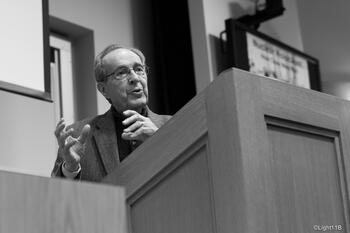
William J. Perry talks with Stanford students in 2013. Perry, who turns 90 on Oct. 11, has been called America’s “nuclear conscience." The Stanford professor emeritus has led a decades-long educational effort to teach people, especially the young, about nuclear dangers. | Courtesy of CISAC
All News button
1
News Type
News
Date
Paragraphs

On June 2, 2017, the 2017 U.S.-Japan Forum was held at Bechtel Conference Center at Stanford University.  The forum discussed three main topics: growth strategy; populism, globalization, and social equality; and technology innovation.

A summary report, full list of panelists, topics addressed and conference agenda can be viewed here.


Hero Image
cimg0294
All News button
1
Authors
News Type
News
Date
Paragraphs

Sunday’s referendum vote in Catalonia, a northeast region of Spain seeking independence, was marred with violence as police forces from the Spanish government, which deemed the referendum illegal, clashed with Catalonians attempting to vote.

From 2011 to 2016, Francois Diaz-Maurin, a visiting scholar at Stanford University’s Center for International Security and Cooperation, lived and studied in Barcelona, Catalonia’s largest city. He offers his perspective on the events that unfolded over the weekend, why the Spanish government reacted so severely and what effects Catalonia’s quest for independence may have on Europe.

What are Catalonia’s motivations for independence?

The Catalonian pro-independence movement has historic, cultural and economic roots. Historically, pro-independence Catalans want to recover their sovereignty that was lost during the War of the Spanish Succession, a major European conflict of the early 18th century.

Culturally, there is a popular slogan: “Catalonia is not Spain.” Catalonia really has a very different culture from Spain. It has its own language, celebrations, traditions and historic references – which were all prohibited under Francisco Franco’s dictatorship (1939-1975). After the Catalan self-determination referendum was shockingly repressed by the Spanish police, it seems that Catalonia and Spain do not even share the same definition of democracy.

The independence of Catalonia also has some pragmatic motivations. Catalonia, one of the wealthiest regions in Spain, wants to be able to take full control of its economy. Indeed, after almost a decade of political gridlock – Spain’s Prime Minister Mariano Rajoy still does not have a majority at the Parliament after two elections. With a wave of austerity measures and multiple cases of corruption affecting Spain’s ruling party, the right-wing Partido Popular, Catalonia is looking for a way out of the economic and political crises.

Why was the reaction from the Spanish government so severe?

Although the Catalan independence referendum was considered anticonstitutional under Spanish law, what happened was an absolute shock. It gives a very sad image of a so-called advanced democracy. We should have been counting the ballots, not the numbers of people having received urgent care at hospitals – about 1,000 people, according to the Catalan government.

Yet, what is behind the Spanish brutality is much more trivial than it appears. In a situation of stalled political process, Rajoy, who has long lost legitimacy in Catalonia where the Partido Popular is not well-represented, could risk his seat if Catalonia becomes an independent state. So, in my view, the harsh reaction of the Spanish government is at the crossroad between a long tradition of brutality and the fear of one to lose power.

Rajoy said that the rule of law was still reigning in Spain, which remained unified, and called for opening negotiations. But negotiating was never an option for the Spanish government, which refused to discuss the possibility of a referendum. That is no longer an option for the Catalan government after this violation of its sovereignty and fundamental rights of its people.

Despite all the troubles, yesterday’s Catalan referendum resulted in more than 2.2 million citizens – out of 5.3 million voters – voting at 90 percent in favor of the independence, although 770,000 ballots could not be counted due to the Spanish police operations, which seized and destroyed ballot boxes, according to news reports. Catalonia government’s President Carles Puigdemont said in a communiqué that an independent state in the form of a republic will be proclaimed after approval of the referendum’s results by the Catalonian Parliament.

What impacts could these events have on Europe in terms of other regions following Catalonia’s actions?

The situation of Catalonia has always been intertwined with the history of Europe, and there is no surprise that the current situation in Catalonia is getting much attention from outside of Spain. So, one can expect that the referendum in Catalonia will certainly reinforce the pro-independence movements in other regions of Europe, such as Scotland, Basque Country, Flanders, Belgium, and Veneto, Italy. Yet, the repression of the Spanish government also poses some dilemma.

The Catalan referendum has some deeper implications as far as the definition of democracy. The Catalans’ fundamental rights were violated by the same institutions that should be protecting their fellow citizens. Of course, this happens in numerous countries every day with some complacency. But those countries do not pretend to be the flagships of democracy. That makes a big difference.

What happened in Catalonia clearly does not show the best image of Europe as a unified community. Only very few state officials and foreign observers from Europe condemned the repression of the Spanish government, despite the fact that it clearly violated the European charter of fundamental rights. What we are seeing is clearly the end of the European model as we know it. In days like the one we just have witnessed we clearly see that democracy is much more fragile than it seems. What we take for granted such as the right to deliberate over a political project can encounter the brutality of dictatorial regimes.

Milenko Martinovich is the deputy director for social science communications in the Stanford News Service. He wrote this story for the Stanford News Service.

Francois Diaz-Maurin also wrote this story on Catalonia for the Freeman Spogli Institute's Medium site. 

Hero Image
catalonia 2 795x530
Catalan demonstrators participating at a rally for the independence of Catalonia in Barcelona on Sept. 11. | DinoGeromella/Getty Images
All News button
1
-

About the Speaker: Patrick McEwan is a Professor of Economics at Wellesley College. He conducts research on education and social policy in developing countries, especially in Latin America. He is especially interested in identifying the causal impact of policies on the schooling, health, and economic outcomes of children and their families. In past research, he has explored the impact of conditional cash transfers and rural school reform in Honduras, of youth orchestras in Venezuela, and of private school vouchers and free school meals in Chile.


Abstract: A Honduran field experiment allocated cash transfers that varied in their amount and timing. Voters were not indifferent to timing. Two groups of villages received similar cumulative payments per registered voter, but one received larger “catch-up” payments closer to election day. The latter treatment had larger effects on voter turnout and incumbent party vote share in the 2013 presidential elections. The results are consistent with lab experiments showing that individuals err in their retrospective evaluations of payment sequences. In Honduras, voters apparently used the amount of the final payment as an end heuristic for the sum of all payments received.

Philippines Room Encina Hall East, 3rd floor

 616 Serra St. Stanford, CA 94305

Patrick McEwan Professor of Economics Wellesley College
Seminars
-

Abstract:

The concept of identity is a modern one in which individuals and groups seek recognition of the dignity of a hidden inner self. The concept can be traced back to Luther, but takes its characteristically modern form in the thought of Kant and Rousseau. In the 19th century identity manifests itself as nationalism and in the 21st as Islamism, both of which are triggered by the modernization of agrarian societies and the identity confusion that process entails. In liberal societies identity takes an individualistic rather than a collective form, though the two forms begin eventually to converge in what we understand as contemporary identity politics. In today’s America, the Left has defined itself in terms of various identity groups, which has triggered a search for identity on the Right in the rise of Donald Trump. The demand for recognition of narrow group rights is dangerous for liberal societies, and needs to be replaced by more integrative forms of national identity.


Speaker Bio:

Image
bb fukuyama
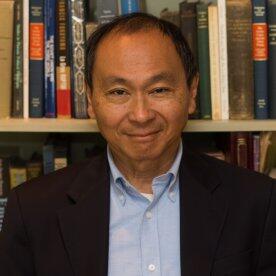
Francis Fukuyama is the Olivier Nomellini Senior Fellow at the Freeman Spogli Institute for International Studies (FSI) and the Mosbacher Director of FSI's Center on Democracy, Development, and the Rule of Law (CDDRL).  He is also a professor by courtesy in the Department of Political Science. He was previously at the Paul H. Nitze School of Advanced International Studies (SAIS) of Johns Hopkins University, where he was the Bernard L. Schwartz Professor of International Political Economy and director of SAIS' International Development program.


Encina Hall, C148
616 Jane Stanford Way
Stanford, CA 94305

0
Olivier Nomellini Senior Fellow at the Freeman Spogli Institute for International Studies
Director of the Ford Dorsey Master's in International Policy
Research Affiliate at The Europe Center
Professor by Courtesy, Department of Political Science
yff-2021-14290_6500x4500_square.jpg

Francis Fukuyama is the Olivier Nomellini Senior Fellow at Stanford University's Freeman Spogli Institute for International Studies (FSI), and a faculty member of FSI's Center on Democracy, Development and the Rule of Law (CDDRL). He is also Director of Stanford's Ford Dorsey Master's in International Policy, and a professor (by courtesy) of Political Science.

Dr. Fukuyama has written widely on issues in development and international politics. His 1992 book, The End of History and the Last Man, has appeared in over twenty foreign editions. His book In the Realm of the Last Man: A Memoir will be published in fall 2026.

Francis Fukuyama received his B.A. from Cornell University in classics, and his Ph.D. from Harvard in Political Science. He was a member of the Political Science Department of the RAND Corporation, and of the Policy Planning Staff of the US Department of State. From 1996-2000 he was Omer L. and Nancy Hirst Professor of Public Policy at the School of Public Policy at George Mason University, and from 2001-2010 he was Bernard L. Schwartz Professor of International Political Economy at the Paul H. Nitze School of Advanced International Studies, Johns Hopkins University. He served as a member of the President’s Council on Bioethics from 2001-2004. He is editor-in-chief of American Purpose, an online journal.

Dr. Fukuyama holds honorary doctorates from Connecticut College, Doane College, Doshisha University (Japan), Kansai University (Japan), Aarhus University (Denmark), the Pardee Rand Graduate School, and Adam Mickiewicz University (Poland). He is a non-resident fellow at the Carnegie Endowment for International Peace. He is a member of the Board of Trustees of the Rand Corporation, the Board of Trustees of Freedom House, and the Board of the Volcker Alliance. He is a fellow of the National Academy for Public Administration, a member of the American Political Science Association, and of the Council on Foreign Relations. He is married to Laura Holmgren and has three children.

(October 2025)

CV
Date Label
The Mosbacher Director of FSI's Center on Democracy, Development, and the Rule of Law (CDDRL).
Seminars
-

Co-sponsored by the Center for East Asian Studies and the Asia Health Policy Program

With rapid economic development, changes in lifestyle, epidemiologic transition and the ageing of the population, China’s primary health challenge has become Non-Communicable Diseases (NCDs). Zhejiang province—one of the wealthiest and longest-lived—illustrates how China is responding to this challenge. In Zhejiang, NCDs account for 85% of deaths; the prevalence of hypertension and diabetes are 26.7 % and 7.4%, respectively; and the age of onset of diabetes is getting progressively younger. This seminar will focus on two inter-related strategies: strengthening primary care management of chronic disease, and leveraging newly created regional “big data” platforms to improve policy. Drawing on collaborative research with Stanford’s Asia Health Policy Program, Dr. Zhong will discuss management of hypertension and diabetes patients in community health centers, as well as how Ningbo City of Zhejiang exemplifies the experience of many local governments (municipalities or counties) in building their own regional health information platforms. By gradually collecting all administrative data and other health-related information for their residents from birth to death, including medical claims, vaccination records, lifestyle behaviors, environmental and meteorological factors, and so on, more and more local policymakers seek to analyze big data to explore potential risk factors, pilot targeted interventions, and support evidence-based health policies.

Image
zhong jieming
Zhong, Jieming graduated from the school of public health of Zhejiang University and received his master's degree in public health (MPH) from the Chinese Center for Disease Control and Prevention. He is the director of the Department of Non-communicable Disease (NCD) Control and Prevention in the Zhejiang CDC. He served as deputy director of the Department of Tuberculosis Control and Prevention in Zhejiang CDC during 2008-2014. He is a member of the Zhejiang Preventive Medicine Association and has engaged in and chaired several international cooperation and local research projects. He has in-depth research on NCDs and TB control and prevention, and has published over 30 scientific papers in related fields.

Zhong Jieming Director of the Department of NCD Control and Prevention, Zhejiang CDC, China.
Seminars
-

Abstract: This presentation will review research from two papers about Bitcoin.  The first paper uses data from the MIT digital currency experiment to shed light on consumer behavior regarding commercial, public and government surveillance. We find that the effect of small incentives may explain the privacy paradox, where people say they care about privacy but are willing to relinquish private data quite easily.  The second paper analyzes empirical evidence about the adoption and usage of Bitcoin, as well as forces that underly Bitcoin pricing.

Speaker Bio: Susan Athey is The Economics of Technology Professor at Stanford Graduate School of Business. She received her bachelor's degree from Duke University and her Ph.D. from Stanford, and she holds an honorary doctorate from Duke University. She previously taught at the economics departments at MIT, Stanford and Harvard.  In 2007, Professor Athey received the John Bates Clark Medal, awarded by the American Economic Association to “that American economist under the age of forty who is adjudged to have made the most significant contribution to economic thought and knowledge.” She was elected to the National Academy of Science in 2012 and to the American Academy of Arts and Sciences in 2008.  Professor Athey’s research focuses on the economics of the internet, online advertising, the news media, marketplace design, virtual currencies and the intersection of computer science, machine learning and economics. She advises governments and businesses on marketplace design and platform economics, notably serving since 2007 as a long-term consultant to Microsoft Corporation in a variety of roles, including consulting chief economist.  

Susan Athey Graduate School of Business, Stanford Institute for Economic Policy Research
Seminars
-

Abstract:

Since 2013, my collaborators and I have conducted research on how rumors and misinformation spread through social media during crisis events. Recently, our work has revealed how a subsection of the alternative media ecosystem facilitates the spread of disinformation—in the form of conspiracy theories or “alternative narratives” about man-made crisis events. This disinformation is often employed as part of a political agenda and poses new information security risks. In this talk, I’ll present highlights from our research on alternative narratives, describing some of the specific tactics being used to spread disinformation. I’ll also share some preliminary findings on more recent work examining the structure and dynamics of the media ecosystem that has taken shape around the ongoing crisis in Syria. Finally, I’ll discuss some of the broader implications of online disinformation for emergency and humanitarian responders as well as society at large.


Speaker Bio:

Image
kate starbird
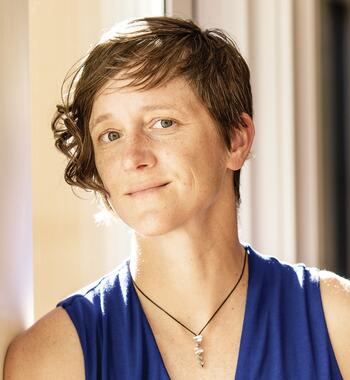
Kate Starbird is an Assistant Professor at the Department of Human Centered Design & Engineering (HCDE) at the University of Washington (UW). Kate's research is situated within human-computer interaction (HCI) and the emerging field of crisis informatics—the study of the how information-communication technologies (ICTs) are used during crisis events. One aspect of her research focuses on how online rumors spread—and how online rumors are corrected—during natural disasters and man-made crisis events. More recently, she has begun exploring the propagation of disinformation and political propaganda through online spaces. Kate earned her PhD from the University of Colorado at Boulder in Technology, Media and Society and holds a BS in Computer Science from Stanford University.

William J. Perry Conference Room,  Encina Hall, 2nd Floor, 616 Serra St, Stanford, CA 94305

Kate Starbird Assistant Professor at the Department of Human Centered Design & Engineering (HCDE) at the University of Washington
Seminars
News Type
News
Date
Paragraphs

CISAC senior research scholar Herb Lin writes in this Washington Post op-ed about the Equifax hacking and how to prevent such future incidents. He urges Congress "to go beyond proposed legislation on free freezing of credit reports to require that individual reports be frozen by default, 'thaw-able' only with the individual’s consent."

Hero Image
gettyimages 532029221
Getty Images/Colin Anderson
All News button
1
News Type
News
Date
Paragraphs

In Superficial Korea, a book recently published in South Korea, Shorenstein APARC director Gi-Wook Shin shares his observations on and provides recommendations for social maladies currently affecting Korean society. Shin sees a problematic level of superficiality in a number of aspects of today's Korea: its interpersonal relations, policies and social systems, and rules and regulations. After explaining his diagnosis in the first part of the book, Shin goes on to offer a prescription in the form of lessons that can be learned from Silicon Valley’s culture. The final section of the book touches on issues in which he specializes as an academic—and which have been of the utmost interest to Koreans in recent days—that is, South Korea’s relations with North Korea and other players on the global stage.

Superficial Korea is in Korean; interviews with Dr. Shin and reviews of the book can be found below:

Stanford Daily (interview, in English)

Korea Herald (Op-Ed, in English)

Korea Daily (interview, in Korean)

Sisa Journal (interview, in Korean)

Munwha Ilbo (interview, in Korean)

Yonhap News (book review, in Korean)

Munwha Ilbo (book review, in Korean)

Kyunghyang Shinmun (book review, in Korean)


All News button
1
Subscribe to Society