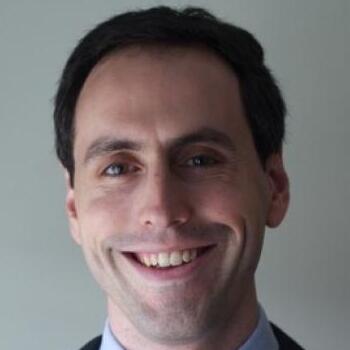
Health economics expert Laurence C. Baker has been appointed chair of the Department of Health Research and Policy (HRP) in the Stanford School of Medicine. He said he intends to encourage students and faculty within the department to expand the use of emerging data and analytic tools in their health-care research and policy recommendations.
Baker, a professor of health research and policy and a core faculty member at the Center for Health Policy/Center for Primary Care and Outcomes Research, succeeds Philip W. Lavori, who becomes vice chair of the newly established Department of Biomedical Data Science.
“Laurence is a natural and excellent choice for the HRP chair position,” said Stanford Dean of Medicine Lloyd Minor. “Well-respected, trusted, and admired by his peers, Laurence has been chief of Health Services Research within HRP since 2001, during which time the division has grown in strength and reputation.”
Minor called Baker one of the top health economic experts in the world with a strong policy focus, saying he would “bring the unique perspective, energy, and thoughtful guidance needed during this time of change for the department.”
The Health Research and Policy department houses the divisions of Health Services Research and Epidemiology, and provides the analytical foundation for research conducted at the Stanford School of Medicine, offering expertise, research and training on collecting and interpreting the scientific evidence essential to improving human health.
“It’s an exciting time for health policy and the Division of Health Services Research,” Baker said. “The country is facing important challenges in our health-care system, and countries around the globe are looking for insights and new ideas that can improve health care. So there are real opportunities for Stanford to be a leader and make a difference.”
Baker, who is also a research associate at the National Bureau of Economic Research, said that in his new role he intends to strengthen the epidemiology and the health services research groups at HRP. He will build on Lavori’s efforts to recruit diverse junior and senior faculty, train and retain graduate students and post-MD physician scientists, and make significant contributions to the Stanford Cancer Institute and Population Health Sciences.
“I’ve learned a lot from Phil and have really appreciated his steady and thoughtful leadership of HRP, as well as his insightful approaches to seeking excellence at a time of great change," Baker said. “We already have a strong history of making important contributions, and I think we are in an excellent position to make the most of new opportunities — like bigger and better emerging data and analytic tools and new settings for research — to do outstanding work.”
Image
Baker said that the department successes have also included growing its faculty, establishing new PhD programs and working on interdisciplinary research projects at the School of Medicine and in collaborations with CHP/PCOR.
“I want to continue looking for opportunities to grow and strengthen the research and education that we offer, in the hope that we can strengthen the overall contribution to national and international health policy that Stanford can make,” he said.
Baker’s research examines the impact of financial incentives, regulations and organizational structures in health care. He also looks at the impact of managed care and related insurance arrangements on health care costs, the pricing of physician services, prices for health insurance and the availability and utilization of medical technologies.
Baker completed his doctoral degree in Economics at Princeton in 1994, and joined the faculty at Stanford in HRP soon after. His research focuses on the way that changes in health-care delivery systems influence the cost and quality of care, with a particular interest in the growth of large, multi-specialty, and hospital-affiliated medical practices.
In addition to his position in HRP, Baker is a professor of economics (by courtesy) at Stanford, a fellow of the Center for Health Policy, and a senior fellow of the Stanford Institute for Economic Policy Research.
He also leads the School of Medicine’s Scholarly Concentration and Medical Scholars programs. Baker has received multiple honors and awards, including the ASHE medal from the American Society of Health Economists, and has helped lead key professional groups, serving on the boards of directors of the International Health Economics Association, AcademyHealth, and the American Society of Health Economists.
“There is growing recognition of the need for well-crafted health policies that can help us deliver quality care and real value,” Baker said. “More and more people are on the lookout for ways to improve population health in the United States and around the world, so I think we’re going to see more interest in the kind of work we do.”
The three women who are the first doctoral candidates in the School of Medicine’s new PhD in Health Policy program have one guiding belief: economics, decision science and data are now key to improving health care.
Stanford Health Policy, through the Department of Health Research and Policy at the School of Medicine, launched the PhD program to educate the next generation of scholarly leaders in the field of health policy.
And the first crop of candidates is taking their backgrounds in science and economics to pursue health policy careers based on medical information technology, data and analytics.
“We live in an era where information in health care is more rapidly and readily available than ever before,” said Catherine Lei, who will focus on the industrial organization of health care, the effects of insurance costs and the impact of regulation on health insurance markets.
Image
“The burgeoning ‘big data’ revolution is beginning to collectively help researchers tackle long-standing issues of health care spread and quality, determinants of health, and how policies could best improve health,” said the recent Princeton University graduate who majored in economics and finance.
“Whether it be the digitization of medical records, the aggregation of pharmaceutical companies’ research into electronic databases, or the increased transparency of the health-care sector as a whole — stakeholders from every corner of the industry recognize that this is a critical turning point in health care,” said Lei.
Kyu Eun Lee, who worked as a research assistant at the Harvard Center for Health Decision Science before joining Stanford, intends to develop mathematical models for health interventions in Asia and other parts of the developing world.
“I am seeking advanced training in quantitative methodology and the application of those skills to support decision-making in a global health context,” said Lee, who graduated from Pohang University of Science and Technology in South Korea and then got her master’s of science at the University of Minnesota.
“I am particularly interested in model-based, cost-effectiveness analysis of cancer interventions in South or Southeast Asia, where the risks of communicable and noncommunicable diseases compete under limited resources,” she said.
The new program offers coursework in two tracks: Health Economics, including the economic behavior of individuals, providers, insurers and governments and how their actions affect health and medical care; and Decision Sciences, which uses quantitative techniques to assess the effectiveness and value of medical treatments.
“The new PhD program really developed because of our aim to offer premier educational programs that will train the next generation of health policy leaders,” said Laurence Baker, professor of Health Research and Policy and chief of Health Services Research in the department of Health Research and Policy.
“One of the real strengths of the program is its context at Stanford, with a rich set of opportunities for health policy students to interact with the clinicians and scientists from around the school of medicine and the university,” said Baker, who is also an affiliated faculty member at the Center for Health Policy/Center for Primary Care and Outcomes Research (CHP/PCOR).
Yiqun Chen, who will focus on the supply and demand of health care both in the United States and China, said her double major in economics and medicine at Peking University made her aware of the integral role that economics plays in providing an analytic framework for studying the meaty issues in health care today.Chen, who went on to get her master’s in economics at Duke University, has published several papers and intends to investigate whether Medicaid payment increases to nursing homes result in cost offsets.
“The utilization of hospital services is high among nursing home residents; yet a large proportion of stays are documented to be avoidable through provision of better quality of nursing home care,” Chen said.
Image
She will also research the recent consolidation of health insurers and of health care providers and how that is impacting the consumer.
“As a result of such consolidation, not only is there a potential loss of consumer choice, but it gives the pricing power to insurers and health-care service suppliers,” Chen said. And those who argue health-care and insurance consolidation results in greater efficiencies have yet to document these gains or losses — something she intends to do.
Faculty belonging to the health policy centers will advise the PhD candidates. The students will take courses in health economics, health insurance and government program operations, health financing, international health policy and economic development, as well as the cost-effectiveness analysis of new medical technologies.
Coursework in the new program will also cover relevant statistical and methodological approaches to public health concerns such as obesity and chronic disease.
"Our PhD students will learn from faculty across the University who bring perspectives from economics, medicine, law, decision science, business and other disciplines," said Michelle Mello, a professor of law and professor of health research and policy at the School of Medicine. "They will become truly cross-disciplinary thinkers and problem solvers."
MUMBAI, India – India’s colors, crowd and noises can overpower a newcomer. And the unfathomable wealth and crushing poverty that are both on display reinforce the sense that this is a country of extremes.
Four Stanford students embraced this savory sensory overload while navigating the labyrinthine Indian health-care system during seven weeks of research in the poor communities outside the financial capital, Mumbai, this summer.
“I think this experience has just hammered into me that it’s a very diverse country with a range of experiences,” said Lina Vadlamani, a Human Biology major just starting her senior year. “As one pharmaceutical owner said to us, ‘India might be poor — but the Indian people are not.’ There’s just so much going on here.”
One day they whizzed by bright Bollywood movie posters in belching auto-rickshaws and gaped up at Antilia, the 27-story mansion of a business tycoon considered the world’s most expensive home after Buckingham Palace.
The next, the students were talking to mothers of one Dalit community — members of the so-called “untouchable” Hindu caste — in the slums on the outskirts of Mumbai. They sat on the floor of a one-room community center taking notes as the women told them about their struggles to get access to medicine and doctors.
And yet another day, the students and their Indian colleagues and translators crouched in a small stucco pharmacy in the heat and humidity of the monsoon season while talking to a doctor about the procurement of traditional medicines.
The three Stanford seniors and one School of Medicine student were tracking access to health care, the quality of that care, and the way pharmaceutical networks impact medical practices in India. The Stanford India Health Policy Initiative fellows saw for themselves that the world’s largest democracy has become a microcosm of humanity’s bustling economic prosperity and yawning stretches of poverty.
“I think Mumbai is the place to see the extremes of inequality,” says Mark Walsh, an Economics major starting his senior year and a coterm who already has a Master’s in Public Policy with a focus on international development. “I’m just trying to think about how some of this great prosperity can be applied to the health problems that are affecting some of the most disadvantaged members of Indian society.”
Hadley Reid, another HumBio senior, and Pooja Makhijani, who just began her second year at the Stanford School of Medicine, are the other fellows. The students spent six days a week in the field for seven weeks and then would debrief one another every night back in their rooms on what they had learned that day.
“I’ve always thought I might be interested in doing international field work,” said Reid. “And I thought this fellowship would be a good way to experience that and see what’s really happening on the ground versus what you learn in the classroom.”
Navigating the three medical practices in India
Grant Miller, an associate professor of medicine and core faculty member at the Center for Health Policy/Center for Primary Care and Outcomes Research, directs the India Health Policy Initiative. The program, now in its third year, aims to work on the ground to identify obstacles to health-care delivery in the South Asian nation.
Miller gave the four fellows a mission: Spend your summer investigating the pharmaceutical networks that cater to the three main branches of Indian medicine:
The more mainstream Western practice of allopathy;
The traditional AYUSH system of medicine: ayurveda, yoga, unani, siddha and homeopathy.
And the large network of providers who have no formal medical training.
“The fellowship has two objectives,” said Miller, also a senior fellow at the Freeman Spogli Institute for International Studies. “One is to develop a nuanced, on-the-ground understanding of the practical realities that often cause otherwise promising health programs in India to fail. The other is to provide in-depth, non-clinical field experience to Stanford students interested in global health.”
Nomita Divi, program manager of the initiative, said the fellowship is designed to be demanding. During the preparatory spring quarter, the students brainstormed with a design-thinking expert about how to formulate their research and work toward specific goals. When the students return to Stanford later this month, they will focus on unpacking and analyzing the data and then writing a full report.
“Our aim is to expose students to the realities of field research in India and provide them sufficient time to grasp the realities on the ground, as well as provide them with the tools to assimilate their observations into a final report,” said Divi.
When they arrived in Mumbai in early July, the fellows went through a week of training with Veena Das, the renowned social anthropologist from Johns Hopkins University who is on the executive board of the New Delhi-based Institute of Socio-Economic Research on Development and Democracy (ISERDD). She taught the students how to conduct field research and compose discussion guides before they crossed the thresholds of more than 100 homes of patients and offices of physicians, pharmacists and drug wholesalers.
ISERDD is a nonprofit organization devoted to research on social and economic issues and is the leading partner of the Stanford initiative, providing decades of qualitative and quantitative data sets as well as field researchers who worked alongside the students all summer.
“Primary care in poor parts of India is centered around drugs,” Miller said. “This summer, our fellows focused on the relationship between pharmaceutical suppliers and health providers, many of whom work in the informal sector — that is, they lack formal clinical training of any kind.”
Only 1.3 percent of India’s GDP was devoted to public health in 2014, one of the lowest rates in the world, according to the World Bank. India still accounts for 21 percent of the world’s burden of disease, yet the amount of public funds India invests in health care is quite small compared to other emerging economies.
Most of the cost of health care falls to the patient in India, where 86 percent of the 1.2 billion people must pay for health care and medications on their own. While the private sector caters to Indians who can pay, the poor are left to rely on the often less-than-optimal public health care system and a network of family and friends.
Unproductive spending and corruption also cripple the system.
Image
In the Field
Jaya Jadhav, a young mother in the Dalit community, explained to the students that they rely on a government nurse who comes once a month to hand out paracetamol. They have no local doctor to treat the more serious cases of typhoid and malaria, so must travel to the next settlement to see a doctor.
The women also turn to poorly trained practitioners who purchase wholesale drugs from small manufacturers and dispense these cheaper, unlabeled and often diluted pills to their patients.
As the students interviewed the women, a dozen children sat on the floor eating government-donated puffed rice and boiled gram from tiffin pots; mothers nursed beneath their saris and politely answered questions. At the end, the women asked shyly if the Stanford students had any medications they could share.
The students explained they were not doctors, but hoped that learning about the women’s daily lives would help them with their findings.
“Well, if it will one day benefit the women in the area, then this exchange of ideas about health is a good thing,” says Jadhav.
But the students weren’t always so sure.
“One of the things that I’m struggling with is the frustration of being able to do so little for these people, who basically have nothing but are ready to give us all their time,” says Makhijani, an American whose parents are from Mumbai. “But I realize I have the potential to be able to do that in the future, so I’m considering coming back to work here one day.”
Hoping for Results
Vadlamani — one of the HumBio majors who this fall also begins the Department of Medicine’s new coterm Master’s Program in Community Health and Prevention Research — applied for the fellowship because of its emphasis on field work.
““It makes us feel like detectives in a way,” said Vadlamani, who was born in the southern India city of Hyderabad and moved to the States with her parents when she was an infant. “I hope we would leave this experience with a couple of concrete areas that need to be focused on that would, down the road, lead to a policy change.”
Reid also believes their summer-long research will yield results.
“I’m not saying we’re painting the broadest, most accurate picture of the situation in India,” she said. “I know we’re taking a very small sample outside of Mumbai. But the hope is our findings will decrease some of the obstacles to effective policymaking for the health care system in India one day.”
Some of the key trends the students observed include the murky government regulations on certain classes of drugs, and the lack of knowledge about the current restrictions of antibiotic and steroid use among AYUSH doctors.
And compounding communicable diseases, such as tuberculosis and HIV/AIDS, Indians are increasingly suffering from non-communicable diseases as well.
“That’s happening across the developing world, these chronic lifestyle diseases such as diabetes and hypertension,” said Walsh. “And these families aren’t used to having to deal with these kinds of chronic diseases.”
The rural poor cannot afford to see a primary care physician who would school them in lifestyle changes to fight a potentially deadly disease such as diabetes.
And those who can afford a doctor in rural India often can’t find one.
India currently has some 840,000 doctors, or about seven physicians for every 10,000 people, according to the World Health Organization. That compares with about 25 in the United States and 16 in India’s economic rival, China.
The doctors the students did meet were generally overworked and struggling to keep up with all their patients and the shifting laws and regulations. But the students were forced to let go of some of their preconceived notions.
“Although there’s definitely a lot of gaps in knowledge, I’ve been surprised at how much doctors do know and how well trained they are,” said Makhijani, who often visits family in Mumbai, but had never ventured out into the poorer communities where her grandfather once ran a government hospital.
“I’ve never had such personal interactions with people living in the slums, with the doctors who are working here,” she said. “It really turns your perspective around, how resilient and creative they are.”
An Honor and Duty
Dr. Masood Ahmed Khan, a physician and pharmacist, spent nearly two hours with the students, with no prior knowledge that they would show up at his door and pepper him with questions about how he runs his unani practice.
When asked why he would give so much of his time, he said it was his “honor and duty” to help the students better understand the ups and downs of his medical community in one of the poor Muslim corners of Mumbai.
Dr. Khan then bid farewell with a cup of masala chai and this advice as they embark on their careers: “Go with empathy, go with humanity — and go with humility.”
View the photo gallery by clicking here or on the arrows below:
Beth Duff-Brown is the communications manager for the Center for Health Policy/Center for Primary Care and Outcomes Research. She joined the students in Mumbai for a week to blog about their research. You can read the blog postings here.
Hero Image
A young boy in an impoverished Dalit community on the outskirts of Mumbai. | Beth Duff-Brown
Although the expansion of Medicaid under the Affordable Care Act has made millions of low-income and rural Americans eligible for health insurance, many states don’t provide dental coverage for adults under their Medicaid programs.
Paying for dental insurance on the individual market or paying for dental services out of pocket is cost-prohibitive for Medicaid beneficiaries, many of whom are at or beneath the federal poverty level.
So many have turned to emergency rooms for such care.
The researchers said Medicaid dental coverage could help reduce the need for many low-income Americans to visit emergency departments for dental conditions that may have otherwise been prevented with adequate access to basic dental care.
“It is likely that EDs will continue to provide care to individuals without adequate access to community-based dental care unless new dental service delivery models are developed to expand access in underserved areas, and unless more dental providers begin to accept Medicaid under the ACA,” the researchers wrote in their study, which was published today in Health Affairs.
Demographic change is fast becoming one of the most globally significant trends of the 21st century. Declining fertility rates and rising life expectancy -- two of the patterns triggering demographic change -- will cause vast socioeconomic strains, especially in the Asia-Pacific region, which has some of the world's most populous countries. Stanford health researcher Karen Eggleston says comparison and cross-collaboration are needed to induce creative solutions.
In an interview with the Office of International Affairs, Eggleston discusses her research approaches and partnerships in the study of healthcare systems and health policy in the Asia-Pacific region. She leads a multiyear research initative that examines comparative policy responses to demographic change in East Asia. Eggleston says the goal is to help move global health policy to a place where everyone has an "equal opportunity for a healthier and longer life."
Analyzing demographic change in China, Japan and South Korea is the focus of the book Aging Asia, an outcome of a conference between the Walter H. Shorenstein Asia-Pacific Research Center and the Stanford Center on Longevity.
Eggleston also coedited a special issue of the Journal of the Economics of Ageing with David Bloom, a professor at Harvard University, looking at a range of economic issues related to population change in China and India.
Hero Image
Karen Eggleston (left) confers with a healthcare worker at a primary care clinic in Hangzhou, China. | Robin Yao
“I am the first child of my parents. I have a small brother at home. If the first child were a son, my parents might be happy ... but I am a daughter. I complete all the household tasks, go to school, again do the household activities in the evening … my parents do not give value or recognition to me.”
Stanford Assistant Professor of Medicine Marcella Alsan often refers to this comment by a 15-year-old girl from Nepal when she talks about how the division of labor among men and women starts at a young age in the developing world.
“Anecdotally, girls must sacrifice their education to help out with domestic tasks, including taking care of children, a job that becomes more onerous if their younger siblings are ill,” said, Alsan, a core faculty member at the Center for Health Policy/Center for Primary Care and Outcomes Research (CHP/PCOR) within the Freeman Spogli Institute of International Studies, and the Department of Medicine.
More than 100 million girls worldwide fail to complete secondary school, despite research that shows a mother’s literacy is the most robust predictor of child survival. So Alsan is analyzing whether medical interventions in children under 5 tend to lead their older sisters back to school.
Her Stanford Department of Medicine colleague, Jason Andrews, is the other recipient of the $100,000 prize given to young Stanford researchers to investigate ways to improve access to health care in developing countries.
Andrews is looking at cheap, effective diagnostic tools for infectious diseases, while Alsan is researching how older girls in poorer countries are impacted by the health of their younger siblings.
“My proposed work lays the foundation for a more comprehensive understanding of how illness in households and early child health interventions impact a critical determinant of human development: an older girl’s education,” she said.
Image
Alsan, the only infectious-disease trained economist in the United States, said Stanford is the ideal place to carry out her interdisciplinary global health research.
“I am humbled and honored to receive this prize, since Dr. Rosenkranz has done so much for women’s health worldwide,” she said.
Alsan – an MD with a specialty in infectious disease who has a PhD in economics from Harvard – said she intends to estimate the impact that illnesses in under-5 children have on older girls’ schooling using econometric tools.
She will compile data from more than 100 Demographic and Health Surveys (DHS) covering nearly 4 million children living in low- and middle-income countries.
The surveys ask about episodes of diarrhea, pneumonia and fever in children under 5 and record data on literacy and school enrollment for every child in the household.
Alsan also intends to collaborate with partners in sub-Saharan Africa to study the gendered effect of household illness on time use, using culturally appropriate questionnaires.
Douglas K. Owens, a Stanford professor of medicine and director of CHP/PCOR, called Alsan’s work “groundbreaking.”
“Although training is critical, more importantly, her work to date shows a degree of innovation, creativity and rigor that led us to conclude she was likely to become one of the top investigators in her field worldwide,” he said.
Low-Cost Diagnostic Tools
Andrews, also an assistant professor of medicine, has been working on ways to bring low-cost diagnostic tools to impoverished communities that bear the brunt of disability and death from infectious disease.
“I began working in rural Nepal as an undergraduate student and as a medical student founded a nonprofit organization that provides free medical services in one of the most remote and impoverished parts of the country,” Andrews said. “As I became a primary physician, and then an infectious diseases specialist, one of the consistent and critical challenges I encountered in this setting was routine diagnosis of infectious disease.”
He said those routine diagnostics were typically hindered by lack of electricity, limited laboratory infrastructure and lack of trained lab personnel.
“In my experiences working throughout rural Nepal – and in India, South Africa, Brazil, Peru and Ethiopia – I found these challenges to be common across rural resource-limited settings,” said Andrews, who founded a nonprofit Nyaya Health – recently renamed Possible Health – which provides modern, low-cost healthcare to rural Nepal.
Andrews has been collaborating with engineers to develop an electricity-free, culture-based incubation and identification system for typhoid; low-cost portable microscopes to detect parasitic worm infections; and most recently an easy-to-use molecular diagnostic tool that does not require electricity.
“The motivation for these projects was not to develop fundamentally new diagnostic approaches, but rather to find simple, low-cost means to make established laboratory techniques affordable and accessible,” he said.
Image
The Rosenkranz Prize will allow him to continue to develop a simple, rapid, molecular diagnostic for cholera that is 10 times more sensitive than the tests that are currently available. The diagnostic tool uses paper for DNA extraction, in contrast to traditional approaches that rely on expensive instruments requiring electricity and maintenance.
“We then perform isothermal amplification heated by a reusable, solar-heated, phase-change material,” Andrews said, adding that the entire process is completed in less than 20 minutes and can be performed by anyone with minimal training.
Andrews will enroll 250 patients with suspected cases of cholera in Nepal, using the new diagnostic tools and adapting as many local supplies as possible.
Andrews also intends to establish and curate a website to gather open-source ideas and evidence on diagnostic techniques for use in the developing world.
“Stanford is one of the world’s greatest hubs for innovation and information sharing as pertains to science and technology and is an ideal home for this venture,” he said.
In the current scientific climate, most National Institutes of Health grants go to established researchers. The Rosenkranz Prize aims to stimulate the work of Stanford’s bright young stars – researchers who have the desire to improve health care in the developing world, but lack the resources.
The award’s namesake, George Rosenkranz, first synthesized cortisone in 1951, and later progestin, the active ingredient in oral birth control pills. He went on to establish the Mexican National Institute for Genomic Medicine, and his family created the Rosenkranz Prize in 2009.
The award embodies Dr. Rosenkranz’s belief that young scientists hold the curiosity and drive necessary to find alternative solutions to longstanding health-care dilemmas.
“As in past years, the competition was extremely tough,” said Grant Miller, a senior fellow at the Freeman Spogli Institute and associate professor of medicine who chaired the prize committee this year.
“It’s exciting to see all of the truly innovative global health research being done by junior scholars at Stanford,” he said. “Both Jason and Marcella really exemplify this – and the legacy of George Rosenkranz.”
Maria Polyakova, an assistant professor of health research and policy at the Stanford School of Medicine, is this year’s recipient of the Ernst-Meyer Prize, which recognizes original research about risk and health insurance economics.
Polyakova, who wrote her thesis, “Regulation of Public Health Insurance,” while working on her Ph.D. in economics at MIT, was given the award by The Geneva Association, an international insurance economics think tank based in Switzerland.
Image
Christophe Courbage, research director of the health and aging and insurance economics programs at the association, made the announcement Tuesday. He called Polyakova’s work “an important and insightful thesis on a set of first order – but understudied – issues in insurance: namely the regulation of privately provided social insurance.”
Courbage said the topic not only had considerable academic interest, but also was “an important public policy issue in both the United States and Europe.
“This work makes extremely useful insights about an important area of public policy that has yet to get the attention it needs: the interaction of regulation with important demand and supply-side features of private insurance markets.”
Polyakova said she was honored to receive the award and thanked her thesis committee for their “unbounded support” of her work.
“I am especially grateful to Amy Finkelstein for inspiring my interest in social insurance in general, and health insurance, in particular,” she said. “I hope to continue my work in this area."
A summary of Polyakova’s thesis will be published in the July 2015 issue of The Geneva Association’s Insurance Economics newsletter.
Stanford School of Medicine Dean Lloyd Minor told a distinguished group of visiting physicians, engineers, economists and businessmen from India that it was the perfect time to be collaborating with the world’s largest democracy.
As India’s economy heats up once again and biomedical research scales across the South Asian nation, Stanford intends to remain a key partner in this growth.
“India is on a journey to overcome its challenges,” Minor said. “Despite the substantial gaps in healthcare infrastructure and a shortfall of skilled healthcare workers, there’s enormous opportunity and enormously good work going on today – most of it being done by the people in this room.”
“I’m really eager to explore ways that we can deepen the collaboration and interactions between Stanford and India,” Minor said. “As I’m sure everyone here is aware, India is the world’s most populous democracy, one of the fastest growing major economies and a rising power with growing international influence – led by a prime minister who has great ambitions for the country.”
Prime Minister Narendra Modi has said his core mission is the revival of the Indian economy – once a powerhouse destined to rival that of China. Since taking office last year, when economic growth stood at 5 percent, the IMF forecasts India’s economy will grow to 7.5 percent by the end of this year.
Stanford has many partnerships with India, such as the Stanford-India Biodesign project to train the next generation of medical technology innovators in India. In 2007, Stanford joined with the nonprofit GVK Emergency Management Research Institute, based in Hyderabad, India, to train the country’s first corps of paramedics.
Minor noted that the Stanford-India Biodesign program has led to the founding of 37 biotech companies. “And the technologies that they have invented have been used in the care of over 300,000 patients – and that’s only the beginning,” he said.
Stanford physicians developed an educational curriculum and have trained thousands of paramedics and emergency instructors in India. EMRI says that since the training program began, more than 150,000 healthcare professions have been trained at its training center.
“These paramedics instructors have played a crucial role in the development of emergency medicine in India,” he said. “It’s been a true collaboration with a curriculum developed here in the U.S. and then standardized and implemented in a way that’s meaningful for people in India.”
“This year’s India Conference was new for SCID in that it was a cross-campus collaboration, partnering us with the business school and schools of medicine and engineering,” said Miller, also a core faculty member at CHP/PCOR.
“We feel that there is great potential for more campus-wide activity focused on India, enabling Stanford to develop new partnerships in India as well as across parts of our own university.”
Last year the SIHPI fellows spent the summer investigating the factors that motivate formal and informal healthcare providers. This summer, three Stanford undergrads and a medical student will do fieldwork on the outskirts of Mumbai for seven weeks to document the impact of existing pharmaceutical networks on formal and informal provider practices.
“Health improvement is of course a critical objective of broad-based social and economic development, and we are very excited to see Stanford’s potential to make interdisciplinary contributions to health improvement in India,” Miller said on the sidelines of the India conference.
The conference featured four panel sessions in which perspectives from economics, business, engineering and medical sectors were debated. Discussions focused on how best to combine these to ensure sustained high growth in the Indian economy.
Each session featured a distinguished panel of speakers, and was followed by a lengthy floor discussion. Among the speakers were Nandan Nilekani, the co-founder of Infosys, one of India’s most successful IT services companies; Stanford President John Hennessy; Montek Ahluwalia, former deputy chairman of India’s Planning Commission, and Mr. K. Ram Shriram, managing partner at the venture capital firm, Sherpalo Ventures.
Ashok Alexander, former founding country director of the Bill and Melinda Gates Foundation in India, said too many India observers tout the incredible growth of its economy and highly educated and skilled technology innovators. Yet they ignore the majority of the country’s 1.2 billion people still lack adequate public healthcare and that 70 percent of medical spending comes out of pocket.
Image
“We cannot ignite India nor can we sustain India unless we think about the ways to fix public health problems,” Alexander said. “The solution to most public health problems in India are absurdly simple; it’s all about scaling up of well-known solutions.”
Only 1.3 percent of India’s GDP was devoted to public health in 2014, according to the World Bank. That is one of the world’s lowest rates. The risk of dying during childbirth is one in 43, whereas the rate in developed countries is one in 4,000.
“While India is making such great strides in its energy and business sectors, how come there is no great debate on public health?” he asked.
Amit Sengupta, a senior biomedical consultant at Tata Memorial Center and adjunct professor at ITT/AIIMS in New Delhi, told the medical panel that modern medicine is still not the first preference in rural Indian and the urban slums.
“Health is not only a biomedical issue, but also sociocultural issue,” he said. “Fifty percent of the world’s tribal population lives in India; it’s a rich heritage but they eschew Western medicine.”
Sengupta said rural India is plagued by physical and psychological stress, alcoholism and domestic violence. Meanwhile, he said, the government continues to cut the healthcare budget – a cycle that always leads back to poverty.
And, he said, remember Gandhi’s memorable saying: “Poverty is the worst form of violence.”
Avik Roy is a Senior Fellow at the Manhattan Institute and the Opinion Editor at Forbes. His research interests include the Affordable Care Act, universal coverage, entitlement reform, international health systems, veterans' health care, and FDA policy. In 2012, Roy served as a health care policy adviser to Mitt Romney. He is the author of Transcending Obamacare: A Patient-Centered Plan for Near-Universal Coverage and Permanent Fiscal Solvency and How Medicaid Fails the Poor, published by Encounter Books in 2013.In addition, Roy writes regularly for National Review Online on politics and policy. He is a frequent guest on television news programs, including appearances on Fox News, Fox Business, NBC, MSNBC, CNBC, Bloomberg, PBS, CBS, and HBO. His work has also appeared in The Wall Street Journal, The Atlantic, USA Today, Health Affairs, and National Affairs, among other publications. Roy is a member of the Advisory Board of the National Institute for Health Care Management, and co-chairs the Fixing Vertans Health Care Policy Taskforce. At the Manhattan Institute, Roy is the founder of Roy Healthcare Research, an investment research firm in New York. Previously, he served as an analyst and portfolio manager at Bain Capital, J.P. Morgan, and other firms.
In this session of the Shorenstein APARC Corporate Affiliate Visiting Fellows Research Presentations, the following will be presented:
Yoshihiro Kaga, Ministry of Economy, Trade & Industry, Japan, "The Roles of University-Industry Collaboration for Promoting Innovation"
The existence of top class universities, especially those ties with industry, is regarded as one of the key characteristics of the Silicon Valley ecosystem, where the most successful innovation-based economic growth in the world is observed today. Kaga has conducted a literature review of previous research on this topic and research on Stanford organizations facilitating university-industry ties. Kaga will present his findings and share implications for policies in Japan. His research is in cooperation with Shingo Nakano.
Feng Lin, ACON Biotechnology, "Innovations in China Primary Healthcare Reform: Development and Characteristics of the Community Health Services in Hangzhou"
One of the five major tasks for China’s health reforms launched in 2009 was to promote the development of a primary healthcare system. Hangzhou is one of the cities with a long history in China for developing community health services. Lin has studied the model of community health services in Hangzhou, which is characterized as government-led, guaranteed with enough funding, personnel, space and regulation; supported by a unified information platform; and the assigned central role of general practitioners as health “gatekeepers”. His data collection and analysis have indicated that the basic health status of residents in Hangzhou is comparable to that in Western developed countries. Based on these findings, Lin proposes that the primary healthcare level in Hangzhou will be further developed and promoted with the indexed performance evaluations and more effective implementation of additional measures.
Shingo Nakano, Ministry of Economy, Trade & Industry, Japan, "Policy Implications for Increasing the Number of Start-ups in Japan"
As mentioned in “Japan Revitalization Strategy (Revised in 2014),” it is critical for Japan to develop an environment where venture businesses are launched one after another. The Japanese government has taken some measures to this end, but significant obstacles - such as institutional, human, financial, etc. - remain for venture businesses. Nakano's research looks at how to eliminate these obstacles, while focusing on increasing the number of start-ups in Japan. Based on his findings, Nakano will discuss some policy implications for improving the Japanese start-up ecosystem. His research was conducted in collaboration with Yoshihiro Kaga.
Philippines Conference Room
Encina Hall, 3rd Floor, Central
Yoshihiro Kaga
Ministry of Economy, Trade & Industry, Japan
Feng Lin
ACON Biotechnology
Shingo Nakano
Ministry of Economy, Trade & Industry, Japan