Human Rights
Authors
News Type
News
Date
Paragraphs

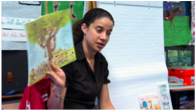
"The Stanford Report" covered the recently launched Stanford Human Rights Education Initiative, which brings human rights curriculum into the classrooms of California community colleges to transform students into globally-conscious citizens. Piloted in partnership with the Program on Human Rights, the Stanford Program on International and Cross-Cultural Education (SPICE), and the Division of International Comparative and Area Studies, the Initiative appoints human rights fellows to develop new curriculum for broader application in California and beyond.

Stanford helps bring human rights to community college classrooms

Globalization has meant that the whole world is connected to the whole world's problems. Yet most of today's students live in a world no bigger than a cell phone keypad.

So how do you explain to them that the clothes on their backs may be sewn by slave labor in Asia, or how international human trafficking may be behind an Internet porn site?

Tim Maxwell, an award-winning poet who teaches at the College of San Mateo, said the basic task of reading is becoming harder each year for the Facebook generation. "To bring unpleasant and challenging ideas into their world is really difficult," he said. He described "young people's increasing use of social media and other technologies that, rather [than] widening their worlds, effectively narrows them" to what is pleasurably entertaining.

The remedy? In an unusual move, Stanford is linking arms with educators in California community colleges for a four-year project called Stanford Human Rights Education Initiative.  Following a conference last June on "Teaching Human Rights in an International Context," which launched the project, Stanford has named eight new "Human Rights Fellows" from California's community colleges. Maxwell is one of them.

For more than 12.4 million young Americans, teaching takes place in one of the nearly 1,200 community colleges across the nation – and about a quarter of those community colleges are in California. But few major universities have engaged these institutions.

The new initiative will train students to be engaged as global citizens, said William Hanson, another fellow, who holds a law degree from Columbia and teaches at Chabot College. "We have to find a way to wriggle in."

With a stipend and "visiting scholar" status, the human rights fellows will work with the Stanford Program on International and Cross-Cultural Education (SPICE) and the Division of International Comparative and Area Studies (ICA) to develop human rights curricula, plan human rights conferences and develop the initiative's website. The human rights curriculum they design could, they hope, seed similar programs across the country and the world.

My hope is that human rights will form a central part of every college curriculum – not only as a topic, but as a lens through which to see all topics. Helen Stacy

"My hope is that human rights will form a central part of every college curriculum" – not only as a topic, but as a lens through which to see all topics, said Helen Stacy, director of the program on human rights at the Center on Democracy, Development and the Rule of Law at Stanford's Freeman Spogli Institute for International Studies.

She said that human rights is typically pigeonholed as a "soft subject" in the social sciences or humanities, but such funneling "misses engineering students and IT students and math students."

For example, she said, students of computer science or statistics could be engaged in mapping human trafficking or drug smuggling. Young economists could study the supply-and-demand dynamics of crime.

The effort "to speak a language that speaks to all of the disciplines" could result in a human rights curriculum that extends into the high school and even the elementary school level, Stacy said. Moreover, the planned website with an online curriculum could help educators the world over – even an isolated educator sitting in Uzbekistan, she said.

For the Stanford faculty and staff who created the course, the beginnings go back a long way and are the fruition of years of experience, research and thought.

Gary Mukai's experience of human rights violations was firsthand: the director of SPICE recalls a childhood as a farm worker whose Japanese-American parents, also farm workers, had been detained by their country during World War II. "I grew up puzzled about many of their stories, and their stories certainly influenced my interest in developing educational materials about civil and human rights for young students," he said.

For instance, he recalled uncles and other relatives who volunteered or were drafted by the U.S. Army from behind barbed wire. Or stories about his relatives who received posthumous medals for their sons' service while they still lived behind barbed wire.

Richard Roberts, a Stanford professor of history, remembered reading William Hinton's Fanshen: A Documentary of Revolution in a Chinese Village, years ago. The questions it raised fascinated him: "Who will teach the teacher? Where do we learn? Who do we learn from? Who has the power to teach?"

He said universities typically teach an "isolated, really small segment" of the general population. Roberts, who studies domestic violence and human trafficking in Africa, said that when it comes to human rights, "That's not enough. We have to go beyond the rarefied segment."

One of the people on this frontline of teaching is Enrique Luna, a history instructor at Gilroy's Gavilan College. For him, Stanford represents something of a return: his father had been a cook at the university's dorms. Now Luna is an educator who looks for opportunities for students to participate with direct aid in their local communities and also with groups such as the Zapatistas of Chiapas and the Tarahumara of northern Mexico.

To reach his students, he said, he creates loops "back and forth between reading and doing." When students are doing, they have a reason to read, and when they read, they are able to fix their understandings through application. "They do their best work when they're doing something. That's where the other disciplines pour in," he said.

A lunchtime session last summer was popping with ideas: Hanson was enthusiastic about possibly broadcasting Stanford lectures on human rights on his college's television station.

Another human rights fellow, Sadie Reynolds from Cabrillo College in Aptos, was just happy for the time to think and reflect. "It's hard to articulate hopes this early in the planning. I have a selfish hope of learning about this model so I can apply it in the classroom." She said she will present what she's learned at Stanford to a workshop at Cabrillo.

Those on the frontline of teaching don't get such opportunities very often:  "It's difficult to find time to develop this at community colleges," she said.

Hero Image
a shrei
All News button
1
-

Closing Guantanamo: Where has the debate gone?Please join the Program on Human Rights for a discussion with Shane Kadidal - Senior Managing Attorney with the Center for Constitutional Rights -on why the issue of closing the Guantanamo Bay Detention Center has all but disappeared as a matter of public discourse.

The Supreme Court’s Guantanamo detainee cases have attracted more attention than any other judicial decisions in the wake of 9/11, and the opinions are frequently required reading in law schools. Yet more than seven years after the decision in Rasul v. Bush and three years after the decision in Boumediene v. Bush, not a single detainee has been released by court order, the litigation has ground to a halt in the district courts, and the prison remains open despite the promises of both presidential candidates in the last election to close it. This talk will explore the reasons why, with particular emphasis on the manner in which the D.C. Circuit has managed, with some subtlety, to pull all the teeth from the Boumediene decision.
 
Shayana Kadidal is senior managing attorney of the Guantánamo Global Justice Initiative at the Center for Constitutional Rights in New York City. He is a graduate of the Yale Law School and a former law clerk to Judge Kermit Lipez of the United States Court of Appeals for the First Circuit. In his ten years at the Center, he has worked on a number of significant cases in the wake of 9/11, including the Center's challenges to the detention of prisoners at Guantánamo Bay (among them torture victim Mohammed al Qahtani and former CIA ghost detainee Majid Khan), which have twice reached the Supreme Court, and several cases arising out of the post-9/11 domestic immigration sweeps. He was also counsel in CCR's legal challenges to the “material support” statute (decided by the Supreme Court in 2010), to the low rates of black firefighter hiring in New York City, and to the NSA’s warrantless surveillance program

Room 280 - Stanford Law School (Crown Building

Shane Kadidal Senior Managing Attorney of the Guantanamo Global Justice Initiative Speaker Center for Constitutional Rights
Seminars
-

The Program on Human Rights Collaboratory Series is an interdisciplinary investigation of human rights in the humanities. It is funded under the Stanford Presidential Fund for Innovation in International Studies as the third in a sequence of pursuing peace and security, improving governance and advancing well-being.

Pheng Cheah is professor of rhetoric at the University of California at Berkeley. He is the author of Inhuman Conditions: On Cosmopolitanism and Human Rights (Harvard University Press, 2006) and Spectral Nationality: Passages of Freedom from Kant to Postcolonial Literatures of Liberation (Columbia University Press, 2003), and the co-editor of several book collections, including Derrida and the Time of the Political (Duke University Press, 2009), Grounds of Comparison: Around the Work of Benedict Anderson (Routledge, 2003) and Cosmopolitics - Thinking and Feeling Beyond the Nation (University of Minnesota Press, 1998).  He is currently completing a  book on theories of the world and world literature from the postcolonial South in an era of global financialization.  Also in progress is a book on globalization and world cinema from the three Chinas, focusing on the films of Jia Zhangke, Tsai Ming-liang and Fruit Chan.

Building 500, Seminar Room
Stanford Archaeology Center

Pheng Cheah Professor of Rhetoric Speaker Berkeley
Workshops
News Type
News
Date
Paragraphs

The Liberation Technology Seminar Series is set for an exciting fall quarter. Held on Thursdays from 4.30 to 6 pm at Wallenberg Theater, this 1-unit seminar course is co-taught by CDDRL director Larry Diamond and Professor of Computer Science Terry Winograd. Hosted by the Program on Liberation Technology (LibTech) at the Center on Democracy, Development, and the Rule of Law, this seminar series features guest speakers who introduce students to cutting-edge theoretical and practical applications of new technologies.

Beginning on October 6, the seminar series will kick off with Andrew McLaughlin an expert on internet regulation who served in the Obama administration and worked with Google’s policy division. The quarter will continue featuring new research, innovative Lib Tech products and stimulating debate on the impact technology has on ‘liberation’.

Technology and revolutions debate

When protestors waged a revolution across the Arab world in January, they did not set out to make life interesting at Stanford. Whether they intended to or not they have achieved just that. We are now mired in the debate on the impact of technology in revolutions that has become more interesting since the Arab Spring. Ramesh Srinivasan Assistant Professor in Design and Media/Information Studies at UCLA, will speak to this debate based on his recent field work in Egypt on October 20. Evgeny Morozov a visiting scholar for the Program on Liberation Technology will revisit the debate at the end of the quarter based on his new work. For those who have heard him caution against the use of technology before the Arab Spring, it may be an interesting time to revisit Morozov's arguments on December 1.

Lib Tech products

At the core of this debate is the idea that technology is ever-evolving. Some are creating systems to give governments greater control, while others seek to protect the activists. New ideas and products are changing this landscape every day. To take an example, at a recent hack-a-thon in San Francisco there was a suggestion to encrypt sensitive messages in a Beyonce song. If that works out, you may be able to swing a leg and send a message at least until a technology comes up to trace your steps. We could not have a LibTech seminar series without taking a look at such innovations. 

Sam Gregory and Bryan Nunez from Witness will give a taste of this evolving drama through their work on the use of videos for human rights. They will offer ideas to harness its power without exposing the activists to its dangers on October 27. 

The Fall series will also feature Joshua Stern, executive director of Envaya, speaking to their ultra fast blogs that are making inroads among African NGOs on October 13. Paul Kim of Stanford University will discuss his experiments with delivering education through mobile phones. For those who enjoy the 'hands on experience,' word is that Paul Kim will bring his mobile phones for us to play with on November 3! On December 8, Jeff Klingner of Benetech will give a presentation on databases that help track human rights abuses.

D-School presentation

One of the season’s highlights is a panel of students who participated in the innovative class taught by Joshua Cohen and Terry Winograd at the Hasso Plattner Institute of Design (d.school). On November 17, four teams will present their new ICT designs to mitigate water problems and other issues in the slums of Kibera, Kenya. For those who wish to get a taste of this much sought after course, this talk will prove invaluable.

For those interested in registering for the course it is available on Explore Courses as CS 546: Seminar on Liberation Technologies and POLISCI 337S. We encourage others to attend who are interested in the topics, speakers, or liberation technology in general.

To view the complete Liberation Technology Seminar Schedule, please click here.


All News button
1
News Type
News
Date
Paragraphs

About the Program

Launched in 2005, the Draper Hills Summer Fellowship on Democracy and Development Program  is a three-week executive education program that is hosted annually at Stanford University's Center on Democracy, Development, and the Rule of Law. The program brings together a diverse group of 25-30 mid-career practitioners in law, politics, government, private enterprise, civil society, and international development from transitioning countries. This training program provides a unique forum for emerging leaders to connect, exchange experiences, and receive academic training to enrich their knowledge and advance their work.

For three weeks during the summer, fellows participate in academic seminars that expose them to the theory and practice of democracy, development, and the rule of law. Delivered by leading Stanford faculty from the Stanford Law School, the Graduate School of Business, and the Departments of Economics and Political Science, these seminars allow emerging leaders to explore new institutional models and frameworks to enhance their ability to promote democratic change in their home countries.

Guest speakers from private foundations, think tanks, government, and the justice system, provide a practitioners viewpoint on such pressing issues in the field. Past program speakers have included; Carl Gershman, president of the National Endowment for Democracy; Kavita Ramdas, former president and CEO of the Global Fund for Women; Stacy Donohue, director of investments at the Omidyar Network; Maria Rendon Labadan, Deputy Director of USAID; and Judge Pamela Rymer, United States Court of Appeals for the Ninth Circuit. Fellows also visit Silicon Valley technology firms to explore how technology tools and social media platforms are being used to catalyze democratic practices on a global scale.

The program is funded by generous support from Bill and Phyllis Draper and Ingrid von Mangoldt Hills.

About the Faculty

The program's all-volunteer interdisciplinary faculty includes leading political scientists, lawyers, and economists, pioneering innovative research and analysis in the fields of democracy, development, and the rule of law. Faculty engage the fellows to test their theories, exchange ideas and learn first-hand about the challenges activists face in places where democracy is at threat. CDDRL Draper Hills Summer Fellows faculty includes; Larry Diamond, Kathryn Stoner-Weiss, Stanford President Emeritus Gerhard Casper, Erik Jensen, Francis Fukuyama, Steve Krasner, Avner Greif, Helen Stacy, and Nicholas Hope.

About our Draper Hills Summer Fellows
Image

Our network of 186 alumni who graduated from the Draper Hills Summer Fellows program hail  from 57 developing democracies worldwide. Their professional backgrounds are as diverse as the problems they confront in their home countries, but the one common feature is their commitment to building sound structures of democracy and development. The regions of Eurasia, which includes the former Soviet Union and Central Asia, along with Africa constitute over half of our alumni network. Women represent 40% of the network and the program is always looking to identify strong female leaders working to advance change in their local communities.

Previous Draper Hills Summer Fellows have served as presidential advisors, senators, attorneys general, lawyers, journalists, civic activists, entrepreneurs, academic researchers, think-tank managers, and members of the international development community. The program is highly selective, receiving several hundred applications each year.

Please see the alumni section of the website for a complete listing of our program alumni.

Our Summer Fellows include:

  • The former Prime Minister of Mongolia
  • Political activists at the forefront of the 2011 Egyptian revolution
  • Advocate for the high court of Zambia
  • Deputy Minister of the Interior of Ukraine
  • Peace advocate and human rights leader in Kenya
  • Journalists advocating for a greater role for independent media
  • Leading democratic intellectual in China
  • Social entrepreneur using technology for public accountability in India


 Funding

Stanford will pay travel, accommodation, living expenses, and visa costs for the duration of the three-week program for a certain portion of applicants. Participants will be housed on the Stanford campus in residential housing during the program. Where possible, applicants are encouraged to supply some or all of their own funding from their current employers or international nongovernmental organizations.


All News button
1
-

As part of PHR's work to organize an edited volume capturing some of the main issues related to human trafficking addressed during the Winter Series, on April 20, authors will present their papers to a panel of experts.

The authors and papers that we anticipate will be presented at the workshop are as follows:

Katherine Jolluck, Trafficking of women in Eastern Europe
Richard Roberts, The history of anti-Trafficking efforts
Helga Konrad and Nadejda Marques, The European perspective on international cooperation
Cindy Liou and Annie Fukushima, Shortcomings of the current anti-trafficking model
Helen Stacy, Contemporary research needs

In addition to the sessions in which these papers will be workshopped, there will be two additional presentations open to the public.

First, at 9:00AM, David Batstone, director and co-founder of the Not for Sale Campaign will speak about his work.

At 12:00 noon, Congresswoman Jackie Speier (D., CA) will speak about anti-trafficking efforts in California and in the United States Congress.

CISAC Conference Room

David Batstone Director and Co-founder Speaker Not For Sale Campaign
Congresswoman Jackie Speier (D., CA) Speaker
Workshops
-

The Program on Human Rights and the Center for Latin American Studies are pleased to host the Conference "Human Rights of Indigenous Peoples in Latin America".

Indigenous peoples around the world have often been dispossessed of their land, leading to ongoing conflict over control and usage of land and resources. Indigenous peoples in Latin America are no exception; they are among the most disadvantaged and vulnerable peoples in the region. Indigenous peoples in Latin America rank highest on underdevelopment indicators such as incarceration, illiteracy, unemployment, poverty and disease. They face discrimination in schools and are exploited in the workplace. Their sacred lands and artifacts are plundered from them. In many Latin American countries, indigenous peoples are not even permitted to study their own language.

The Stanford Spring conference “Human Rights of Indigenous Peoples in Latin America,” brings scholars from all disciplines to examine the common trends, actors, challenges and changes among indigenous populations in Latin America and the Caribbean.

Bechtel Conference Center

Alejandro Toledo President of Peru from 2001 to 2006 Keynote Speaker
Eliane Karp-Toledo Anthropologist, Economist and former First Lady of Peru (2001 to 2006) Keynote Speaker
Conferences
-

Image
Alison Brysk is the Mellichamp Chair in Global Governance, Global and International Studies at UC Santa Barbara. She has authored or edited eight books on international human rights including the book From Human Trafficking to Human Rights. Professor Brysk has been a visiting scholar in Argentina, Ecuador, France, Spain, Sweden, the Netherlands, South Africa, and Japan, and in 2007 held the Fulbright Distinguished Visiting Chair in Global Governance at Canada's Centre for International Governance Innovation.


Image
Dr. Mohammed Mattar is the executive director of the Protection Project. He has worked in over 50 countries to promote state compliance with international human rights standards and has advised governments on drafting and implementing anti-trafficking legislation. He participated in drafting the United Nations model law on trafficking in persons and he authored the Inter-Parliamentarian Handbook on the appropriate responses to trafficking in persons. Dr. Mattar currently teaches courses on international and comparative law at Georgetown University, Johns Hopkins University (SAIS) and American University, and has authored numerous publications for law reviews and the United Nations on international human rights and Islamic law, trafficking in persons and reporting mechanisms.

Bechtel Conference Center

Alison Brysk Mellichamp Professor of Global Governance in the Global and International Studies Program Speaker UCSB
Dr. Mohammed Mattar Executive Director of the Protection Project Speaker Johns Hopkins University
Helen Stacy Director Host Program on Human Rights
Seminars
-

Justin Dillon is a musician. His band, Tremolo, was featured on television shows, "The Mountain" and "North Shore," as well as a variety of MTV shows including Pimp My Ride, Newlyweds, Bands Reunited, and Dismissed. Dillon came across the issue of Human Trafficking while touring in Russia. He met scores of girls whose ambition to come to west was being preyed upon by traffickers. During his visit, his interpreter, a young girl, shared with him the many "opportunities" that were being offered to her to come to west. Dillon investigated the bogus job opportunities and became incensed at how easy it was to trick them. After sharing with them the dangers of these proposals, he vowed to do something about this issue once he returned home. Upon arriving back in the United States he looked around to find organizations that were addressing the problem and found that they were few, small, and under-funded, but passionate. He immediately started hosting benefit concerts for these organizations in order to support and spread their work. His desire to put on a benefit concert soon grew into a "rockumentary" that combined both critically acclaimed artists and social luminaries in the film, CALL+RESPONSE.


Bechtel Conference Center

Justin Dillon Director Speaker CALL+RESPONSE
Helen Stacy Director Host Program on Human Rights
Seminars
-

Jyoti Sanghera is the United Nations High Commissioner for Human Rights Representative in Nepal. She has been with Office of the High Commissioner for Human Rights for close to a decade serving as the Adviser on trafficking in Geneva for several years and subsequently as the Senior Human Rights Adviser in Sri Lanka. 

Ms. Sanghera has also worked with UNICEF both in South Asia and New York and with UNDP’s regional office in New Delhi. She has worked on human rights protection issues in relation to women, migrants, and other discriminated groups in conflict and post conflict situations for the past three decades in various capacities, including with key NGOs in North America and Asia.

Bechtel Conference Center

Jyoti Sanghera Expert OHCHR on Trafficking Speaker
Helen Stacy Director Host Program on Human Rights
Seminars
Subscribe to Human Rights