


At Oslo Freedom Forum, former fellow speaks on lack of political participation among youth
News Type
News
Date
Paragraphs
Recently, Amira Yahyaoui (former Draper Hills Summer Fellow, Tunisia '14) spoke at the Oslo Freedom Forum, calling for governments to increase opportunities for youth leadership in the political sphere. In her provoking talk, Yahyaoui argued that lack of opportunities for youth representation in political leadership has had ripples on recruitment of youth in the Islamic State.
Yahyaoui was also featured in a recent Q&A with Foreign Policy, providing a critique of professional human rights organizations and reflecting on the democratic development of Tunisia. Click here to read the Q&A.
Hero Image

All News button
1
Research Presentations by Park and Chin
-
"The Controversy Over South Korean Wartime Operational Control: The Real Issues"
Speaker: Nam-soo Park, 2014-15 Visiting Scholar, Lieutenant General (Ret.)
South Korean Lt. Gen. (retired) Nam-soo Park will address the controversy in South Korea (ROK) over the indefinite, “conditions-based” postponement last year of Seoul’s planned reassumption of wartime operational control (opcon) over its own forces. Since the Korean War, the U.S. commander in South Korea has been assigned wartime operational control over most South Korean military units, but U.S. and Korean leaders agreed in 2007 that Seoul would resume wartime opcon over all its forces by 2012. That decision was based on progressives’ concerns that U.S. exercise of opcon over South Korean forces diminished Seoul’s sovereignty and disadvantaged it in negotiations with North Korea. Conservatives and some military leaders, however, pushed for postponement in the belief that ROK military forces were not adequately prepared for the change and that it might increase the likelihood of a further reduction in U.S. forces in South Korea. Lt. Gen. Park will share his views on this controversy over opcon change.
"The Use of Domestic and International Law: Against North Korean Subversion and Human Rights Violations"
Speaker: Dong Hyuk Chin, 2014-15 Visiting Scholar from Kim & Chang Law Firm
Visiting scholar Dong Hyuk Chin will discuss issues of criminal law related to North Korea, including the application of the controversial National Security Law in South Korea in the case of individuals and organizations suspected of supporting Pyongyang, and the international community's consideration of the North Korean regime's human rights violations and crimes against humanity. Chin is a former South Korean prosecutor with experience handling cases involving the National Security Law; he also established comprehensive plans for national security-related administration while serving in the Public Security Affairs Division of the Ministry of Justice and District Prosecutor's Office. In his talk, he will review the South Korean Constitutional Court's recent dissolution of a political party accused of supporting North Korea; share his personal experience prosecuting a criminal case involving the National Security Law; and discuss the United Nation's Commission of Inquiry into North Korea's human rights situations and the UN General Assembly's referral of North Korean crimes against humanity to the International Criminal Court.
Philippines Conference Room
Encina Hall, 3rd floor
Nam-soo Park
Shorenstein APARC616 Serra StreetEncina Hall E301Stanford, CA 94305-6055
(650) 723-6530
0
nampark@stanford.edu
nam-soo_park.jpg
Lieutenant General (Ret) Park, Nam-soo joins the Walter H. Shorenstein Asia-Pacific Research Center (Shorenstein APARC) during the 2014-2015 academic year. At Shorenstein APARC, General Park's research will focus on ROK-U.S. strategic responses to North Korean threats, the future of the ROK-U.S. alliance, and the establishment of peace on the Korean Peninsula.
As a career officer, General Park held varied military staff and field positions. His final assignment (2012-2013) was as superintendent of the Korea Military Academy (KMA), and he commanded the Capital Defense Command in 2011. Earlier, he was the director of Combat Readiness Inspection and the deputy chief of staff for Joint Operations with the Joint Chiefs of Staff (2010-2011). General Park also served as the director of Defense Reform Planning and Coordination, and later as the director of Management Reform at the Ministry of National Defense (2006-2008). After retirement, he served as a chair professor of Soegyung University in Seoul, and he is also a senior research fellow with the Korea Research Institute for Strategy (KRIS). He received a BA in literature from KMA and an MA in security assurance from Kyonggi University.
Visiting Scholar
Dong Hyuk Chin
Shorenstein APARC616 Serra StreetEncina Hall, E301Stanford, CA 94305-6055
(650) 723-6530
0
donghyuk@stanford.edu
Visiting Scholar
Dong Hyuk Chin joins the Walter H. Shorenstein Asia-Pacific Research Center during the 2014–15 academic year from the Kim & Chang Law Office in Korea. Chin is a senior attorney at Kim & Chang's Labor and Employment Group and White Collar Defense Practice Group. He served as a public prosecutor for 7 years, and has handled cases of the National Security Act and established comprehensive plans for a national security-related administration while in Public Security Affairs division of the Ministry of Justice and District Prosecutor’s Office.
Chin's research interests include the influence and meaning of criminal cases related to North Korean issues and the role of the jurists in preparation for the unification of Korea.
Chin graduated from the Judicial Research and Training Institute of the Supreme Court of Korea and holds a BA in law from the Seoul National University.
Seminars
Journalism from below in the Digital Age with P. Sainath
-
The People's Archive of Rural India combines text, audio, video, and photographs to present what is both a living journal and a growing online archive. It's a unique and ambitious movement to document the diversity of rural India, home to 833 million people speaking 780 languages. PARI, http://www.ruralindiaonline.org/, is aimed at recording the everyday lives of everyday people, to document the stories from what Sainath has called the “continent within a sub-continent”.
The site was launched in December 2014. The website is not-for-profit, free to view and all the contributors – journalists, writers, film-makers, editors, translators, engineers, lawyers and accountants – are volunteers. The website hopes to grow by public participation.
About the speaker
Over a career spanning 34 years, Sainath has won over 40 awards for his reporting, including the 2007 Ramon Magsaysay Award and the first Amnesty International’s Global Human Rights Journalism Prize in 2000. His book, Everybody Loves a Good Drought, has remained a non-fiction bestseller for decades and was declared a Penguin Classic in 2012. He is currently teaching two courses in the Program for South Asian Studies at Princeton University.
The People's Archive of Rural India, http://www.ruralindiaonline.org/ , combines text, audio, video, and photographs to present a living journal and a growing online archive. It's a unique and ambitious movement to record everyday lives and to document the diversity of rural India, home to over a billion people speaking 780 languages. Launched in December 2014, the website is not-for-profit and free to view. All the contributors – journalists, writers, film-makers, editors, translators, engineers, lawyers and accountants – are volunteers. The website hopes to grow by public participation.
More on the archive:
The Atlantic: http://www.theatlantic.com/international/archive/2015/04/india-villages-digital-archive-rural-sainath/390630/
The event is organized by Asha at Stanford and a similar event will be organized at UC Berkeley by the School of Information.
7:00 PM | Tuesday, May 5, 2015
"The Great Room"
Donald Kennedy Commons
Escondido Village
Comstock Circle, Stanford University
https://web.stanford.edu/dept/rde/cgi-bin/drupal/housing/frontdesk/kenn…
6:30 PM | Wednesday, May 6, 2015
210 South Hall
School of Information
UC Berkeley
Free and open to the public.
7:00 PM | Tuesday, May 5, 2015
Donald Kennedy Commons
Escondido Village
Comstock Circle, Stanford University
https://web.stanford.edu/dept/rde/cgi-bin/drupal/housing/frontdesk/kenn…


Talk by ballroom dancing legend Pierre Dulaine
-
Abstract:
Ballroom dancing legend Pierre Dulaine will discuss his 'Dancing Classrooms' method which he applied in his award winning documentary 'Dancing in Jaffa' to bring Arab and Jewish children together through dance. Mr. Dulaine will speak about the film, his journey into the world of dance and his experience as a Judge on the Arabic version of the TV show 'So You Think You Can Dance.' Talk features audio-visual presentation and free lunch.
Speaker Bio:
Image
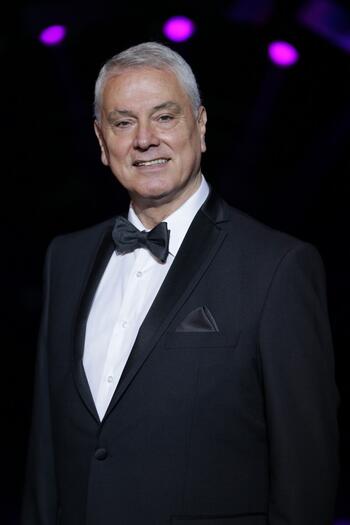
Pierre Dulaine was born in Jaffa, Palestine in 1944 to an Irish father and a Palestinian mother--both of whom fled the area in 1948. After eight months of moving several times, Dulaine's family settled in Amman, Jordan. In 1956, the Suez Crisis forced Dulaine's parents to flee the country, eventually resettling in Birmingham, England. In 1994 Dulaine founded the Dancing Classrooms program in New York City's public schools in which he encouraged children from various backgrounds to dance together. He later traveled to the city of his birth, Jaffa, to visit his childhood home and to make a film, 'Dancing in Jaffa,' where he brought Israeli Arabs and Jews together through dance and music. His life was also fictionalized in the film Take the Lead starring Antonio Banderas. More recently, Pierre Duaine has gained much acclaim in the Arab world for his role as Judge on the Arabic version of the TV show 'So You Think You Can Dance' where he encouraged young Arab men and women to pursue dance as way of dealing with difficult circumstances and certain outdated social
(See flyer for a list of the co-sponsors)
Note: A screening of 'Dancing in Jaffa' will take place on campus on May 29. For more information, click here.
[[{"fid":"218684","view_mode":"crop_870xauto","fields":{"format":"crop_870xauto","field_file_image_description[und][0][value]":"PD flyer","field_file_image_alt_text[und][0][value]":"","field_file_image_title_text[und][0][value]":"","field_credit[und][0][value]":"","field_caption[und][0][value]":"","field_related_image_aspect[und][0][value]":"","thumbnails":"crop_870xauto","pp_lightbox":false,"pp_description":false},"type":"media","attributes":{"height":1344,"width":870,"class":"media-element file-crop-870xauto"}}]]
Stanford Language Center,
Building 30-102,
Stanford, CA
Pierre Dulaine
Lectures
War on Gaza in the Age of Human Rights: Prospects for Accountability
-
Abstract:
In July and August, hostilities in the Gaza Strip left 2,131 Palestinians and 71 Israelis dead, including 501 Palestinian children and one Israeli child. Of Gaza’s 1.8 million residents, 475,000 are living in temporary shelters or with other families because their homes have been severely damaged. The extent of destruction has raised questions around culpability for war crimes on all sides of the conflict. International organizations including the United Nations Human Rights Council, Amnesty International and Human Rights Watch have called for independent investigation. At the end of 2014, Palestine deposited a 12(3) application to the ICC for ad-hoc jurisdiction as well as acceded to the Rome Statute, thus granting the International Criminal Court the authority to investigate war crimes conducted in Palestinian territory. Such an investigation would bring both Israel and Palestine under scrutiny for events from this summer and as far back as 2012, and possibly to 2002 when the ICC was first formed to investigate war crimes. This is the third large scale military offensive against the besieged coastal enclave since Israel’s unilateral disengagement in 2005. Given the shortcomings of the ceasefire on August 26, 2014, another attack is seemingly inevitable. How is such civilian carnage possible notwithstanding the humanitarian and human rights legal regimes established to reduce civilian suffering? And what are the prospects for accountability under international criminal law and beyond? This lecture will explore these questions and specifically the prospects for accountability at the ICC.
Speaker Bio:
Image

Noura Erakat is a human rights attorney, activist, and an Assistant Professor at George Mason University. Her scholarship investigates the laws of war, human rights, refugee law, and national security. She is a Co-Editor of Jadaliyya, an electronic magazine that leverages scholarly expertise and local knowledge on the Middle East. She has taught International Human Rights Law and the Middle East at Georgetown University since Spring 2009 and before beginning at George Mason University, she was a Freedman Teaching Fellow at Temple University, Beasley School of Law. She has served as Legal Counsel for a Congressional Subcommittee in the House of Representatives, chaired by Congressman Dennis J. Kucinich. She helped to initiate and organize several national formations including Arab Women Arising for Justice (AMWAJ) and the U.S. Palestinian Community Network (USPCN). While an undergraduate student at UC Berkeley, Noura helped launch the first university divestment campaign at UC Berkeley in 2001 and upon graduating from Berkeley Law School, she helped seed BDS campaigns throughout the country uas the National Organizer with the US Campaign to End the Israeli Occupation. There, she also helped initiate federal lawsuits in the U.S. against Israeli officials in for war crimes and crimes against humanity. She has lived and worked throughout the Middle East including as part of a legal fact-finding delegation to the Gaza Strip in the aftermath of Israel’s Winter 2008/09 onslaught and spent the Spring 2010 academic semester in Beirut, Lebanon as a Visiting Scholar at the American University in Beirut. Noura has appeared on PBS News Hour, BBC World Service, NPR’s “To The Point,” MSNBC's "Up With Chris Hayes," Fox’s “The O’ Reilly Factor,” NBC’s “Politically Incorrect,” Democracy Now, and Al-Jazeera Arabic and English. Her non-scholarly publications have appeared in the New York Times, USA Today, the Los Angeles Review of Books, The Nation, Huffington Post, and Foreign Policy among others. Most recently, she co-published an anthology entitled Aborted State? The UN Initiative and New Palestinian Junctures.
This event is co-sponsored by the Sohaib and Sara Abbasi Program in Islamic Studies.
[[{"fid":"218623","view_mode":"crop_870xauto","fields":{"format":"crop_870xauto","field_file_image_description[und][0][value]":"Noura Erakat flyer","field_file_image_alt_text[und][0][value]":"","field_file_image_title_text[und][0][value]":"","field_credit[und][0][value]":"","field_caption[und][0][value]":"","field_related_image_aspect[und][0][value]":"","thumbnails":"crop_870xauto","pp_lightbox":false,"pp_description":false},"type":"media","attributes":{"width":"870","class":"media-element file-crop-870xauto"}}]]
Okimoto Conference Room
3rd Floor East Wing
Encina Hall
616 Serra Street
Stanford, California 94305
Noura Erakat
Assistant Professor
George Mason University
Seminars
Pamela Merchant and Kristen Myles speak on human rights litigation abroad
News Type
Commentary
Date
Paragraphs
The Program on Human Rights welcomed Pamela Merchant and Kristen Myles to Stanford on March 4 as final speakers in the winter course U.S. Human Rights NGOs and International Human Rights. Ms. Merchant has served for the past nine years as executive director of the Center for Justice & Accountability, the leading U.S.-based organization that pursues international human rights abusers through litigation in U.S. courts. Formerly a federal prosecutor, Ms. Merchant has frequently testified on human rights issues before the U.S. Congress; currently serves on the Advisory Council for the ABA Center on Human Rights; and is a director of the Foundation for Sustainable Rule of Law Initiatives. Ms. Myles is a litigation partner in the San Francisco office of Munger, Tolles & Olson and is repeatedly named among California's “top women lawyers” by the Daily Journal. In her practice of complex business litigation, Ms. Myles filed a “friend of the court” brief in the 2014 case of Shell Oil vs. Kiobel which in the U.S. Supreme Court decided that U.S. corporations could not be sued in U.S. courts under the Alien Torts Statute for alleged human rights abuses abroad.
Ms. Merchant’s strongly held view is that some human rights violations are so egregious that they should be litigated in any court system, even if they occurred outside the country in which the case is argued. Ms. Merchant argued that courts create a record of truth about human rights violations, and that shedding the light of truth on these terrible events will make the world a less violent place. The Center for Justice and Accountability has provided legal advice for human rights victims to pursue their claims of human rights abuses in U.S. courts when abuses occurred in countries such at El Salvador, Nigeria, South Africa, and Myanmar, using U.S. federal legislation of the Alien Torts Statute and the Torture Victims Prevention Act. The CJA’s position is that the Nuremberg Trials of the World War II genocide atrocities created an obligation for all nation states to pursue justice in their courts under the international law principle of universal jurisdiction that holds that egregious human rights abuses are the concern of all humanity, wherever they have taken place.
Ms. Myles has represented U.S. corporations against whom human rights victims allege were directly or indirectly the instigators of their violations by virtue of pursuing corporate economic interests abroad in collusion with corrupt officials who resort to violence, such as by pushing people off their land or working in industrial settings in sub-standard conditions. Ms. Myles pointed that U.S. corporate executives do not instruct their overseas operators to be violent; instead, they are working through long chains of delegated authority in their off-shore operations, and these off-shore people act beyond their corporate mandate. Most importantly, the international legal principle of universal jurisdiction is the “law of nations” so it is directed to national governments and not to private corporations.
After Ms. Merchant and Ms. Myles summarized their individual positions, they engaged in dialogue with Professor Helen Stacy, director of the Program on Human Rights. Discussion covered the pros and cons of using the U.S. court system for transnational issues, given that such cases are lengthy and expensive; whether the high visibility of such cases had a deterrent effect on violators abroad, or may lead to the deportation of a violator who had subsequently settled in the U.S., or would prevent an alleged perpetrator’s application to emigrate to the U.S.; the success of victims being paid money from their perpetrator under a civil damages award ordered by a U.S. court; whether this U.S. litigation poses a diplomatic problem for the U.S. in its international operations; how standards on corporate social responsibility can be raised beyond litigating past practices in lengthy and expensive civil court proceedings; and the ethics of imposing higher standards of U.S. corporate standards in countries with lower standards and very high needs to improve economic conditions for their population.
Helen Stacy, Executive Director, Program on Human Rights
Hero Image

All News button
1
‘Don’t Ask, Don’t Tell’ Secrecy, Security, and Oversight of Targeted Killing Operations
-
Abstract: Governments around the world have been targeting and killing individuals to prevent them from committing terror attacks or other atrocities. They use this method secretly, sometimes without even taking responsibility for such operations, and without making public most of the relevant information: who is being targeted and what are the criteria for targeting individuals, what evidence is used to make targeting decisions, and what procedures are adopted to identify mistakes or misuse of this method. Recently released documents, such as the U.S. Department of Justice Drone Memo (analyzing lethal operations against U.S. citizen Anwar Al-Aulaqi), the more general White Paper on targeted killings of US citizens, or the Report of the Israeli Special Investigatory Commission on the targeted killing of Salah Shehadeh, shed some light on otherwise highly secretive decision-making processes, thereby introducing to the public debate important information previously unavailable. At the same time, in revealing only a small amount of relevant information, they emphasize the thick veil of secrecy that still surrounds the discussions in this field. Moreover, the information that is available demonstrates the vague nature of the relevant rules; the security-oriented implementation of these rules; and the inadequacy of current oversight mechanisms of targeted killing operations. These challenges to a process designed to take human lives emphasize the need to develop effective and independent accountability mechanisms, with powers to investigate high-level policymakers as well as operational-level decision-makers. This policy-paper proposes concrete solutions to the main weaknesses of the current legal framework: it narrowly (and clearly) defines legal terms such as ‘imminent threat,’ ‘feasibility,’ and ‘last resort’; it develops an activity-based test for determinations on direct participation in hostilities; it designs an independent ex post review mechanism; and it calls for governmental transparency and meaningful oversight. Most importantly, it promotes a targeted killing policy that protects civilians from both terror and counter-terror attacks.
About the Speaker: Shiri Krebs is a JSD Candidate at Stanford Law School, specializing in international criminal and humanitarian law. She was recently awarded the Christiana Shi Stanford Interdisciplinary Graduate Fellowship in International Studies and is a Law and International Security Predoctoral Fellow at Stanford Center on International Security and Cooperation (CISAC).
Her doctoral dissertation focuses on war crimes investigations and fact-finding during armed conflicts. This interdisciplinary research project combines theories and methods from law, psychology, sociology and political science, including online survey experiments.
From 2005 to 2010 Shiri served as legal advisor on international law matters in the Chief-Justice's chambers, the Israeli Supreme Court. During that time she has taught public international law at the Hebrew University of Jerusalem, a teaching assistantship which granted her the Dean's award for excellent junior faculty members, as well as 'best teacher' award. After leaving the Supreme Court, Shiri joined the Israeli Democracy Institute as a researcher, working on 'Terrorism and Democracy' projects, and publishing frequent op-eds in various newspapers and blogs.
In September 2010 Shiri started her graduate studies at Stanford Law School. Her Masters thesis - an empirical analysis of preventive detention cases - was presented in several international conferences and has won the Steven M. Block Civil Liberties Award.
In 2012, while working on her dissertation, Shiri was appointed as a Teaching Scholar at Santa Clara University School of Law, teaching international criminal law and international humanitarian law. She is currently serving as a Teaching Assistant for the Stanford Interschool Honors Program in International Security Studies.
Encina Hall (2nd floor)
Shiri Krebs
JSD Candidate at Stanford Law School, CISAC Law and International Security Fellow
Speaker
Stanford University
Seminars
Russia: Back to the Future feat. Mikhail Khodorkovsky
-
Video
Speaker Bio:
Image

Mikhail Khodorkovsky is a former Russian businessman and political prisoner of Vladimir Putin’s regime. Prior to his arrest in 2003, Khodorkovsky was the head of Yukos, one of Russia’s largest oil producers, and an increasingly outspoken critic of corruption in Russian life. He began funding opposition parties and established Open Russia, a non-governmental organization promoting a strong civil society. Khodorkovsky was one of the pioneers of Internet in Russia. His company Yukos incubated numerous successful Internet entrepreneurs and investors. He financed educating Russian teachers on new technologies, computerization of schools and broadband Internet connection for schools and libraries in Russian regions. Khodorkovsky was arrested and charged with fraud and tax evasion, and sentenced to nine years in prison, which was prolonged to eleven years after the second trial. Khodorkovsky, declared a prisoner of conscience by Amnesty International, was released in December 2013. Following his release he declared that he will support political prisoners and civil society in Russia. In September 2014 Khodorkovsky re-launched Open Russia as a movement aiming to unite pro-Western Russian citizens.
[[{"fid":"218596","view_mode":"crop_870xauto","fields":{"format":"crop_870xauto","field_file_image_description[und][0][value]":"","field_file_image_alt_text[und][0][value]":"","field_file_image_title_text[und][0][value]":"","field_credit[und][0][value]":"","field_caption[und][0][value]":"","field_related_image_aspect[und][0][value]":"","thumbnails":"crop_870xauto","pp_lightbox":false,"pp_description":false},"type":"media","attributes":{"height":1113,"width":870,"class":"media-element file-crop-870xauto"}}]]
CEMEX Auditorium
Zambrano Hall/North Building
Graduate School of Business
Stanford University
641 Knight Way
Mikhail Khodorkovsky
Former Russian businessman; Founder, Open Russia
Seminars