World Trade Organization
-

This half-day symposium will bring together scholars and practitioners to reconsider Taiwan's prospects for entry into the Trans-Pacific Partnership in light of the conclusion of negotiations in October 2015 and the election of a new president and legislature in Taiwan in January 2016. It will revisit the themes and conclusions of the Taiwan Democracy Project's 2013 annual conference.

9:00-9:15am: Introductions

9:15-11:00am. Panel 1: The Politics of Trade and Development in Taiwan

Stephen Tan, Vice President of the Cross-Strait Policy Association, Taipei

Kristy Hsu, Director, Taiwan ASEAN Studies Center, Chung Hua Institution for Economic Research, Taipei

Chung-ming Kuan, Chair Professor, Department of Finance and Director of CRETA at National Taiwan University, and former Minister of the National Development Council

Hung-mao Tien, President of the Institute for National Policy Research, and former Minister of Foreign Affairs, Taiwan

11:00-11:15. Break

11:15-12:45. Panel 2: International Perspectives on the TPP: Implications for Regional Development and Geopolitics

Vinod Aggarwal, Professor of Political Science and Faculty Affiliate of the Center for East Asian Studies, UC Berkeley

Nicholas Hope, Director of the China Program at the Stanford Center for International Development

Thomas Gold, Professor of Sociology and Faculty Affiliate of the Center for East Asian Studies, UC Berkeley


Audio Recording


CISAC Central Conference Room

Conferences
-

Abstract

The Trans-Pacific Partnership (TPP) is widely regarded as the economic component of the US strategy of “rebalance” to Asia. As a major trading partner of many of the founding members, Taiwan has obvious economic and security interests at stake and is therefore seeking to join the TPP in the next round. But an overlooked aspect of the TPP for Taiwan is its potential impact on sovereignty. Trade agreements provide a revealing window into the evolving conceptions of modern sovereignty. The way Taiwan’s unique form of statehood and international status is defined in trade agreements could strengthen its position under international law and contribute to its national security. This talk will consider how Taiwan was defined as a sui generis legal entity in its application to join the World Trade Organization (WTO) and as a party to the Cross-Straits Economic Cooperation Framework Agreement (ECFA), with lessons for future negotiations to join the TPP.   


Speaker Bio

Image
Joseph Yen-ching Chao
Joseph Yen-ching Chao is an Executive Officer in the Department of International Cooperation and Economic Affairs. A member of Taiwan’s Ministry of Foreign Affairs (MOFA) diplomatic corps since 2005, he has previously served as a German-language interpreter for the Presidential Office, an officer in the Department of Treaty and Legal Affairs, and as a deputy secretary of Taiwan’s permanent mission to the World Trade Organization in Geneva, Switzerland.  He holds an LL.M. from Ruprecht-Karls University in Heidelberg and a Doctor juris from Albert-Ludwige University, Frieberg, Germany. Dr. Chao is in residence at Stanford from May-July 2015, where his research examines Taiwan’s prospects for entry into the Trans-Pacific Partnership (TPP).


This event is hosted by the Taiwan Democracy Project.

TPP and Taiwan
Download pdf
Joseph Yen-ching Chao Visiting Fellow Ministry of Foreign Affairs, Republic of China (Taiwan)
Seminars
-

[[{"fid":"209960","view_mode":"crop_870xauto","fields":{"format":"crop_870xauto","field_file_image_description[und][0][value]":"","field_file_image_alt_text[und][0][value]":false,"field_file_image_title_text[und][0][value]":false,"field_credit[und][0][value]":"Arlene Hsu","field_caption[und][0][value]":"Taipei at night with Taipei 101. 28 February 2009.","field_related_image_aspect[und][0][value]":"0","thumbnails":"crop_870xauto"},"type":"media","field_deltas":{"1":{"format":"crop_870xauto","field_file_image_description[und][0][value]":"","field_file_image_alt_text[und][0][value]":false,"field_file_image_title_text[und][0][value]":false,"field_credit[und][0][value]":"Arlene Hsu","field_caption[und][0][value]":"Taipei at night with Taipei 101. 28 February 2009.","field_related_image_aspect[und][0][value]":"0","thumbnails":"crop_870xauto"}},"link_text":null,"attributes":{"width":"870","class":"media-element file-crop-870xauto","data-delta":"1"}}]]


Over the past year and more, Taiwan’s political elite has been deadlocked over the question of deepening economic relations with the People’s Republic of China. This controversial issue has led to a standoff between the executive and legislative branches, sparked a frenzy of social activism and a student occupation of the legislature, and contributed to President Ma Ying-jeou’s deep unpopularity.

On October 17-18, the Taiwan Democracy Project at CDDRL, with the generous support of the Taipei Economic and Culture Office, will host its annual conference at Stanford University to examine the politics of polarization in Taiwan.

This conference will bring together specialists from Taiwan, the U.S., and elsewhere in Asia to examine the sources and implications of this political polarization in comparative perspective. It will include a special case study of the Trade in Services Agreement with China that triggered this past year’s protests, as well as a more general overview of the politics of trade liberalization in Taiwan, prospects for Taiwan’s integration into the Trans-Pacific Partnership and other regional trade agreements, and a consideration of the implications for Taiwan’s long-term democratic future.

Conference speakers will include: Chung-shu Wu, the president of the Chung-hwa Institute of Economic Research (CIER) in Taipei; Steve Chan of the University of Colorado; Roselyn Hsueh of Temple University; Yun-han Chu, the president of the Chiang Ching-kuo Foundation; and Thitinan Pongsudhirak of Chulalongkorn University in Bangkok.


Panels will examine the following questions:

1. What are the sources and implications of political polarization in Taiwan, and how have these changed in recent years?

2. How does Taiwan’s recent experience compare to political polarization in other countries in Asia (e.g. South Korea, Thailand) and elsewhere (the US)?

3. To what extent does the latest political deadlock in Taiwan reflect concern over the specific issue of trade with the People’s Republic of China, versus a deeper, systemic set of problems with Taiwan’s democracy?

4. How are globalization and trade liberalization reshaping Taiwan’s domestic political economy, and what are the prospects for forging a stronger pro-trade coalition in Taiwan that transcends the current partisan divide?


The conference will take place October 17-18 in the Bechtel Conference Room in Encina Hall at Stanford University. It is free and open to the public. 


Conference Resources


Agenda

Speaker Bios

Presentations

Conference Report

Conference Flyer


Conference Papers


How Cross-Strait Trade and Investment Is Affecting Income and Wealth Inequality in Taiwan by Chien-Fu Lin, National Taiwan University


Generational Differences in Attitudes towards Cross-Straits Trade by Ping-Yin Kuan, Department of Sociology & International Program in Asia-Pacific Studies, National Chengchi University


Change and the Unchanged of Polarized Politics in Taiwan by Min-Hua Huang, National Taiwan University; Center for East Asia Policy Studies, The Brookings Institution


Social Media, Social Movements and the Challenge of Democratic Governability by Boyu Chen, National Sun Yat-sen University, Institute of Political Science 


Coping with the Challenge of Democratic Governance under Ma Ying-jeou by Yun-han Chu, National Taiwan University


Taiwan’s Bid for TPP Membership and the Potential Impact on Taiwan-U.S. Relations by Kwei-Bo Huang, National Chengchi University, Department of Diplomacy


In the Wake of the Sunflower Movement: Exploring the Political Consequences of Cross-Strait Integration by Pei-shan Lee, National Chung Cheng University, Political Science Department 


The Roots of Thailand’s Political Polarization in Comparative Perspective by Thitinan Pongsudhirak, Chulalongkorn University; The Institute of Security and International Studies


The Role of the United States in Cross-Strait Economic Integration by Chen-Dong Tso, National Taiwan University


The China Factor and the Generational Shift over National Identity by Mark Weatherall, Taiwan Foundation for Democracy


Taiwan’s Strategy for Regional Economic Integration by Chung-Shu Wu, Chung-Hua Institution for Economic Research


Polarized Electorates in South Korea and Taiwan: The Role of Political Trust under Conservative Governments by Hyunji Lee, Institute of Asian Research, University of British Columbia


Polarization in Taiwan Politics by Steve Chan, University of Colorado, Boulder

 

Agenda
Conference Biographies
Taiwan Polarization Conference Flyer
Politics of Polarization in Taiwan: Conference Report
Conferences
News Type
News
Date
Paragraphs

Special Event:  Pascal Lamy Lecture

“World Trade and Global Governance”

 
The Europe Center invites you to a special lecture by Pascal Lamy, the former Director-General of the World Trade Organization.
 
Image
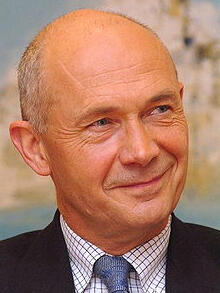
Image of Pascal Lamy
Date: February 10, 2014 
Time: 4:00 - 5:30 p.m.
Venue: Bechtel Conference Center, Encina Hall
RSVP by February 5, 2014                       
  
Mr. Lamy will speak on the necessary mix of economic, social, and political policies that will determine the efficacy of free trade as an engine of global economic growth. In particular, he will outline a statement of his own thinking about the future of global governance and international trade, and describe what remains to be done in addressing the challenges of globalization. Additionally, Mr. Lamy will reflect on the features of modern politics that create governance gridlock and thwart global oversight, and will identify how progress can be made in overcoming impediments to policy action at the international level. 
 
My Lamy served as the Director-General of the World Trade Organization from 2005-2013. He is currently the Honorary President of the Paris-based think tank, Notre Europe.


Meet our Visiting Scholars:  Bjørn Høyland 

 
In each newsletter, The Europe Center would like to introduce you to a visiting scholar or collaborator at the Center. We welcome you to visit the Center and get to know our guests.
 
Bjør
Image
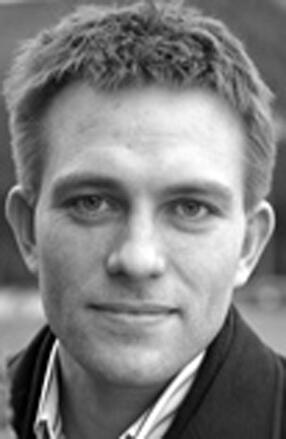
Image of Bjorn Hoyland
n Høyland (PhD, London School of Economics, 2005) is Professor of Political Science at the University of Oslo, Norway. He is currently visiting Professor and Anna Lindh Fellow at The Europe Center, Freeman Spogli Institute for International Studies and Stanford Global. The focus of his research is European Union politics and comparative legislative politics. Professor Høyland’s list of journal publications includes the American Political Science Review, Annual Review of Political Science, British Journal of Political Science, and European Union Politics. His textbook (with Simon Hix) The Political System of the European Union (3rd ed) is the standard text for advanced courses on the European Union.

Workshop Schedules  

 
The Europe Center invites you to attend the talks of speakers in the following workshop series: 
 

Europe and the Global Economy

 
January 23, 2014
David Dreyer Lassen, Professor of Economics, University of Copenhagen
RSVP by Jan 20, 2014 
 
February 20, 2014
Alan Deardorff, John W. Sweetland Professor of International Economics & Prof. of Economics and Public Policy, University of Michigan
RSVP by Feb 17, 2014
 
Mar 6, 2014
Sophie Meunier, Research Scholar, Woodrow Wilson School and Co-Director, EU Program at Princeton, Princeton University
RSVP by Mar 3, 2014
 
Mar 13, 2014
Randy Stone, Professor of Political Science, University of Rochester
RSVP by Mar 10, 2014
 
Apr 3, 2014
Kåre Vernby, Associate Professor, Department of Government, Uppsala University
RSVP by Mar 31, 2014
 
Apr 17, 2014
Mark Hallerberg, Professor of Public Management and Political Economy, Hertie School of Governance 
RSVP by Apr 4, 2014
 
May 15, 2014
Christina Davis, Prof. of Politics and International Affairs, Princeton University
RSVP by May 12, 2014

European Governance

 
February 6, 2014
Matthew Gabel, Professor of Political Science, Washington University at St. Louis
RSVP by Feb 3, 2014
 
May 22, 2014
Wolfgang Ischinger, Former German Ambassador to the U.S.; Chairman, Munich Security Conference
RSVP by May 19, 2014
 
May 29, 2014
Simon Hug, Professor of Political Science, University of Geneva
RSVP by May 26, 2014

Other Events

 
The Europe Center also invites you to attend the following events of interest:
 
January 27, 2014
Vassil Terziev, Co-founder & CEO, Telerik (BG); and Japec Jakopin, Co-founder & CEO, Seaway (SI)
“Worldclass Enterprise Software and Design Firms in SouthEast and Balkans Europe” 
Sponsor: European Entrepreneurship & Innovation Thought Leaders Seminar
 
January 30, 2014
Ken Schultz, Professor of Political Science, Stanford University
“Making and Breaking Territorial Agreements: Explaining European Exceptionalism”
Sponsor: CISAC Social Science Seminar; co-sponsored by The Europe Center
 
 
All News button
1

Encina Hall
616 Serra Street
Stanford, CA 94305-6055

0
Visiting Scholar

Jessie Jin-Jen Leu a government official from the Republic of China (Taiwan), was a visiting scholar at the Stanford Center on Democracy, Development, and the Rule of Law (CDDRL) in 2012-13. 

Ms. Leu is a senior economic officer who worked in various positions at the Ministry of Economic Affairs of R.O.C. She is experienced on the import management and multilateral trade related to the World Trade Organization (WTO) and Asia-Pacific Economic Cooperation (APEC). Currently she is working as an associate researcher to the National Security Advisor for economic affairs.

Ms. Leu graduated from Taiwan’s Tam-Kang University with a Bachelor's degree of International Trade in 1989. She continued her Master’s degree at University of Wyoming, United States in 1995. Ms. Leu also participated in the WTO negotiation and leadership Program at the Harvard University’s Kennedy School of Government in 2003.

-

The fastest growing economy in the Association of Southeast Asian Nations (ASEAN) is the Lao People's Democratic Republic. For a decade Steve Parker has been intensively involved on behalf of USAID as a resident adviser on economic and related legal reforms, first in Vietnam and for the last three years in Laos. In each country he has focused on helping the government fulfill the requirements of membership in the WTO. Vietnam joined the WTO in 2007 and Laos followed suit on 2 February 2013. He is also advising the Lao government on meeting its obligations under the ASEAN Economic Community that is scheduled for inauguration in 2015, and on implementing the 2005 U.S.-Lao PDR Bilateral Trade Agreement.  

Parker will open this roundtable with some remarks on economic development and reform in the two ASEAN countries, including an assessment of the impact of WTO membership on economic development and reform—retrospectively in Vietnam, prospectively in Laos. An open discussion will follow.

In the course of his career in Asia as an economic specialist for the U.S. government and the Asia Foundation, Parker has been posted to Laos, Vietnam, Indonesia, and Japan with USAID, the ADB, and the Harvard Institute of International Development. The Southeast Asia Forum and the Stanford Center for International Development co-sponsored his last talk at Stanford in 2007: "The United States and Asia's Newest Tiger:  Trade, Aid, and Governance in Vietnam."

This seminar series is co-sponsored by

The Stanford Center for International Development

John A. and Cynthia Fry Gunn Building,
Doll Conference Room (#320)

Steve Parker Project Director and Resident Trade Advisor Speaker U.S.-Laos International and ASEAN Integration Project (LUNA-Lao) Managed by Nathan Associates Inc.
Seminars
Paragraphs

The OECD and the WTO have accumulated systematic data on the magnitude of support going to farmers as a result of farm policies. The datasets are collected for different purposes, but give a detailed picture of the evolution of these policies. This paper extends recent work on the compatibility of these two classification systems with a focus on Norway, Switzerland, the US and the EU. The results show how the OECD data set, particularly with respect to the link between direct payments and production requirements, complements that of the WTO. Many payments classified as in the WTO Green Box require production, raising the possibility that they may not be trade-neutral. Though the issue of correct notifications to the WTO is the province of lawyers, the implications for modeling and policy analysis is more interesting to economists. And the broader question of improving the consistency of the two datasets is of importance in the quest for transparency.


This work was undertaken while Mittenzwei was a Research Fellow at the Europe Center.

All Publications button
1
Publication Type
Working Papers
Publication Date
Journal Publisher
Norwegian Agriultural Economics Research Institute
Authors
Klaus Mittenzwei
-

Richard Steinberg is Professor of Law at UCLA and the Director of the Sanela Diana Jenkins Human Rights Project. In addition to his UCLA appointment, Professor Steinberg is currently a Visiting Scholar at the Stanford Department of Political Science.

Professor Steinberg has written over forty articles on international law.  His most recent books are Assessing the Legacy of the ICTY (forthcoming 2010, Martinus Nijhoff), International Institutions (co-edited, 2009, SAGE), International Law and International Relations (co-edited, 2007, Cambridge University Press), and The Evolution of the Trade Regime: Economics, Law, and Politics of the GATT/WTO (co-authored, 2006, Princeton University Press).

Helen Stacy is Senior Fellow at the Freeman Spogli Institute for International Studies (FSI) and Director of the Program on Human Rights at CDDRL

As a scholar of international and comparative law, legal philosophy, and human rights, Helen Stacy has produced works analyzing the efficacy of regional courts in promoting human rights, differences in the legal systems of neighboring countries, and the impact of postmodernism on legal thinking. Her recent scholarship has focused on how international and regional human rights courts can improve human rights standards while also honoring social, cultural, and religious values.

Bechtel Conference Center

Helen Stacy Speaker
Richard Steinberg Director, Sanela Diana Jenkins Human Rights Project; Professor of Law Speaker UCLA
Lectures
Subscribe to World Trade Organization