
Longevity Policy Should Focus on Better Lives, Not Just Longer Ones
Longevity Policy Should Focus on Better Lives, Not Just Longer Ones
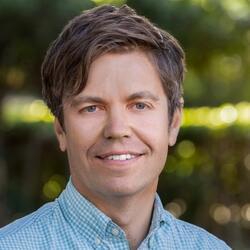
David Rehkopf takes over leadership of the Stanford Longevity Center with the goal of helping older people discover their potential for the years after retirement.

The number of Americans living 100 years and beyond is increasing, with the centenarian population projected to quadruple over the next three decades.
Yet our institutions, economic policies, social and cultural norms have not kept pace, according to the Stanford Center on Longevity.
“Society has not fully adapted to one of the most consequential demographic changes of the past century: people are living much longer lives,” said David Rehkopf, ScD, MPH, a professor of epidemiology, population health and sociology at Stanford Medicine.
Rehkopf, who is also a professor of health policy (by courtesy), is the new director of the longevity center, succeeding Laura Carstensen, PhD, MA, who is stepping down after nearly two decades as the center’s founding director.
Established in 2007, the center is an international leader in research, education and outreach on healthy, equitable aging. As people age, Rehkopf said, most want financial security, good health—especially cognitive health—and close ties with family and friends.
And health policy will be a key component of his leadership of the center.
“Many of our institutions—from education and work to retirement, health care, and local community institutions—were designed for a different era,” he said. “Helping people thrive over longer lives is therefore fundamentally a policy challenge: What needs to change so that longer lives are healthier, more financially secure, and more connected?”
Rehkopf said one of his key goals at the longevity center is to convene and support researchers in identifying and testing policies that help people achieve healthy longevity.
“A distinctive—and challenging—part of our work will be to evaluate policies not only by a single outcome, but by how they affect the things that matter most to people as they age: health, financial security, and social connection. Policies can create tradeoffs across these areas, and we need better evidence about which approaches improve multiple dimensions of well-being.”
Once gathered, he said, researchers can synthesize the evidence, identify the most promising changes, clarify where important questions remain, and support research that gives policymakers and the public better guidance for action.
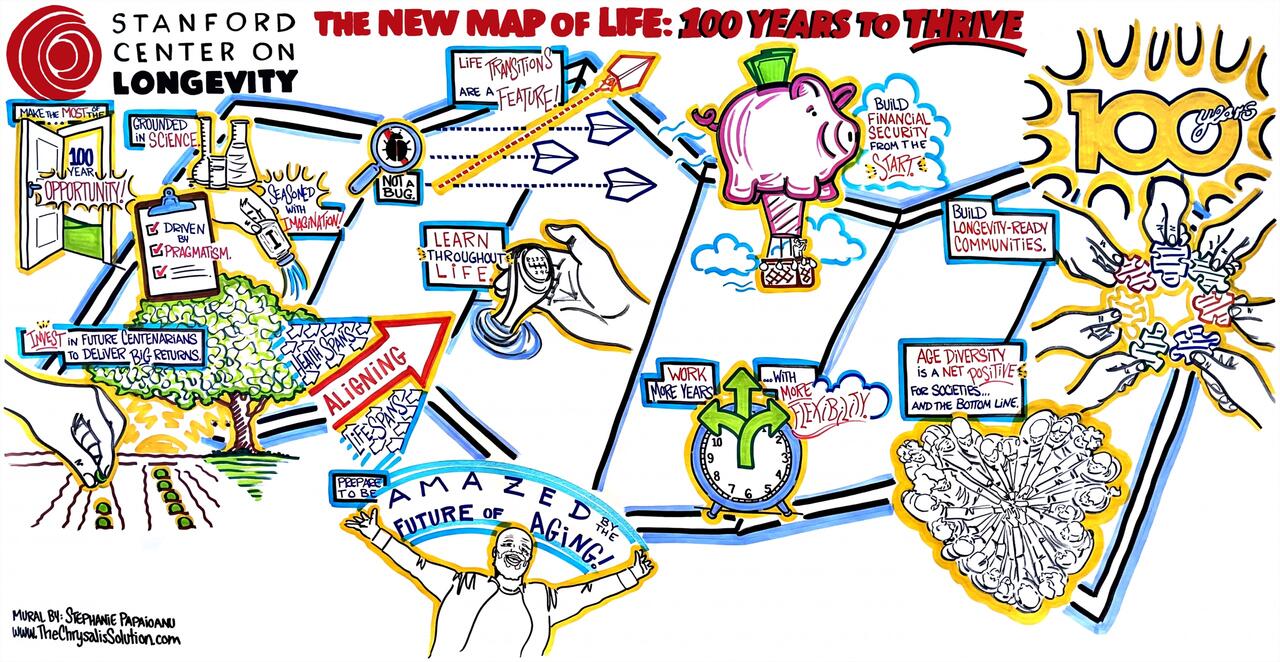
The New Map of Life
His predecessor at the longevity center developed The New Map of Life initiative, which reimagines the 21st century human life course to support 100-year lifespans.
Rehkopf said The New Map of Life summarizes ideas across domains and sectors to describe what life is like now, reflecting the demographic and societal changes that have occurred over the past century, but are not yet reflected in our structures and institutions.
Stanford Health Policy’s Julie Kim, PhD, MS, a statistical demographer and a New Map of Life Fellow, is working on a project to identify which components of age-related disease burden are most amendable to technological innovation.


