
When Heat Outpaces the Human Body: A Warming, Aging World at Risk
When Heat Outpaces the Human Body: A Warming, Aging World at Risk
As the climate warms, understanding where, when, and to what extent human heat tolerance limits will be breached has become increasingly important—particularly for the elderly.

As global temperatures climb, a growing number of older adults are facing a point where their bodies simply can't keep up, a state that physiologists call “uncompensable heat stress.” This is when sweating and other biological cooling mechanisms are overwhelmed and core body temperature keeps rising unchecked.
Previous projections have applied heat limits for healthy young adults to all age groups, overlooking the greater vulnerability in people 65 years and older. But with the world's population aging rapidly—due to longer life expectancies and falling fertility rates—this could seriously underestimate future heat risks for elderly people.
A new study published in The Lancet Planetary Health by Stanford Health Policy (SHP) researchers SHP’s Qinqin Kong, PhD, and Eran Bendavid, MD, MS, asks the question: if you factor in how age affects heat tolerance, how much does that change predictions of who's at risk of heat-related illness and death?
Bendavid and Kong—an SHP postdoctoral scholar whose research lies at the intersection of climate change and society—applied existing lab-tested heat limits for young, middle-aged and older adults, combining those with population and climate projections. They then built the first-ever global map of who’s at risk from dangerous heat, broken down by age.
“As the planet warms, it is critical to understand where, when, and to what extent environmental conditions will exceed human heat tolerance,” said Bendavid, a professor of health policy and of medicine at the Stanford School of Medicine, senior fellow at the Stanford Woods Institute for the Environment and a global health faculty fellow at the Stanford Center for Innovation in Global Health, which helped fund the research with a seed grant. Bendavid is also a senior fellow, by courtesy, at the Freeman Spogli Institute for International Studies
While the Earth’s climate has always changed throughout history, today’s warming is happening faster than at any point in the past 10,000 years, according to NASA.
Whether heat becomes “uncompensable" isn't about hitting one fixed temperature. It depends on the combination of heat, humidity, and individual factors like age, fitness, and hydration that determine whether the body can keep pace with cooling itself down. But there’s no safe level of exposure once that threshold is crossed; lab studies show conditions just above it can push core temperature to heatstroke range in about 3 to 10 hours.
Aging Matters More than Warming
The researchers found that the dangerous uncompensable heat levels will be breached often and widely, particularly for older adults in South Asia and China. In fact, elderly people face more of this extreme heat risk at just 1.5°C of global warming above preindustrial levels than young adults do even at a 4°C hike, showing that aging is comparable to or even more important than warming itself when it comes to heat danger.
Each additional degree of warming exposes roughly 1 billion more people to at least 180 hours of uncompensable heat a year—and older adults bear the brunt. When the researchers accounted for how aging reduces heat tolerance, the number of people facing such repeated, uncompensable heat exposure is two-to-eight-times higher than earlier studies estimated using young-adult thresholds for everyone.
At 3°C of warming, India, China, Pakistan, and Bangladesh alone account for 1.5 billion people facing repeated, uncompensable heat exposure, or nearly three-quarters of everyone affected worldwide. Some smaller countries fare even worse proportionally: in Bahrain and Qatar, 100% of the population would be exposed, and in the United Arab Emirates, nearly 95%. Pakistan stands out on both counts, with nearly 295 million people affected; more than 80% of its population.
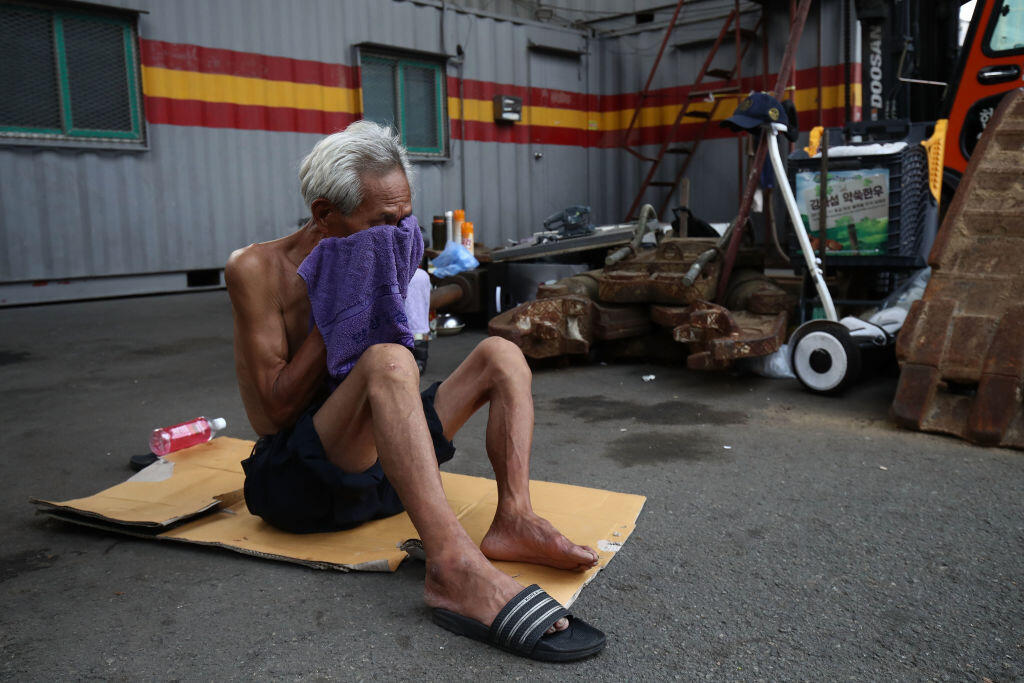
The picture is even starker for the elderly. In seven countries, including Bangladesh, Cambodia, and several Gulf nations, the entire older population would face this risk. Importantly, the dangerous uncompensable heat is not spread evenly throughout the year but concentrated in peak months. This means that, at >3oC warming, older adults could experience intolerable heat repeatedly through both the day and night for several consecutive months, leaving little opportunity for the body to recover.
“The human body can tolerate only a limited range of ambient heat,” said Kong, lead author of the study. “Understanding where, when, and to what extent these limits are exceeded is critical for informing climate prevention policies.”
This is key, the researchers note, given extreme heat is already one of the leading causes of weather-related deaths worldwide and heat-related mortality may become the largest contributor to climate-related costs in a warming world.
Sustained exposure beyond these limits can lead to dangerous or even fatal hyperthermia, as well as exacerbate preexisting chronic illnesses, particularly those affecting the cardiovascular, respiratory, and renal systems.
“The projected concentration of risk in tropical and subtropical regions poses severe challenges for energy reliability, grid resilience, and access to cooling, particularly in low- and middle-income countries with limited adaptive capacity,” Kong said.
Turning Data into Action
Kong and Bendavid hope their heat maps will help global health officials and emergency preparedness experts protect older adults as the climate continues to warm, while strengthening international support for the low- and middle-income countries that have limited adaptive capacity.
“Our findings indicate that intolerable heat will affect far more people, across larger regions, and for longer periods than previously recognized,” they wrote. “By identifying which age groups are exposed, and where, and at which warming levels, our findings can inform targeted heat action plans, emergency preparedness, and health system planning.”
Uncompensable heat will likely drive internal displacement and cross-border climate migration, creating urgent policy and humanitarian challenges, they said, underscoring the need for stronger international support for low- and middle-income countries with limited capacity to adapt.
The other authors of the study were Daniel J. Vecellio, Matthew Huber, Rachel M. Cottle, S. Tony Wolf, Olivia K. Leach, Kat G. Fisher, and senior author W. Larry Kennedy.


