
Logan Wright | Broken China: How the Economic Miracle Shattered and What it Means for the World
Logan Wright | Broken China: How the Economic Miracle Shattered and What it Means for the World
Thursday, December 3, 20264:00 PM - 5:30 PM (Pacific)
Shultz Auditorium, George P. Shultz Building, Hoover Institution
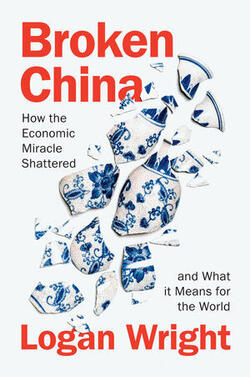
Economic competition between the United States and China has been a defining issue of the twenty-first century. But after years of rapid growth, China's economy has faltered. How did its long-term economic outlook change so quickly? And can Beijing change course and preserve China's political ambition for global economic primacy?
Join Logan Wright, author of Broken China: How the Economic Miracle Shattered and What it Means for the World, for a book talk exploring these questions and more co-hosted by the Stanford Center on China's Economy and Institutions and the Hoover History Lab. A light reception will follow the talk from 5:30-6:00 PM.
About the Speaker

Logan Wright is a Partner at Rhodium Group and leads the firm’s China Markets Research work. He is also a Senior Associate of the Trustee Chair in Chinese Business and Economics at the Center for Strategic and International Studies. Previously, Logan was head of China research for Medley Global Advisors and a China analyst with Stone & McCarthy Research Associates, both in Beijing.
Logan’s research focuses on China’s financial system and credit conditions in shaping outcomes within China’s economy, as well as the policies of China’s central bank. He is the author of the forthcoming book Broken China: How the Economic Miracle Shattered and What it Means for the World, as well as three reports on China’s financial system and the country’s longer-term economic trajectory: Credit and Credibility (2018), The China Economic Risk Matrix (2020), and Grasping Shadows (2023).
Logan holds a Ph.D. from the George Washington University, where his dissertation concerned the political factors shaping the reform of China’s exchange rate regime. He graduated with a Master’s degree in Security Studies and a Bachelor’s degree in Foreign Service from Georgetown University. He is a member of the Council on Foreign Relations. He is based in Washington, DC, after living and working in Beijing and Hong Kong for over two decades.
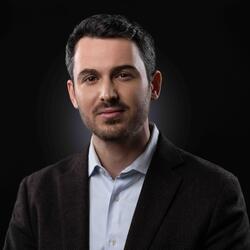
Eyck Freymann is a Hoover Fellow at Stanford University, where he directs the Allied Coordination Working Group. He is also a Non-Resident Research Fellow at Columbia University's Center on Global Energy Policy, the Institute of Geoeconomics in Tokyo, and the China Maritime Studies Institute at the U.S. Naval War College.
Dr. Freymann works on strategies to preserve peace and protect U.S. interests and values in an era of systemic competition with China. He is the author of several books, including the forthcoming Defending Taiwan: A Strategy to Prevent War with China (Oxford, 2026), The Arsenal of Democracy: Technology, Industry, and Deterrence in an Age of Hard Choices (Hoover, 2025), and One Belt One Road: Chinese Power Meets the World (Harvard, 2021). His scholarly work has appeared in The China Quarterly and is forthcoming in International Security.
Dr. Freymann comments on bipartisan national security issues in The Wall Street Journal, The New York Times, Foreign Affairs, The Economist, War on the Rocks, The Wire China, and The Atlantic, among other venues.
Before Hoover, Dr. Freymann held postdoctoral fellowships at Harvard and Columbia. He holds a doctorate from Oxford, masters degrees from Cambridge and Harvard, and a bachelors from Harvard, all in history and China studies.