
The Recognition of Indigenous Peruvian Communities and Declining Violence
The Recognition of Indigenous Peruvian Communities and Declining Violence
CDDRL Research-in-Brief [4-minute read]

Introduction and Contribution:
The recognition of indigenous territory or rights to self-governance is often viewed as intrinsically valuable: indigenous peoples (or comunidaded campesinas) deserve to be recognized as such, especially in light of the violence and discrimination they have endured. However, recognition can also be extrinsically good, insofar as it makes indigenous life more secure or sustainable in the face of political encroachment or environmental degradation.
Indigenous recognition has often occurred during, and because of, conflict and violence. In “Adhering Indigenous Communities to the State,” Michael Albertus shows that recognition during Peru’s infamous 1980-2000 “internal conflict” itself reduced violence: formally recognized communities had systematically fewer conflict deaths than those not recognized. He argues that recognition (a) made property rights more secure, thus “restrict[ing] what could be won and held with violence” (p.7), and (b) supplied the Peruvian government with detailed information about and connections into indigenous communities, thus improving state intelligence during the war. Marshaling a large and original dataset on recognition, property rights, fatalities, state capacity, and more, Albertus demonstrates how recognition can empower not only indigenous communities but also central governments.
Peru’s “Internal Conflict”:
Between 1980 and 2000, the Peruvian state fought an extremely brutal war against the Shining Path (Sendero Luminoso), which sought to overthrow the government and establish an agrarian communist society. The Shining Path’s insurgency was anchored in indigenous communities, whose members suffered economic hardships and political exclusion. Nearly 75% of the estimated 70,000 people killed were indigenous, despite them constituting just 26% of the population. Some insurgents learned Quechua, married into indigenous families, and dismantled unpopular state agricultural cooperatives.
Over time, however, Shining Path’s growing violence and village authoritarianism alienated many indigenous communities, who formed self-defense committees in response. Initially, the Peruvian government dealt with the insurgency through indiscriminate violence. However, the failure of these strategies prompted a search for alternatives within indigenous communities themselves.
How Recognition Reduced Violence:
Regarding property rights, because disputes over land and resources — those between communities and private landholders — often turned violent, recognition enabled more peaceful, state-led resolutions. Indeed, “the state invited parties for conciliation, checked public registries, examined the de facto occupation of land, and, in the case of disagreements, would begin a judicial proceeding for the disputed territory…outlining a process to identify specific community lands, to map them, and to record the responses of neighbors” (p.7). These varied activities led to a thorough “penetration” of the state into indigenous life.
Recognition was not simply a one-way grant but a mutual agreement, one that imposed clear legal conditions on indigenous communities. These included enrolling community members, forming leadership bodies, and making territorial claims. The state then verified these claims by communicating with leaders and collecting geographical data. Recognized communities also had to adapt their traditional governing institutions to a standardized framework. All of this greatly enhanced the state’s ability to gather information and coordinate counterinsurgency efforts at the community level. It also enabled the training and arming of self-defense committees, many of whose leaders became local authorities.
Research Design and Findings:
It follows from Albertus’ logic not only that (1) recognition should have decreased violence; in addition, and given the importance of property rights and state-community relations, decreases in conflict deaths should have been more pronounced in places with greater (2) land insecurity and (3) state penetration. To see this, imagine the opposite case: where land was plentiful, and ownership was clear, state recognition would have had little added value — and, in turn, minimal effects on violence. The same is true if the state had been unable to build connections with local communities and coordinate its counterinsurgency.
To measure the impact of recognition on violence, Albertus compares 2,475 recognized communities (i.e., those “treated” with recognition) between 1980 and 2000 with their pre-recognition trends, and an additional 228 communities recognized after the war — the “control” group.
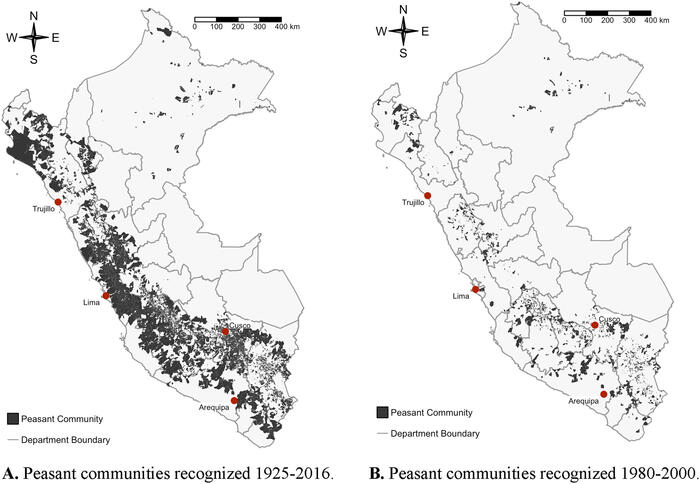
Figure 1. Recognized indigenous communities across Peru.
The findings confirm Albertus’ general hypothesis: the average number of deaths per year in a given community during the war was 0.086. (This may sound low, but the violence was heavily concentrated.) In formally recognized indigenous communities, however, the average number of deaths was 0.055 per year, about a 36 percent decline.
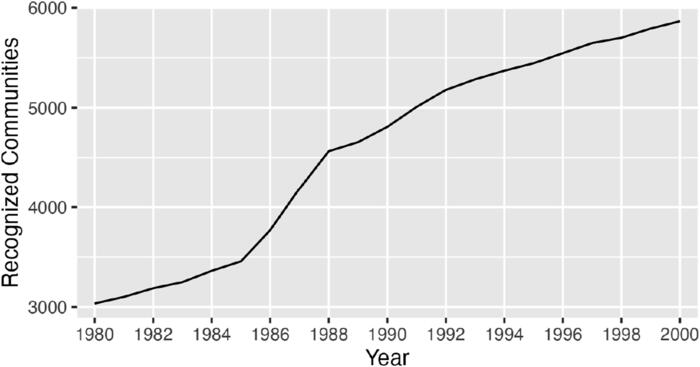
Figure 2. Indigenous community recognition from 1980 to 2000.
The findings confirm Albertus’ general hypothesis: the average number of deaths per year in a given community during the war was 0.086. (This may sound low, but the violence was heavily concentrated.) In formally recognized indigenous communities, however, the average number of deaths was 0.055 per year, about a 36 percent decline.
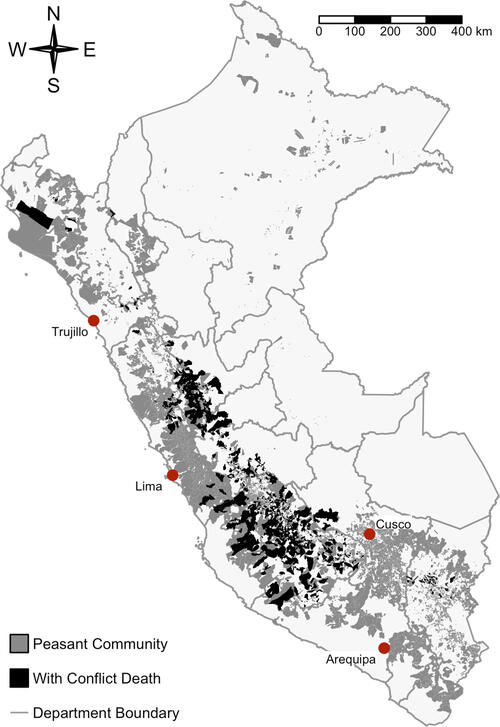
Figure 3. Indigenous communities that experienced conflict deaths.
Albertus then assesses the importance of property rights, comparing places with different levels of land security: Insecure communities were those that had tenuously acquired land as part of state-run cooperatives under Peru’s 1960-80 military government, or who had bought pieces of that land as the cooperatives broke up; secure communities were those with longer-standing land claims. Albertus finds that the insecure communities experienced much greater declines in violence, again pointing to the state’s importance in peacefully resolving land disputes. In addition, those communities with greater state penetration — measured by road density — also experienced more pronounced declines. Recognition was also associated with greater participation in self-defense committees, perhaps unsurprising given that many of these were state-trained and -funded.
Finally, Albertus finds that recognition had different effects on the kinds of wartime violence observed. In recognized communities, there were lower levels of violence by civilian and state actors, consistent with the logics of legibility, coordination, and penetration. By contrast, recognition initially had little effect on violence by the Shining Path — perhaps because recognized communities became targets. Over time, however, guerrilla violence also declined. In all, readers come away with an understanding that recognition is not merely symbolic but can be politically quite consequential, enhancing the state’s reach into peripheral areas and improving its intelligence capabilities.
*Brief prepared by Adam Fefer