
Civil War in Guangxi
Civil War in Guangxi
The Cultural Revolution on China's Southern Periphery
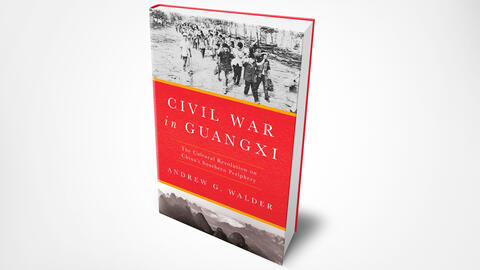
Guangxi, a region on China's southern border with Vietnam, has a large population of ethnic minorities and a history of rebellion and intergroup conflict. In the summer of 1968, during the high tide of the Cultural Revolution, it became notorious as the site of the most severe and extensive violence observed anywhere in China during that period of upheaval. Several cities saw urban combat resembling civil war, while waves of mass killings in rural communities generated enormous death tolls. More than one hundred thousand died in a few short months.
These events have been chronicled in sensational accounts that include horrific descriptions of gruesome murders, sexual violence, and even cannibalism. Only recently have scholars tried to explain why Guangxi was so much more violent than other regions. With evidence from a vast collection of classified materials compiled during an investigation by the Chinese government in the 1980s, this book reconsiders explanations that draw parallels with ethnic cleansing in Rwanda, Bosnia, and other settings. It reveals mass killings as the byproduct of an intense top-down mobilization of rural militia against a stubborn factional insurgency, resembling brutal counterinsurgency campaigns in a variety of settings. Moving methodically through the evidence, Andrew Walder provides a groundbreaking new analysis of one of the most shocking chapters of the Cultural Revolution.
Reviews of Civil War in Guangxi
Review by Donald S. Sutton, Carnegie Mellon University
Published in The China Quarterly, November 6, 2023
"This work is yet another vital contribution to the study of the Cultural Revolution by the sociologist Andrew Walder.... It will be essential reading for scholars of the People's Republic and an accessible source, for informed lay readers and students, on the horrors of the Cultural Revolution."
Review by Yueran Zhang, University of Maryland Global College
Published in Social Forces, March 2024
"What is unique about Civil War in Guangxi. . . is its refreshing emphasis on the geopolitical dimension of the Cultural Revolution's complex twists and turns, concretely tying the tragic unfolding of political processes in China to the war operation in Vietnam. As such, this book is not only of pivotal interest to scholars of collective mobilization, political violence, and Chinese communism, but also firmly places itself in conversation with global and transnational sociology and scholarship on the US empire in the post-war era."
Review by Eddy U, University of California, Davis
Published in International Sociology, April 2, 2024
"The book furnishes a rich, multilayered, and event-based account of politics and governance (or the lack of it) in Guangxi during the Cultural Revolution."
Review by Fei Yan, Tsinghua University
Published in Contemporary Sociology, April 27, 2024
"Enriched with a wealth of fresh data and evidence, Walder's book substantially enhances readers' comprehension of the intricacies of political violence in modern Chinese history. It also makes a substantial and pertinent contribution to the broader dialogues encompassing political sociology and contentious politics."
Review by James J. Hudson, University of North Carolina at Pembroke
Published in Twentieth-Century China, May 2024
"Civil War in Guangxi adds yet another important chapter to the narrative history of China's Cultural Revolution decade. . . . [A] new generation of scholars and students will have access to a valuable resource in Civil War in Guangxi, one that can teach lessons on how moments of intense political unrest can unleash the most horrid of inhuman tendencies in a society."
Review by K. Lynass, University of Maryland Global College
Published in Choice, September 2024
"This is an excellent illustration of sociological study, using newer ideas of analyzing the data in such a way that contextualizes the information provided in the sources. Essential."
Review by Daniel Leese, University of Freiburg, Germany
Published in International Review of Social History, November 5, 2024
"Walder convincingly demonstrates that it is of crucial importance to take the specific chains of events into account in order to understand both the rise of factionalism and the patterns of political violence in Guangxi. Based on this largely historical approach, in combination with state-of-the-art statistical analysis and painstaking empirical detail, Andrew Walder has been able to significantly advance our understanding of why political violence in Guangxi came to be so much more intense than in most other Chinese regions."
Review by Daniel Koss, Harvard University
Published in Pacific Affairs, March 2025
"Cutting through the complexity of events, Walder's theory identifies forces that tie together the dynamics of the Cultural Revolution throughout the province. I am not aware of other analyses about Maoist movements which connect with such precision disparate events in towns and villages to events at higher levels of the state."
Review by Yiching Wu, University of Toronto
Published in China Journal, January 2026
"Civil War in Guangxi builds on an impressive range of archival materials, official reports, and local gazetteers. It uses provincial and county annals, confidential Communist Party documents, and post–Cultural Revolution investigation reports to provide a comprehensive account of political alignments, military interventions, and mass violence. By meticulously analyzing these materials, Walder traces the trajectories of factional conflicts from political struggles to full-scale militarized conflicts. . . . Civil War in Guangxi is set to become a key reference for anyone interested in the Cultural Revolution and the political history of the PRC. The book not only reaffirms Walder’s standing as the leading authority in the field but will also be an indispensable read for anyone hoping to gain a deeper understanding of this turbulent era."