
Patients’ Value of Physician Continuity: Evidence from China
Patients’ Value of Physician Continuity: Evidence from China
Thursday, February 5, 20265:00 PM - 6:00 PM (Pacific)
Zoom

Continuity of medical care is widely observed, but it is often difficult to disentangle patients’ intrinsic preferences from system-imposed switching costs. In this webinar, Dr. Yuli Xu discusses a study that uses the Chinese healthcare setting, where patients can freely choose physicians at each visit and flexibly switch across hospitals and departments, to isolate patients’ value of physician continuity.
Estimating a discrete choice model, the study shows that patients strongly prefer to see the same physician despite minimal institutional barriers to switching, indicating an intrinsic preference for continuity. The study also examines how physicians’ temporary leave affects patient behavior, using a stacked difference-in-differences design. A physician’s absence leads to significant reductions in patient visits, both within the physician’s department and across other departments in the same hospital, with no substitution toward other hospitals and no detectable effects on health outcomes. Patients return to their original physicians once they resume practice. Moreover, patients with more severe conditions incur higher spending when forced to see a new physician. Overall, the findings demonstrate that patients place substantial intrinsic value on physician continuity, even in a healthcare system with highly flexible provider choice.
Speaker:
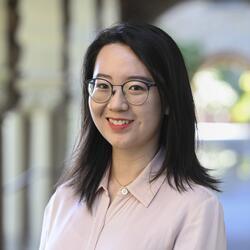
Yuli Xu joins the Walter H. Shorenstein Asia-Pacific Research Center (APARC) as Asia Health Policy Postdoctoral Fellow for the 2025-2026 academic year. She recently obtained her Ph.D. in Economics at the University of California, San Diego. Her research focuses on Labor and Health Economics, with particular interests in how female labor force participation and fertility decisions are influenced by labor market institutions and past birth experiences. In her thesis, "Gendered Impacts of Privatization: A Life Cycle Perspective from China," she demonstrates that the reduction in public sector employment has widened the gender gap in the labor market while narrowing the gender gap in educational attainment. She also finds that this structural shift has delayed marriage among younger generations.
In another line of research, Yuli examines the effects of maternity ward overcrowding. She finds that overcrowding reduces the use of medical procedures during childbirth without negatively impacting maternal or infant health. While it has no direct effect on subsequent fertility, she shows that mothers, especially those with a college degree, are more likely to switch to another hospital for subsequent births after experiencing overcrowding. During her time at APARC, Yuli will further investigate patient-physician relationships in the Chinese healthcare system, where patients have considerable flexibility in choosing their doctors at each visit. She will explore the persistence of these relationships and examine how patients respond when their regular doctors are temporarily unavailable.
Yuli also holds a B.A. in Economics from the University of International Business and Economics in China.